
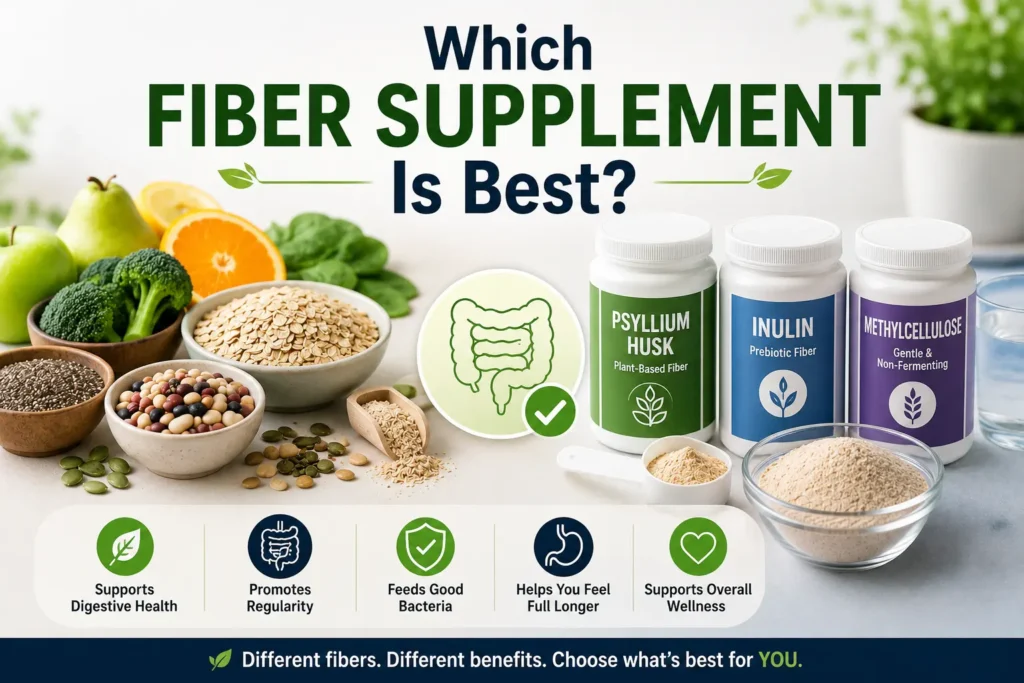
Which Fiber Supplement Is Best? There’s no single fiber supplement that’s best for everyone—the right one depends on what problem you’re trying to solve.
For most people, psyllium husk is the strongest all-around choice: it’s the only fiber with an FDA-authorized heart health claim, and it has solid research behind constipation relief and blood sugar support. If psyllium causes gas or bloating, methylcellulose is a gentler, non-fermenting alternative. If your goal is feeding gut bacteria rather than relieving constipation, inulin or acacia fiber fit better. The “best” fiber supplement is the one matched to your specific goal, not the one with the biggest marketing budget.
This guide breaks down every major type by evidence, tolerability, and use case, so you can match the fiber to your actual situation instead of guessing.
Table of Contents
Why “Best” Depends on the Question
Most articles answer “which fiber supplement is best” with a single winner and move on. That’s misleading, because fiber supplements aren’t interchangeable — they’re built from different source materials that behave differently once they hit your gut.
Some fibers form a thick gel and slow digestion. Others ferment quickly and feed bacteria but do little for constipation. Some are almost tasteless and mix into anything; others come pre-dosed in capsules or gummies. Picking the “best” one without knowing what you’re solving for is like asking which shoe is best without asking whether you’re running a marathon or standing at a cash register all day.
The Main Types of Fiber Supplements, Compared
| Fiber Type | Best Known For | Fermentation (Gas Risk) | Gel-Forming | Notable Evidence |
| Psyllium husk | Constipation, cholesterol, blood sugar | Low | Strong | FDA heart health claim; most-studied fiber supplement |
| Methylcellulose | Sensitive stomachs, non-fermenting bulk | Very low | Moderate | Well-tolerated alternative to psyllium |
| Wheat dextrin | Mild, tasteless daily fiber | Low-moderate | Minimal | Good tolerability; lacks psyllium’s cholesterol claim |
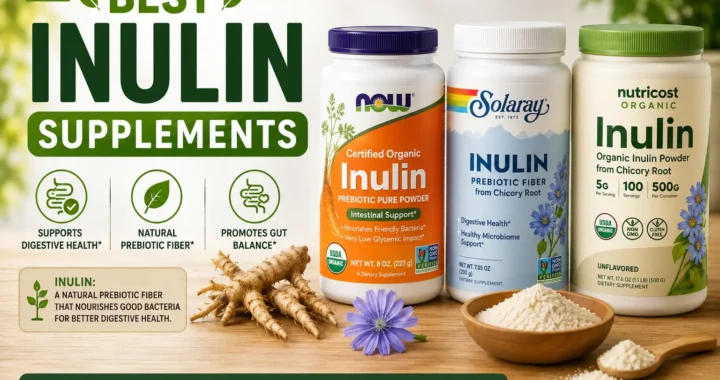
| Inulin / chicory root | Gut bacteria, prebiotic support | High | None | Strong prebiotic research; not ideal for constipation or IBS-C |
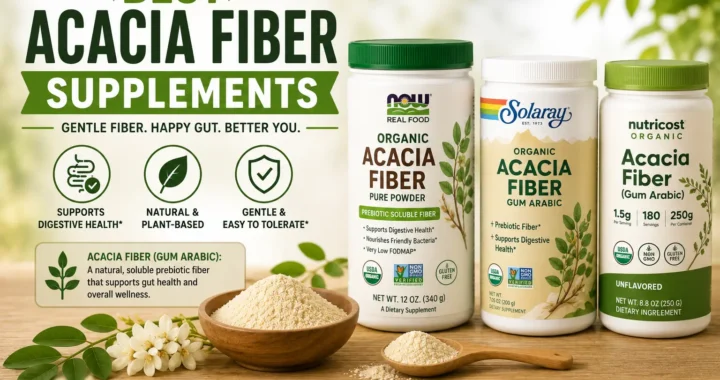
| Acacia fiber | Sensitive stomachs, low-FODMAP diets | Low | None | Well-tolerated prebiotic option |
| PHGG (partially hydrolyzed guar gum) | IBS-C and IBS-D | Low-moderate | Mild | Trial support in both constipation- and diarrhea-predominant IBS |
| Glucomannan | Fullness, weight management support | Moderate | Very strong | Highly viscous; strongest gel-forming effect of common fibers |
| Oat fiber / beta-glucan | Cholesterol, blood sugar | Low-moderate | Moderate | FDA-recognized cholesterol benefit at effective doses |
How to Match a Fiber Type to Your Goal
For constipation and regularity
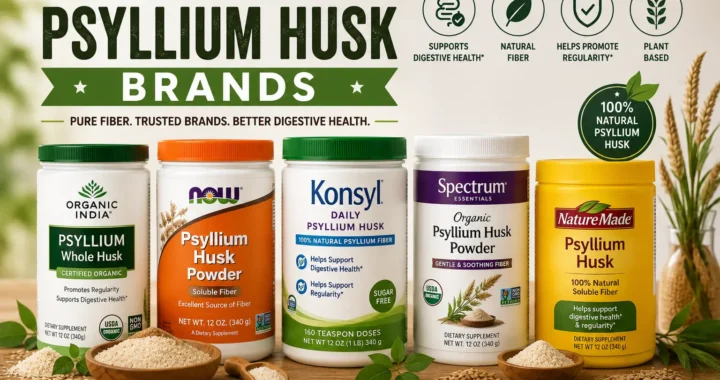
Psyllium husk has the most consistent research for softening stool and improving regularity, largely because of its strong gel-forming action. PHGG is a reasonable second option, particularly for people whose constipation alternates with looser stools. See our full guide to the best fiber supplement for constipation.
For cholesterol support
Psyllium and oat beta-glucan both carry FDA-recognized claims for LDL cholesterol reduction, generally at doses around 7 grams or more of soluble fiber per day. Neither works overnight — expect several weeks of consistent use before checking for a change. More detail here: best fiber supplement for cholesterol.
For gut health and microbiome support
Inulin and acacia fiber are fermentable prebiotics, meaning gut bacteria break them down and produce compounds linked to a healthier gut environment. They’re a better fit here than psyllium, which is barely fermented. See best prebiotic fiber supplement.
For sensitive stomachs or IBS
Methylcellulose and acacia fiber tend to cause the least gas because they ferment slowly or not at all. Inulin, by contrast, is one of the more likely fibers to cause bloating in sensitive people, since it ferments quickly. If you’ve had a bad experience with one fiber, the type — not the dose — is often the real issue. More in our guide to a fiber supplement that doesn’t cause gas and best fiber supplement for IBS.
For weight management or appetite
Glucomannan forms an especially thick gel and has the strongest viscosity of the common supplement fibers, which is why it’s often studied for fullness and appetite control. Results vary by individual, and it’s not a substitute for overall diet quality. See best fiber supplement for weight loss.
Format Matters Almost as Much as Fiber Type
Once you know which fiber type fits your goal, the format you choose changes how easy it is to hit an effective dose.
| Format | Typical Fiber Delivered | Best For |
| Powder | Highest per serving; fully adjustable dose | People who need a real therapeutic dose (5g+) |
| Capsules | Lowest per unit; often 0.4–1g fiber per capsule | Travel, convenience, no mixing |
| Gummies | Moderate; usually 3–5g per serving | People who dislike swallowing pills or drinking powder |
A powder gives you the most control and the lowest cost per gram of fiber. Capsules and gummies trade some of that dosing efficiency for convenience — worth knowing before you assume any format will get you to the same daily target with the same number of servings. For a deeper look at this tradeoff, see fiber powder vs fiber capsules and fiber gummies vs fiber pills.
Pros and Cons of the Two Most Common Choices
Psyllium Husk
| Pros | Cons |
| Strongest overall evidence base | Needs to be taken with plenty of water |
| FDA-authorized heart health claim | Can cause bloating if increased too fast |
| Effective for both constipation and cholesterol | Gel-forming texture takes some getting used to |
| Low fermentation, so relatively gentle | Allergic reactions possible in rare cases |
Inulin / Chicory Root Fiber
| Pros | Cons |
| Strong prebiotic effect for gut bacteria | High fermentation, more likely to cause gas |
| Often used in low-sugar, low-calorie products | Not effective for constipation relief |
| Mild, slightly sweet taste blends easily | Can worsen symptoms in IBS or SIBO |
| Widely available in food and supplement form | Little effect on cholesterol |
Common Mistakes People Make Choosing a Fiber Supplement
- Picking based on brand recognition instead of fiber type. Two products can list “fiber” on the label and behave completely differently in your gut.
- Assuming more fermentation is always better. Fermentable fibers support gut bacteria, but they’re also the most likely to cause gas — not automatically the “healthiest” choice for everyone.
- Ignoring the dose on the label. A 1-gram serving of any fiber type is unlikely to produce a noticeable effect. Check whether the product actually reaches an effective dose for your goal.
- Switching types too often. Give one fiber type at least one to two weeks at a consistent dose before deciding it doesn’t work — early gas and bloating usually settle as your gut adjusts.
- Not increasing water intake alongside fiber. This is especially important for gel-forming fibers like psyllium and glucomannan, which can worsen constipation if taken without enough fluid.
Decision Framework: Which Fiber Supplement Should You Choose?
- You want one supplement with the strongest all-around evidence → Psyllium husk.
- Psyllium upsets your stomach → Methylcellulose or wheat dextrin.
- Your main goal is gut bacteria and microbiome support → Inulin or acacia fiber.
- You have IBS with alternating symptoms → PHGG.
- You want the strongest appetite/fullness effect → Glucomannan.
- You’re managing cholesterol or blood sugar specifically → Psyllium or oat beta-glucan, at a dose your provider confirms is appropriate.
- You’re still not sure where to start → Our guide on how to choose a fiber supplement walks through the decision step by step.
Frequently Asked Questions
Is psyllium husk always the best fiber supplement? It’s the best-evidenced option for most goals, particularly constipation and cholesterol, but it’s not automatically right for everyone. People who get gassy or bloated from psyllium often do better with methylcellulose or acacia fiber instead.
What’s the healthiest fiber supplement to take daily? “Healthiest” depends on your goal. For general daily maintenance with minimal digestive upset, wheat dextrin or acacia fiber are gentle, well-tolerated options. For a supplement with the most robust clinical backing, psyllium remains the strongest choice.
Can I take more than one type of fiber supplement? Yes, some people combine a gel-forming fiber like psyllium with a prebiotic fiber like inulin to cover both regularity and gut bacteria support. Introduce one at a time so you can tell which fiber is responsible for any digestive changes.
Which fiber supplement causes the least gas? Methylcellulose and acacia fiber are generally the least fermentable, meaning they’re broken down slowly or not at all by gut bacteria — this typically means less gas compared to highly fermentable fibers like inulin.
How long does it take for a fiber supplement to start working? For regularity, some people notice a difference within a few days. For cholesterol or blood sugar benefits, most research shows measurable changes after several weeks of consistent daily use.
Do more expensive fiber supplements work better? Not necessarily. Price often reflects flavoring, format (gummies and capsules cost more per gram of fiber than powder), and branding rather than a meaningfully different or more effective fiber source.
Final Verdict
If you only take away one thing from this guide: the best fiber supplement is the one that matches your goal and that you’ll actually take consistently. Psyllium husk is the strongest default choice for most people because of its research depth and versatility across constipation, cholesterol, and blood sugar support. But “best” shifts the moment your priority shifts — toward gut bacteria support, a sensitive stomach, or a specific condition like IBS.
Start with your goal, pick the fiber type that matches it from the table above, then choose the format — powder, capsule, or gummy — that fits how you’ll realistically take it every day. For a broader look at fiber sources beyond supplements, see our comparison of soluble fiber foods vs supplements.
This article is for educational purposes only and is not a substitute for medical advice. Talk to a healthcare provider before starting any new supplement, especially if you take other medications or have a digestive condition.