
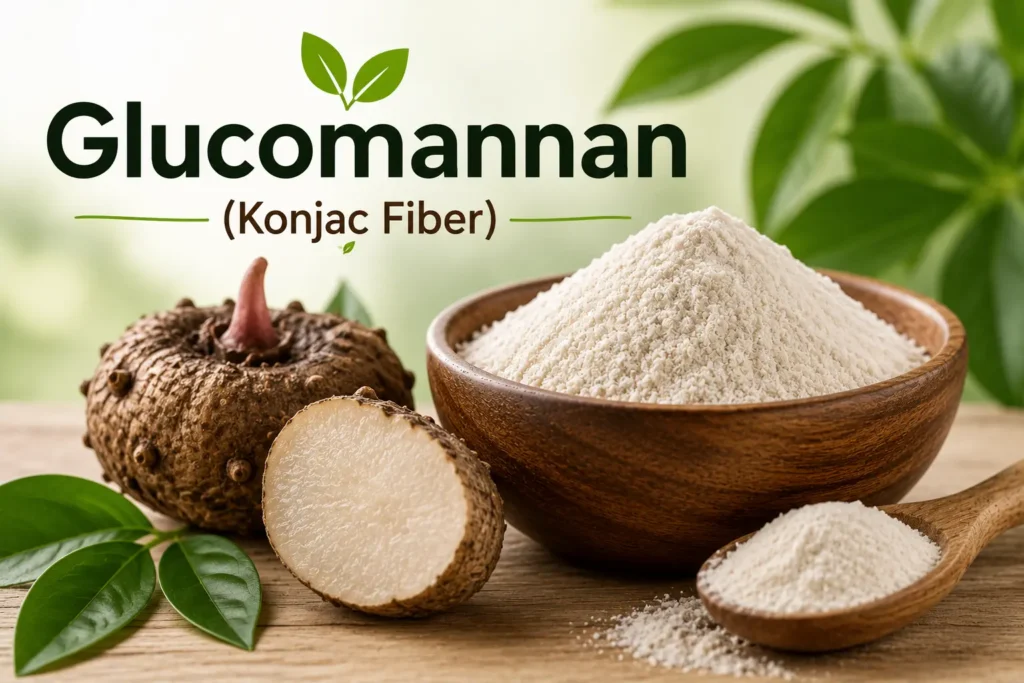
Glucomannan (Konjac Fiber) is a soluble fiber extracted from the root of the konjac plant (Amorphophallus konjac). It’s one of the most water-absorbent fibers known, capable of expanding to many times its dry weight when mixed with liquid. This is why Glucomannan (Konjac Fiber) is most often discussed for appetite control and weight management — the gel it forms in the stomach adds volume and can slow digestion, contributing to a fuller feeling after eating.
Glucomannan also has a genuine safety consideration that many articles underplay: because it expands so dramatically, taking it in tablet form without enough water has caused reports of throat and esophageal blockage. Understanding both the benefits and this specific risk is essential before using it.
Table of Contents
What Is Glucomannan (Konjac Fiber)?
Glucomannan is a soluble, highly viscous dietary fiber derived from konjac root, a plant traditionally grown in parts of Asia and used for centuries in foods like konjac noodles (shirataki) and konjac jelly.
Chemically, glucomannan is a polysaccharide made of glucose and mannose sugar units. What sets it apart from other soluble fibers is its exceptional water-binding capacity — it can absorb up to roughly 50 times its weight in water, forming a thick, viscous gel.
This extreme viscosity is the defining trait of glucomannan and the reason it behaves differently from milder soluble fibers like inulin or acacia fiber.
Forms of Glucomannan
- Powder — mixed into water or beverages, allowing it to hydrate before consumption.
- Capsules or tablets — a common supplement format, though one that requires careful attention to water intake (covered below).
- Konjac noodles and food products — glucomannan-based foods like shirataki noodles use the fiber’s gelling property to create low-calorie, fiber-rich food substitutes.
How Glucomannan Works in the Body
- It absorbs water rapidly and dramatically. Far beyond what most fibers do, glucomannan can expand to many times its original volume.
- It forms a thick gel in the stomach. This gel adds bulk and can slow gastric emptying, meaning food and liquid move out of the stomach more slowly.
- It’s partially fermented by gut bacteria. Some glucomannan reaches the colon and is fermented, contributing mild prebiotic activity, though this isn’t its primary function.
- It doesn’t provide significant calories. As with most fibers, it isn’t broken down and absorbed as an energy source.
The combination of rapid water absorption and gastric-emptying delay is what drives most of glucomannan’s discussed effects — particularly around fullness and appetite.
Glucomannan for Weight Loss: What the Evidence Actually Shows
This is the most searched angle for glucomannan, so it deserves a clear, balanced look rather than a sales pitch.
What’s supported: Some clinical research has examined glucomannan taken before meals, generally finding modest reductions in body weight compared to placebo when combined with a calorie-controlled diet. The proposed mechanism is straightforward: the gel-forming fiber increases fullness and may reduce the amount of food eaten at a meal.
What’s not supported: Glucomannan is not a standalone weight-loss solution. Results across studies are inconsistent, effect sizes are generally modest, and outcomes depend heavily on diet and consistency of use. It should not be treated as a substitute for dietary changes, physical activity, or medical guidance around weight management.
A fair way to frame it: glucomannan may serve as a supporting tool for people already working on portion control or calorie awareness, not as an independent fix. Its documented weight-related effects are considered modest, not dramatic — a useful distinction competitor pages often gloss over.
Glucomannan vs. Other Fibers Used for Appetite or Fullness
| Fiber | Viscosity/Gel Strength | Main Use Case | Fermentability | Notable Consideration |
| Glucomannan | Very high | Appetite/fullness, weight support | Partial | Requires ample water; tablet form carries choking/blockage risk |
| Psyllium husk | High | Regularity + mild appetite effect | Partial | Well-studied, more established safety history |
| PHGG (partially hydrolyzed guar gum) | Low-moderate | Gut tolerance, mild regularity | High | Gentle, low bloating |
| Inulin | Low | Prebiotic gut support | Very high | More gas/bloating risk |
| Methylcellulose | Moderate | Regularity without fermentation | None | No gas, less appetite-focused evidence |
Compared to psyllium husk, glucomannan forms an even thicker gel, which is precisely why it carries a more specific safety warning around dry consumption. If your main goal is general regularity rather than appetite support, psyllium or PHGG may be simpler, better-established choices.
Potential Benefits of Glucomannan
Based on its fiber properties and available research, glucomannan is associated with:
- Supporting feelings of fullness when taken before meals with adequate water.
- Supporting regular bowel movements, similar to other viscous soluble fibers.
- Modest support for weight management when combined with dietary changes, according to some clinical research.
- Some research interest in cholesterol and blood sugar markers, though this evidence is less robust and consistent than its appetite-related research.
As with any supplement claim, individual results vary, and glucomannan should be viewed as one input among many rather than a guaranteed outcome.
Safety and Side Effects: The Section Most Articles Underplay
Glucomannan is generally recognized as safe when used appropriately, but its extreme water-absorbing property creates specific risks that deserve direct attention:
- Choking and esophageal/intestinal blockage risk. Regulatory bodies have documented reports of glucomannan tablets swelling before being fully swallowed or without enough accompanying water, leading to throat obstruction. This is why glucomannan in tablet form typically carries a specific warning to take it with a full glass of water and never dry.
- Always take with plenty of water. This applies to powder and capsule forms alike — glucomannan needs adequate fluid to hydrate properly rather than expanding somewhere it shouldn’t.
- Gas and bloating can occur, especially with fermentable glucomannan reaching the colon.
- Interaction with medication absorption. Because glucomannan slows gastric emptying and adds bulk, it may affect how well some oral medications are absorbed if taken too close together. Spacing supplement and medication doses by a couple of hours is a reasonable general precaution, though specific guidance should come from a pharmacist or doctor.
- Not appropriate for people with swallowing difficulties or certain gastrointestinal conditions, such as esophageal strictures, without medical supervision.
This article is educational and does not replace personalized medical advice. If you take medication, have a swallowing disorder, or have a diagnosed digestive condition, speak with a healthcare provider before using glucomannan.
Practical Tips for Taking Glucomannan Safely
- Take capsules or tablets with a full glass of water (at least 8 ounces), and follow with more water shortly after.
- If using powder, mix it into liquid and let it hydrate briefly before drinking, rather than swallowing it dry.
- Take it 20–30 minutes before a meal if using it for appetite support, allowing the gel to form before eating.
- Start with a lower amount and increase gradually to assess tolerance, as with any new fiber.
- Avoid taking it immediately before lying down, to reduce any risk of it expanding in the esophagus.
Common Mistakes People Make With Glucomannan
- Swallowing capsules without enough water. This is the single most important mistake to avoid, given the documented blockage risk.
- Expecting dramatic weight loss on its own. The research supports modest effects tied to overall dietary habits, not standalone transformation.
- Taking it at the same time as medications. Its gel-forming, gastric-emptying-slowing effect can interfere with medication absorption if timing isn’t spaced out.
- Increasing the dose too quickly. This raises the likelihood of bloating and gas.
- Confusing it with milder soluble fibers. Glucomannan’s gelling strength is considerably higher than fibers like inulin or acacia, so dosing advice for one doesn’t automatically apply to the other.
Frequently Asked Questions
Is glucomannan the same as konjac fiber? Yes. Glucomannan is the specific fiber compound extracted from konjac root, so “glucomannan” and “konjac fiber” refer to the same substance.
Does glucomannan actually help with weight loss? Some clinical research shows modest weight reductions when glucomannan is taken before meals alongside a calorie-controlled diet, but it isn’t a standalone solution and results vary between studies.
Is glucomannan safe to take every day? It’s generally considered safe for regular use when taken correctly — with plenty of water and not exceeding recommended amounts. The main safety concern relates to how it’s taken, not the fiber itself.
Why does glucomannan carry a choking warning? Because it can absorb dozens of times its weight in water, tablets that begin expanding before being fully swallowed, or that are taken without enough water, have been linked to throat or digestive tract blockage in documented cases.
Can glucomannan cause bloating or gas? Yes, particularly since a portion of it is fermented by gut bacteria in the colon. Starting with a lower dose and increasing gradually can reduce this effect.
How is glucomannan different from psyllium husk? Both are soluble, gel-forming fibers, but glucomannan has a notably higher water-absorbing capacity and is more specifically studied for appetite and weight-related effects, while psyllium has broader, longer-established research on regularity.
Final Verdict
Glucomannan is one of the most powerful gel-forming fibers available, and its water-absorbing capacity is exactly why it’s linked to appetite support and modest weight-management benefits in some research. It’s a legitimate, evidence-supported tool — but not a shortcut, and not without a specific safety detail that matters more here than with most fibers: always take it with enough water.
If appetite support isn’t your main goal, other fibers like psyllium husk or PHGG may offer a simpler, gentler path to regularity. But for people specifically looking at fiber-based appetite support, glucomannan remains one of the more researched options in that particular category.
For a broader look at how fiber fits into a weight-management approach, see our guide on the best fiber supplement for weight loss.