
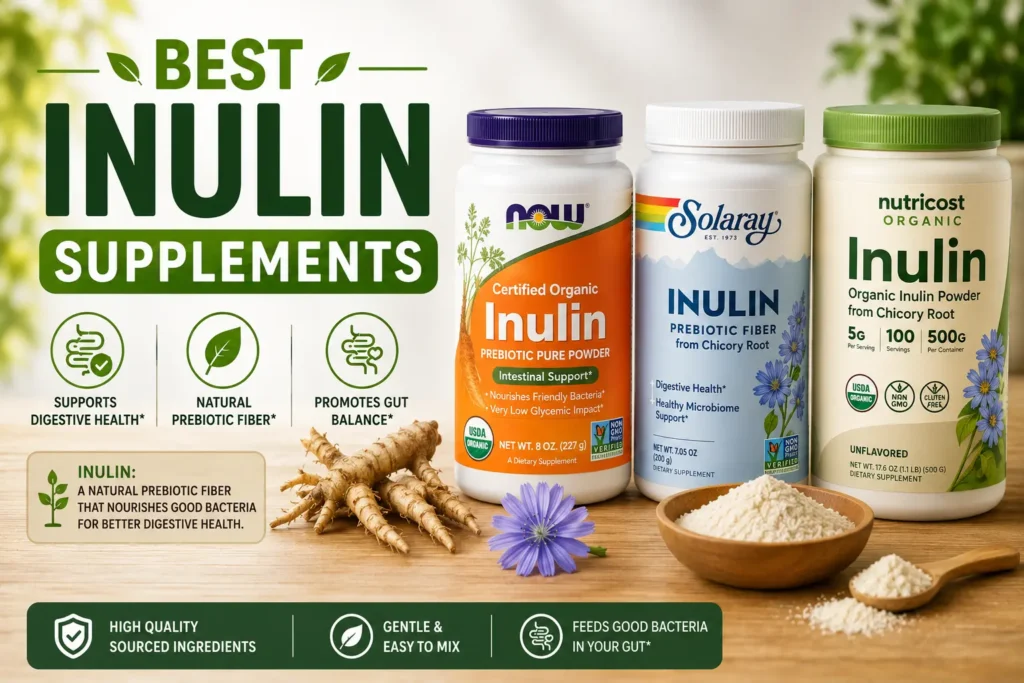
The best inulin supplements share three things: a clearly stated source (usually chicory root), a fiber dose of at least 5-7g per serving, and no unnecessary fillers. NOW Foods Organic Inulin Powder is the most consistently recommended overall pick, thanks to certified-organic sourcing and a strong fiber yield per serving. Micro Ingredients Organic Inulin FOS Fiber is the best choice if you want bulk value or the added fructooligosaccharides (FOS) that come from a less-processed chicory extraction. Anthony’s Organic Inulin Powder is a solid budget entry point for first-time users who want to test tolerance before committing to a larger bag. If you specifically want a milder inulin source, agave-based inulin powders like Kate Naturals ferment somewhat differently than chicory root and are worth knowing about as an alternative. Below, we explain what actually separates a good inulin supplement from a mediocre one, then compare the top brands side by side.
Table of Contents
What Is Inulin, Briefly
Inulin is a soluble, fermentable prebiotic fiber most commonly extracted from chicory root, though it also occurs naturally in Jerusalem artichoke, agave, and asparagus. Unlike fiber that primarily adds bulk to stool, inulin’s main job is feeding beneficial bacteria in your large intestine, which is why it’s classified as a prebiotic rather than just a fiber source. For the full explanation of how inulin behaves in the digestive tract, our dedicated inulin fiber guide covers the mechanism in more depth than we will here. This article focuses specifically on choosing a supplement, not on the ingredient science itself.
What Actually Makes an Inulin Supplement Good
Most “best inulin” roundups just rank products by star rating. That misses the variables that actually determine whether a specific inulin supplement will work for you:
- Source. Chicory root is the most common and most studied source. Agave and Jerusalem artichoke inulin exist too, and while the fiber itself is chemically similar, extraction method and purity can vary between suppliers.
- Fiber per serving. Look for products delivering roughly 5-7g of inulin per serving. Some blended “prebiotic fiber” products dilute inulin with other ingredients, so check the label rather than assuming.
- Chain length (degree of polymerization). Inulin with a higher average chain length tends to ferment more slowly, which can mean gentler digestive tolerance. Most consumer brands don’t publish this figure, but “inulin FOS” blends generally include shorter chains that ferment faster.
- Solubility. Some inulin powders dissolve clear in liquid; others leave a gritty or cloudy texture. This matters for daily consistency more than most buyers expect going in.
- Additives. Pure inulin powder has no flavor of its own. If a product tastes sweet or has added flavoring, check whether that’s inulin blended with a sweetener rather than a standalone fiber source.
The Best Inulin Supplements, Compared
| Brand | Source | Fiber Per Serving | Format | Best For |
| NOW Foods Organic Inulin | Chicory root | ~7g | Powder | Best overall, certified organic |
| Micro Ingredients Organic Inulin FOS | Chicory root | ~5g | Powder | Bulk value, added FOS |
| Anthony’s Organic Inulin Powder | Chicory root | ~5-7g | Powder | Budget-friendly first-time buyers |
| It’s Just! Inulin Prebiotic Fiber | Chicory root | Varies | Powder | Baking and recipe use |
| Kate Naturals Organic Inulin (Agave) | Blue agave | Varies | Powder | Alternative source, milder taste |
| Nutricost/BulkSupplements Inulin | Chicory root | Varies by scoop size | Powder | Large-format bulk buyers |
| Herbamama Inulin Capsules | Chicory root | Varies by capsule count | Capsules | No-mixing convenience |
Fiber content per serving varies meaningfully even within the “chicory root inulin” category, so this is worth double-checking on the actual label before you buy, not just the brand name.
Brand-by-Brand Breakdown
NOW Foods Organic Inulin Powder
NOW Foods’ inulin is certified USDA Organic and Non-GMO Project Verified, sourced from chicory root, and delivers one of the higher fiber yields per serving among mainstream brands. It’s consistently the most recommended option across independent reviews, largely because it combines a clean label with a fiber dose strong enough to be genuinely useful rather than symbolic. It’s a reasonable default if you’re buying inulin for the first time and don’t have a specific reason to choose otherwise.
Micro Ingredients Organic Inulin FOS Fiber
This product combines inulin with fructooligosaccharides (FOS), a related but shorter-chain prebiotic fiber also derived from chicory root. The blend dissolves clearly in water and is sold in bulk sizes, making it a strong choice for households or long-term daily users who don’t want to reorder frequently. Because FOS ferments faster than longer-chain inulin, some users notice more initial gas with FOS-inclusive blends — worth knowing if you’re sensitive to fermentable fibers.
Anthony’s Organic Inulin Powder
Anthony’s offers a straightforward, USDA-certified organic inulin powder at a lower price point, making it a sensible starting product if you’ve never tried inulin and want to gauge your personal tolerance before buying a larger, pricier bag. As a newer product in this specific category, it has a smaller review history than more established competitors, so go in expecting less third-party feedback on long-term solubility performance.
It’s Just! Inulin Prebiotic Fiber
Marketed partly as a natural sweetener alternative as well as a fiber source, this chicory root-derived inulin powder is water-soluble and commonly used in baking and recipes beyond just mixing into drinks. It has a naturally mild sweetness, which some users like and others find makes it harder to dose precisely if you’re tracking fiber intake strictly.
Kate Naturals Organic Inulin (Blue Agave)
Most inulin supplements source from chicory root, but agave-derived inulin is a notable alternative worth knowing about. The fiber itself functions similarly as a prebiotic, though extraction source and processing can affect taste and solubility. This is a reasonable option if you specifically want to diversify prebiotic fiber sources rather than relying on chicory root alone.
Nutricost and BulkSupplements Inulin
Both brands are common choices for buyers who want inulin in large-format bags at a lower per-serving cost, without added organic certification driving up the price. These are functional, no-frills options best suited to people who already know they tolerate inulin well and are optimizing for cost per gram of fiber.
Herbamama Inulin Capsules
For anyone who wants to avoid mixing powder altogether, capsule-based inulin products solve the taste and texture question entirely. As with any fiber capsule, expect to take several capsules to match the dose found in a single scoop of powder, which affects the real cost-per-serving comparison.
Chicory Root vs. Agave vs. Jerusalem Artichoke Inulin
Since source is one of the biggest differentiators between inulin brands, here’s a quick comparison most competing guides skip entirely.
| Source | Common In Supplements | Notes |
| Chicory root | Most commercial inulin powders | Most studied source, widely available, neutral taste |
| Blue agave | Specialty/organic brands | Naturally sweeter, sometimes marketed as a sugar alternative |
| Jerusalem artichoke | Less common in supplement form | Common in whole-food inulin sources, rarer as an isolated powder |
If you’re weighing inulin against a completely different fiber category rather than just comparing inulin brands, our comparisons of psyllium husk vs. inulin and inulin vs. acacia fiber go through those tradeoffs directly.
How to Start Taking Inulin Without Overdoing It
Inulin is a fast-fermenting fiber, which means starting at a full serving is one of the most common reasons people quit after a few days. A more sustainable approach:
- Start with 2-3g per day (roughly half a standard scoop) for the first week.
- Increase gradually every few days rather than jumping to the full labeled serving.
- Take it with adequate water, since soluble fiber needs fluid to work as intended.
- Track how you feel for at least a week before deciding a specific brand “doesn’t work,” since early bloating is common and usually temporary.
If bloating remains a persistent problem even after a slow introduction, it may be worth trying a slower-fermenting fiber instead. Our guide to fiber supplements that don’t cause gas covers gentler alternatives if inulin turns out not to be the right fit for your gut.
Common Mistakes When Choosing an Inulin Supplement
- Buying based on price per bag instead of price per gram of fiber. Bulk products look cheaper but vary in fiber concentration per scoop.
- Assuming all “prebiotic fiber” labels mean inulin. Some blended products combine inulin with other ingredients in amounts that aren’t clearly broken out on the label.
- Starting at a full dose. This is the single most common reason people associate inulin with bloating and give up on it entirely.
- Ignoring chain length differences. FOS-heavy blends ferment faster than pure long-chain inulin, which can mean a bigger initial adjustment period.
- Not accounting for hidden inulin in other products. If you’re also using inulin-sweetened bars, drinks, or “low sugar” snacks, your total daily intake may be higher than you realize.
Frequently Asked Questions
What is the best source of inulin for supplements? Chicory root is the most common and most researched source used in commercial inulin powders. It’s not inherently superior to other sources like agave, but it has the largest body of evidence and product availability behind it.
How much inulin should I take per day? Most inulin supplements are designed around a 5-7g daily serving, but starting lower (2-3g) and increasing gradually over one to two weeks is the more comfortable approach for most people, especially first-time users.
Is organic inulin better than non-organic inulin? Organic certification relates to farming and sourcing standards, not how the fiber itself behaves in your gut. It’s worth choosing if organic sourcing is already a priority for you, but it won’t change tolerance or effectiveness.
Why does inulin cause more gas than other fibers? Inulin is a fast-fermenting, short-to-medium chain fiber, meaning gut bacteria break it down relatively quickly. That fermentation process produces gas as a normal byproduct, which is why gradual dosing matters more with inulin than with slower-fermenting fibers like acacia.
Can I get inulin from food instead of a supplement? Yes — chicory root, Jerusalem artichoke, garlic, onions, and asparagus all naturally contain inulin. A supplement simply offers a more concentrated, consistent dose than trying to estimate intake from food alone.
Is inulin the same as FOS (fructooligosaccharides)? They’re related but not identical. FOS is a shorter-chain fiber, sometimes derived alongside inulin during chicory root processing, and it tends to ferment faster. Some products list “inulin FOS” together as a blend rather than pure inulin alone.
Final Verdict
If you want a single reliable default, NOW Foods Organic Inulin Powder offers the strongest overall combination of purity, fiber dose, and organic certification. If you’re buying in bulk or want the added FOS content, Micro Ingredients is a reasonable step up in volume. First-time buyers who aren’t sure how their gut will handle inulin should start with a smaller, budget-friendly bag like Anthony’s before committing to a larger container. Whichever brand you choose, the source and chain length matter more than the packaging — and starting slow matters more than the brand you pick at all. For a broader comparison of inulin against other prebiotic and non-prebiotic fiber types, our guide to the best prebiotic fiber supplement puts this category in context alongside acacia, PHGG, and other options.