
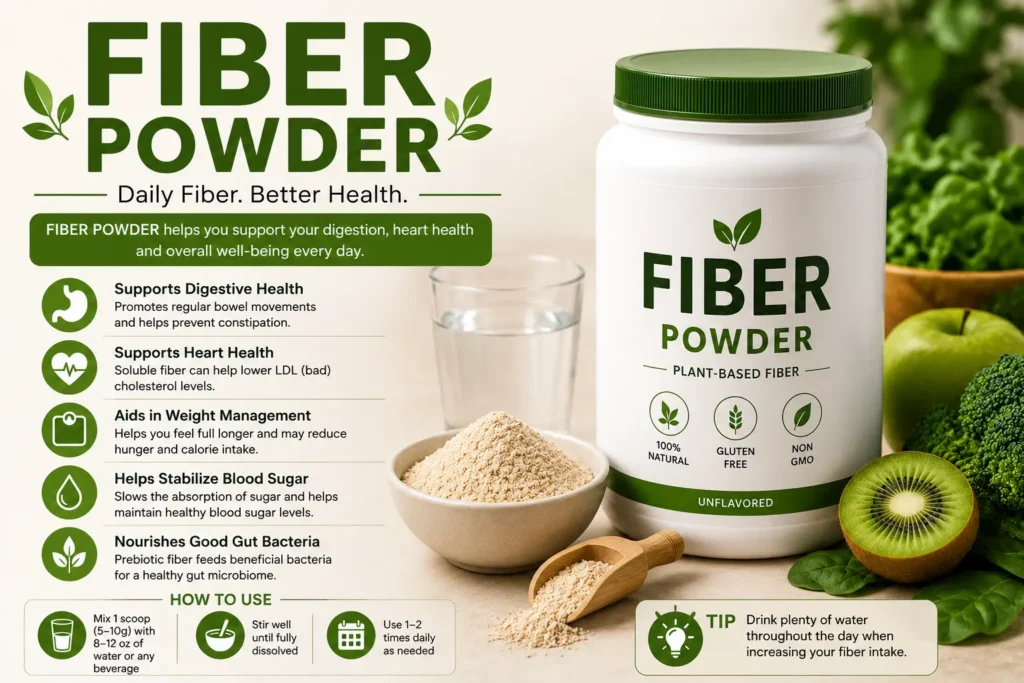
Fiber powder is a dietary fiber powder made from plant sources like psyllium husk, acacia, inulin, or wheat dextrin. You mix it with water or food to boost your daily fiber intake, support regular bowel movements, feed gut bacteria, and help manage cholesterol and blood sugar. Most adults need 25–38 grams of fiber a day, but the average American gets less than half that, which is why a fiber powder supplement has become one of the simplest ways to close the gap.
The right fiber powder for you depends on your main goal — regularity, gut health, cholesterol, or general wellness — since different fiber sources behave differently in the body. The best fiber supplement depends on choosing the right fiber source for your needs. The rest of this guide breaks that down so you can choose with confidence.
Table of Contents
What Is Fiber Powder?
Fiber powder is dietary fiber that has been extracted or ground from a plant source and dried into a fine powder. Instead of eating a bowl of oats or a plate of beans, you stir a scoop of powder into water, juice, a smoothie, or soft food, and get a concentrated dose of fiber in seconds.
It’s one of several ways to supplement fiber — the others being capsules, chewable tablets, and gummies. Powder tends to be the most popular format because it’s flexible with dosing, usually more affordable per gram of fiber, and works for people who don’t want to swallow pills.
Fiber powder is not a replacement for fiber-rich food. It’s a tool for filling the gap between what you eat and what your body actually needs. If you want to understand this distinction in more depth, see fiber supplements vs. fiber foods.
Why Fiber Powder Exists: The Fiber Gap Problem
<cite index=”3-1″>A 2022 study found the average American consumes about 17 grams of fiber a day, with only around 5% of the population meeting adequate intake levels.</cite> Most nutrition experts recommend somewhere between 25 and 38 grams daily, depending on age and sex, which means most people are running a deficit of 10 grams or more, every single day.
That gap matters because fiber isn’t just “roughage.” It plays an active role in digestion, blood sugar regulation, cholesterol metabolism, and the health of the trillions of bacteria living in your gut. Fiber powder exists specifically to make closing that gap easier — no meal planning required, just a scoop and a glass of water.
How Fiber Powder Works in the Body
Not all fiber behaves the same way, and understanding this is the key to choosing the right product.
Soluble fiber dissolves in water and forms a gel-like substance in the digestive tract. This gel slows digestion, which:
- Helps you feel fuller for longer
- Slows sugar absorption, which can smooth out blood sugar spikes
- Binds to cholesterol particles and helps remove them from the body
- Softens stool, which helps with both constipation and diarrhea
Insoluble fiber does not dissolve in water. It adds bulk to stool and speeds up how quickly waste moves through the intestines, which is why it’s most associated with regularity and preventing constipation.
Fermentable fiber is a separate category that overlaps with both of the above. <cite index=”9-1″>Fermentable fiber feeds the beneficial bacteria in your gut, and while soluble fiber is usually fermentable, some insoluble fibers ferment too.</cite> This fermentation process produces short-chain fatty acids, compounds increasingly linked to gut lining health and immune function.
Most fiber powders lean toward one category, though blended formulas that combine soluble, insoluble, and fermentable fibers do exist. To go deeper on this distinction, see soluble vs. insoluble fiber.
Main Types of Fiber Powder
Not every fiber powder is made from the same ingredient. Here’s what you’ll actually find on labels.
| Fiber Type | Source | Soluble or Insoluble | Best Known For |
| Psyllium husk | Seed husk of Plantago ovata | Mostly soluble, some insoluble | Regularity, cholesterol support |
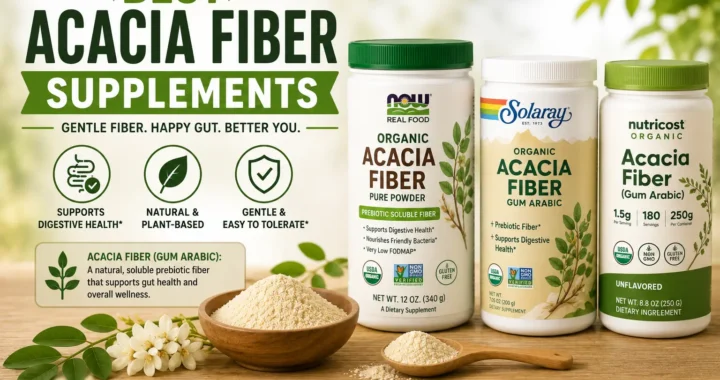
| Acacia fiber | Sap of the acacia tree | Soluble, prebiotic | Gentle on digestion, low bloating |
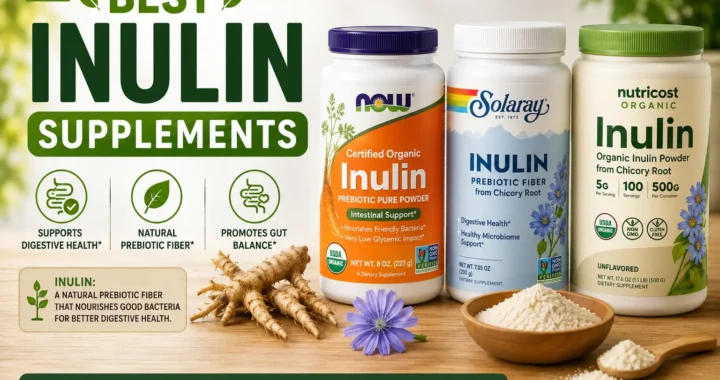
| Inulin | Chicory root, agave | Soluble, prebiotic | Feeding gut bacteria |
| Wheat dextrin | Processed wheat starch | Soluble | Mixes invisibly into drinks |
| Methylcellulose | Plant cellulose, synthetic processing | Soluble | Doesn’t ferment, less gas |
| Ground flaxseed | Flax seeds | Mostly insoluble | Bulk-forming, added nutrients |
| Glucomannan | Konjac root | Soluble, highly viscous | Satiety, weight management |
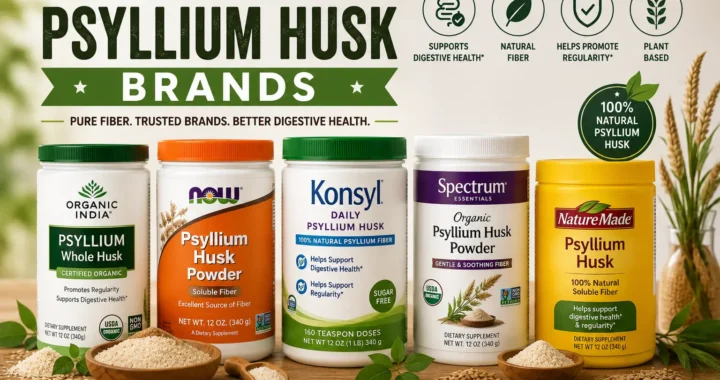
A quick note on psyllium husk, the most widely used ingredient in fiber powders: <cite index=”7-1″>powdered psyllium typically contains around 70% soluble fiber and 30% insoluble fiber</cite>, which is part of why it shows up in so many products — it offers a bit of both benefits in one ingredient. You can read a full breakdown on our psyllium husk page.
Fiber Powder vs. Other Supplement Formats
People often ask whether powder is actually “better” than capsules or gummies. The honest answer: it depends on your priorities.
| Format | Fiber Per Serving | Convenience | Cost Per Gram | Best For |
| Powder | Usually 3–6g per scoop, adjustable | Needs mixing, but flexible dosing | Generally lowest | People who want control over dose |
| Capsules/Pills | Often 0.5–1g per capsule | Very portable, no mixing | Higher (many capsules needed) | Travel, no access to water/mixing |
| Gummies | Typically low fiber per gummy | Most palatable, kid-friendly | Highest | People who dislike powder texture |
If you’re weighing pills specifically, our fiber pills guide and fiber gummies guide break down the trade-offs in more detail.
Benefits of Fiber Powder
Supports regular bowel movements. By adding bulk and moisture to stool, fiber powder can make bowel movements more consistent — useful for both occasional constipation and loose stools, depending on the fiber type used.
May help manage cholesterol. <cite index=”3-1″>Soluble fiber specifically is associated with lower cholesterol levels</cite>, largely because the gel it forms binds to cholesterol-containing bile acids and carries them out of the body.
Can support blood sugar control. By slowing how quickly sugar is absorbed into the bloodstream, soluble fiber may help smooth out post-meal blood sugar spikes.
Feeds gut bacteria. Prebiotic fibers like inulin and acacia are fermented by gut bacteria, which may support a more diverse and resilient microbiome.
Supports satiety and weight management. Because soluble fiber slows digestion, it can help you feel full longer after eating — a mechanism some people use to support weight management goals. See our dedicated guide on fiber supplements for weight loss for more.
May lower risk of certain digestive conditions. <cite index=”3-1″>Adequate fiber intake is linked to reduced likelihood of hemorrhoids, diverticular disease, and colorectal cancer risk factors.</cite>
It’s worth being direct here: these are well-documented, general associations between fiber intake and health outcomes — not guarantees, and not a substitute for medical care. If you have a specific digestive condition, talk to a doctor before starting any new supplement.
How to Choose the Right Fiber Powder
There’s no single “best” fiber powder — the right one depends on what you’re trying to fix. Use this decision framework:
If your main goal is constipation relief: Look for psyllium husk or a blend with both soluble and insoluble fiber. See best fiber supplement for constipation.
If you’re prone to bloating or gas: Acacia fiber and methylcellulose tend to ferment more slowly and cause less gas than inulin. See fiber supplement that doesn’t cause gas.
If cholesterol is your priority: Psyllium has the strongest evidence base here. See best fiber supplement for cholesterol.
If you have IBS: Soluble, low-fermentation fibers are usually better tolerated than highly fermentable ones. See best fiber supplement for IBS.
If gut health broadly is the goal: Look for a blend that includes a prebiotic fiber like inulin or acacia. See best fiber for gut health.
If you want an all-purpose daily option: A moderate-dose psyllium or blended powder without added sugars is a reasonable default. See best daily fiber supplement.
For a more detailed walkthrough of the full decision process, see how to choose a fiber supplement.
How to Use Fiber Powder (Without the Side Effects)
The single biggest mistake people make with fiber powder is increasing their dose too quickly. Here’s how to do it right:
- Start low. Begin with half the recommended serving for the first few days.
- Increase gradually. Add fiber in small increments over one to two weeks rather than jumping straight to a full dose.
- Drink enough water. Soluble fibers like psyllium absorb water and expand — without enough fluid, this can worsen constipation instead of relieving it.
- Take it consistently. Fiber works best as a daily habit, not an occasional fix. See when should I take fiber supplements and best time to take fiber supplement for timing specifics.
- Separate from medications. <cite index=”4-1″>Some fiber types can interact with certain medications — for example, psyllium-based products are generally advised against for people taking blood thinners like warfarin, and methylcellulose products may not be appropriate for those on tetracycline.</cite> Take fiber supplements at least a couple of hours apart from medications, and check with a pharmacist or doctor if you’re on any prescription drugs.
Common Mistakes People Make With Fiber Powder
- Jumping straight to a full dose. This is the #1 cause of bloating and gas complaints.
- Not drinking enough liquid. This can turn a fiber powder meant to relieve constipation into something that makes it worse.
- Assuming more is always better. Excess fiber, especially without adequate water, can cause cramping and interfere with mineral absorption.
- Ignoring added sugars and artificial sweeteners. Some flavored powders contain more additives than fiber. Check the label if you’re avoiding sugar or artificial ingredients — our organic fiber supplement guide covers cleaner alternatives.
- Expecting it to replace whole foods. Fiber powder is a supplement, not a substitute for high-fiber foods like vegetables, fruits, and legumes, which also provide vitamins, minerals, and other plant compounds a powder can’t replicate.
Fiber Powder for Different Life Stages and Needs
Fiber needs and tolerances aren’t one-size-fits-all. A few groups worth a dedicated look:
- Best fiber supplement for women
- Best fiber supplement for men
- Best fiber supplement for seniors
- Best fiber supplement for kids
- Best fiber supplement for pregnancy
If you’re not sure a supplement is necessary for you at all, our guide on do I need a fiber supplement walks through how to tell.
Fiber Powder Pros and Cons
| Pros | Cons |
| Flexible, adjustable dosing | Requires mixing with liquid — less portable than pills |
| Usually the most cost-effective per gram of fiber | Texture (grittiness) can be off-putting for some |
| Works well in smoothies, water, or soft foods | Can cause bloating if increased too quickly |
| Wide variety of fiber types and blends available | Some flavored versions contain added sugar or sweeteners |
| Fast-acting when taken consistently | Not a substitute for whole-food fiber sources |
Frequently Asked Questions
Is fiber powder the same as a fiber supplement? Fiber powder is one format of fiber supplement. Fiber supplements also come as capsules, tablets, and gummies — powder is simply the version you mix with liquid or food.
How much fiber powder should I take per day? This depends entirely on the product’s concentration and your current fiber intake from food. Most people start with a serving that adds 3–6 grams of fiber and adjust from there, staying within a total daily fiber intake of roughly 25–38 grams from all sources combined.
Can fiber powder cause bloating? Yes, especially highly fermentable fibers like inulin, and especially when the dose is increased too quickly. Starting low and increasing gradually largely prevents this.
Does fiber powder help you lose weight? It can support weight management indirectly by increasing fullness and slowing digestion, but it isn’t a weight-loss product on its own. It works best alongside a balanced diet.
Is it safe to take fiber powder every day? For most healthy adults, yes — daily use is how fiber supplements are designed to be used. People with certain digestive conditions or those on specific medications should check with a doctor first.
What’s the difference between soluble and insoluble fiber powder? Soluble fiber dissolves in water and forms a gel that slows digestion and helps with cholesterol and blood sugar. Insoluble fiber adds bulk and speeds up transit time, which helps with regularity. Many powders contain a mix of both.
Can I mix fiber powder into coffee or smoothies? Most unflavored fiber powders, like wheat dextrin or methylcellulose, dissolve well in hot or cold drinks without changing taste or texture noticeably. Psyllium tends to thicken more and is often better suited to water or smoothies consumed quickly.
Final Verdict
Fiber powder is one of the simplest, most researched ways to close the daily fiber gap most people don’t realize they have. The right choice comes down to matching the fiber type — psyllium, acacia, inulin, wheat dextrin, or a blend — to your specific goal, whether that’s regularity, cholesterol support, gut health, or general wellness.
Start with a low dose, increase gradually, drink enough water, and treat it as a daily habit rather than an occasional fix. Used this way, fiber powder can be a genuinely useful addition to a diet that’s already trying to include whole-food fiber sources — not a replacement for them.
This article is for educational purposes only and is not a substitute for professional medical advice. Talk to a doctor or registered dietitian before starting any new supplement, especially if you take medication or have an existing health condition.