

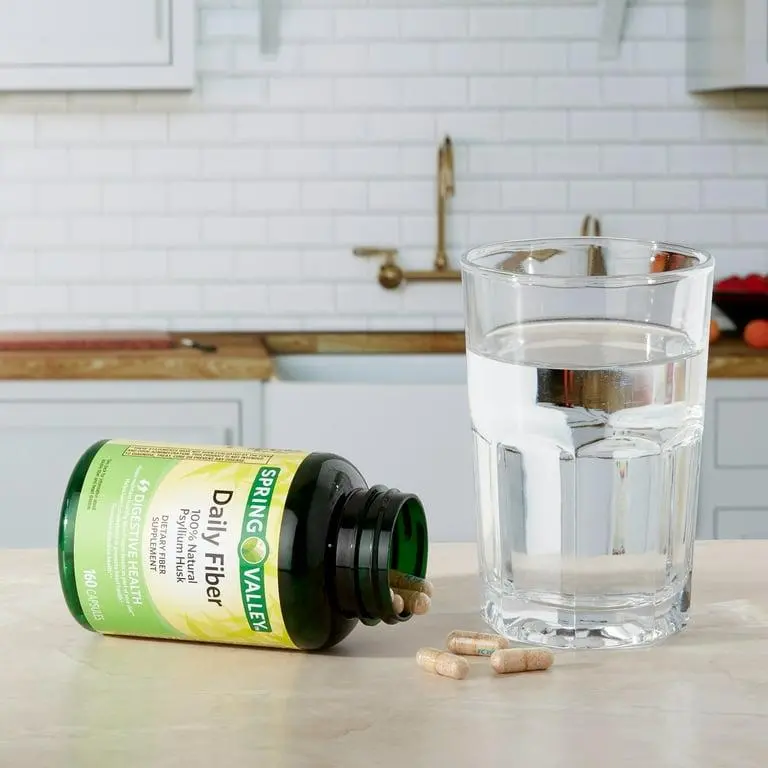
Most people who search for the best fiber pills are trying to solve one of three problems: irregular bowel movements, bloating and digestive discomfort, or simply not getting enough fiber from food. Capsules are the obvious answer because they’re easy to swallow, don’t need mixing, and don’t leave you with the gritty texture of powders.
Quick answer: There isn’t one universal “best” fiber pill, because different fibers do different jobs. Psyllium husk capsules are generally the strongest all-around choice for regularity and cholesterol support. Methylcellulose capsules are the gentlest option and cause the least gas. Glucomannan capsules are the most researched for appetite control and weight management. Wheat dextrin and calcium polycarbophil sit in between. The right choice depends on whether your main goal is regularity, gut comfort, or appetite control — not on which bottle has the flashiest label.
This guide walks through exactly how to make that decision, without the guesswork.
Table of Contents
What Fiber Pills Actually Are
Fiber pills are capsules or tablets that contain a concentrated dose of dietary fiber, usually somewhere between 400 mg and 700 mg of fiber per capsule. Because that’s a small amount compared to a spoonful of powder, most fiber capsule products require you to take several capsules per serving to reach a meaningful dose — often 4 to 6 capsules at once.
That single fact is the biggest thing competitors gloss over: capsules are convenient, but they are rarely the most efficient way to hit your daily fiber target. A single dose of fiber powder can deliver in one scoop what would take a handful of pills to match. Capsules make the most sense as a top-up to your diet, not as a replacement for fiber-rich food.
How Fiber Pills Work in the Body
Fiber isn’t digested the way protein, fat, or carbohydrates are. It passes through the small intestine largely intact and reaches the colon, where it does one of two things depending on its type:
- Soluble fiber dissolves in water and forms a gel-like substance. This gel slows digestion, helps soften stool, and can bind to cholesterol particles in the gut, which is why soluble fibers like psyllium are linked to modest reductions in LDL cholesterol.
- Insoluble fiber does not dissolve. It adds physical bulk to stool and speeds up how quickly waste moves through the intestines, which is helpful for constipation.
Many fiber pills contain a blend of both, though most single-ingredient capsules lean heavily toward one type. Knowing which type you’re taking matters more than the brand name on the label.
Types of Fiber Found in Capsules
Psyllium Husk
Psyllium is the fiber most commonly recommended by gastroenterologists. It’s mostly soluble fiber, absorbs a large amount of water, and forms a soft, bulky stool. It has the largest body of clinical research behind it for both constipation relief and mild cholesterol reduction. The tradeoff: because psyllium capsules are less concentrated than the powder form, you typically need more capsules to get an effective dose, and it’s important to drink enough water with it.
Methylcellulose
Methylcellulose is a semi-synthetic soluble fiber that is not fermented by gut bacteria. That’s actually its main selling point — it produces far less gas and bloating than most other fibers, making it a good starting point for people with sensitive digestion or a history of bloating on other fiber products.
Wheat Dextrin
Wheat dextrin is a soluble fiber derived from wheat starch. It’s nearly tasteless in powder form and is also sold in capsules, though it’s fermented by gut bacteria, so some people experience gas, especially when starting out.
Glucomannan
Glucomannan, derived from the konjac root, is one of the most viscous fibers available — it can absorb many times its weight in water. This property is why it’s the fiber most studied for appetite control and modest weight management support. It requires adequate hydration, since taking it with too little water has, in rare cases, been linked to throat or esophageal blockage. This is one of the few fiber types where the capsule form itself carries a specific safety note worth taking seriously.
Calcium Polycarbophil
This is a synthetic fiber that absorbs water and forms a gel similar to psyllium, but it does not ferment in the gut, so gas is less of an issue. It’s less common than psyllium or methylcellulose but is sometimes recommended for people who need a fiber source with a more predictable, low-fermentation profile.
Inulin and Chicory Root Fiber
Inulin is a prebiotic fiber, meaning its main benefit is feeding beneficial gut bacteria rather than adding bulk. It’s highly fermentable, which makes it one of the more likely fibers to cause bloating and gas in capsule form, especially at higher doses. It’s a reasonable choice if your goal is gut microbiome support rather than bulk-forming regularity.
Comparison Table: Fiber Pill Types at a Glance
| Fiber Type | Soluble or Insoluble | Best For | Gas/Bloating Risk | Capsules Needed for Effective Dose |
| Psyllium husk | Mostly soluble | Regularity, cholesterol support | Low–moderate | High (5–8 typical) |
| Methylcellulose | Soluble | Sensitive stomachs, low gas | Low | Moderate–high |
| Wheat dextrin | Soluble | General fiber top-up | Moderate | Moderate |
| Glucomannan | Soluble (very viscous) | Appetite control, weight management support | Moderate | Moderate |
| Calcium polycarbophil | Soluble | Predictable bulking, low fermentation | Low | Moderate |
| Inulin/chicory root | Soluble (prebiotic) | Gut microbiome support | Moderate–high | Low–moderate |
How to Actually Choose the Best Fiber Pills for You
Instead of chasing a “best overall” product, work through these questions:
1. What’s your main goal?
- Constipation or irregularity → psyllium husk or calcium polycarbophil
- Sensitive gut, prone to bloating → methylcellulose
- Appetite control or weight management support → glucomannan
- General gut health / feeding good bacteria → inulin, in small doses
2. How many pills are you realistically willing to take? If a product requires 8 capsules per serving to hit an effective 5-gram fiber dose, be honest about whether you’ll actually take that many, every day. If not, a powder may serve you better, even if capsules feel more convenient on paper.
3. Do you already deal with gas or bloating easily? If yes, start with methylcellulose or a low dose of psyllium, and increase slowly. Jumping straight into a high-fermentation fiber like inulin is one of the most common reasons people quit fiber supplements within the first week.
4. Are you drinking enough water? This matters more with fiber pills than with powder, because it’s easy to swallow a handful of capsules with a small sip of water. Every fiber type listed above needs adequate fluid intake to work properly and safely, especially glucomannan.
Pros and Cons of Fiber Pills vs. Fiber Powder
| Fiber Pills | Fiber Powder | |
| Convenience | Easy to carry, no mixing | Needs water or food to mix into |
| Taste | No taste | Some products have texture/taste |
| Dose per serving | Lower, needs more units | Higher, fewer servings needed |
| Cost per effective dose | Usually higher | Usually lower |
| Best for | Travel, on-the-go use | Daily consistent fiber intake |
Common Mistakes People Make With Fiber Pills
- Not drinking enough water. Fiber pulls water into the gut. Without enough fluid, it can worsen constipation rather than relieve it.
- Starting at a high dose immediately. Sudden increases in fiber intake are the leading cause of bloating and cramping. Increase gradually over one to two weeks.
- Assuming more pills always means better results. Past a certain point, additional fiber without adequate water or activity doesn’t add benefit and can add discomfort.
- Ignoring medication timing. Fiber can affect how well certain medications are absorbed. As a general rule, taking fiber supplements at least two hours apart from other medications is a reasonable precaution, though you should confirm this with a pharmacist for your specific prescriptions.
- Expecting overnight results. Most people notice a difference in regularity within a few days to two weeks of consistent use, not the first day.
Who Should Be Cautious With Fiber Pills
Fiber supplements are generally well tolerated, but a few situations call for extra caution:
- People with swallowing difficulties or a history of esophageal narrowing, since capsule fiber (especially glucomannan) can expand before fully passing
- People with a bowel obstruction or a history of intestinal strictures
- Anyone on regular prescription medication, due to possible interactions with absorption
- People who are pregnant or breastfeeding, who should check with a healthcare provider before starting any new supplement
This is general educational information, not medical advice. Anyone with an existing digestive condition or who is taking prescription medication should talk to a doctor or pharmacist before starting a fiber supplement.
Frequently Asked Questions
Are fiber pills as effective as fiber powder? Gram for gram, the fiber itself works the same way regardless of the form. The practical difference is dose: powders typically deliver more fiber per serving, while pills require more units to reach the same amount.
How long do fiber pills take to work? Most people notice improved regularity within a few days to two weeks of consistent daily use. Effects on cholesterol, where applicable, generally take longer — often several weeks of steady use.
Can I take fiber pills every day? Yes, for most healthy adults, daily use is considered safe and is how these supplements are designed to be used. The key is starting at a low dose and increasing gradually.
Do fiber pills cause bloating? They can, particularly with highly fermentable fibers like inulin or wheat dextrin, especially when starting at too high a dose. Methylcellulose is the option least likely to cause gas.
What’s the best fiber pill for constipation specifically? Psyllium husk has the strongest evidence base for constipation relief among fiber capsule options, followed by calcium polycarbophil for those who want a lower-fermentation alternative.
Is it better to take fiber pills in the morning or at night? There’s no strong evidence that timing changes effectiveness. Consistency matters more than the specific time of day — pick a time you’ll actually remember daily.
Final Verdict
If you want a single starting point: psyllium husk capsules are the most well-rounded choice for most people, backed by the deepest research and useful for both regularity and modest cholesterol support. If bloating has been a problem for you with other fiber products, start with methylcellulose instead. If appetite control is your specific goal, glucomannan is the more targeted option.
The bigger point is this: the “best” fiber pill isn’t a specific brand — it’s the fiber type that matches your goal, taken consistently, with enough water, at a dose you actually stick with.
For more specific guidance, you may also want to explore our comparisons on the best fiber supplement overall, the best fiber supplement for women, options for constipation, and choices for weight loss. If you’re open to alternatives to capsules, our guides on the best soluble fiber supplement and best fiber powder cover higher-dose options worth comparing.