
Most people don’t need convincing that fiber matters. What trips people up is the shelf itself — psyllium, methylcellulose, inulin, wheat dextrin, acacia, glucomannan, all promising the same thing in different packaging. Pick the wrong one and you get bloating instead of relief. Pick the right one and it quietly becomes one of the most useful things you take all day.
Quick answer: There is no single “best” daily fiber supplement that works for everyone, because different fibers do different jobs. For general, everyday fiber support and the strongest research base, psyllium husk is the most well-rounded choice for most adults. If psyllium causes too much gas, methylcellulose (non-fermentable, gentler) or wheat dextrin are good alternatives. The right pick ultimately depends on your specific goal — regularity, cholesterol, blood sugar, or general gut health — and how your gut tolerates fermentable fibers.
This guide walks through exactly how to figure out which one is right for you, without the guesswork.
Table of Contents
Why “Best” Depends on the Person, Not the Product
A lot of buying guides rank fiber supplements like they rank blenders — by star rating and price. That approach doesn’t really work here, because fiber supplements aren’t interchangeable. They’re different molecules that behave differently once they hit your gut.
The honest starting point is this: the best daily fiber supplement is the one that matches three things —
- Your goal (regularity, cholesterol, blood sugar, weight management, or simply closing a daily fiber gap)
- Your gut’s tolerance (how well you handle fermentable, gas-producing fibers)
- Your consistency (a supplement you’ll actually take every day beats a “perfect” one you abandon after a week)
Everything below is built around helping you answer those three questions for yourself.
Why Most People Fall Short on Fiber in the First Place
<cite index=”15-1″>Dietary guidelines recommend consuming between 22 and 34 grams of fiber a day, depending on age and sex.</cite> Yet <cite index=”15-1″>only about 5% of American adults actually hit that target, with the average person getting closer to 16 grams a day</cite> — roughly half of what’s recommended.
That gap is usually a food problem, not a willpower problem. Whole grains, legumes, vegetables and fruit have quietly disappeared from a lot of daily meals, replaced with refined, low-fiber convenience foods. <cite index=”2-1″>Fiber supplements can’t fully replace fiber-rich foods, since supplements don’t carry the vitamins, minerals and other nutrients that whole foods provide.</cite> But as a way to close the gap between what you eat and what your body needs, they’re genuinely useful.
Internal resource: if constipation is your main concern rather than general maintenance, our dedicated guide on the best fiber supplement for constipation goes deeper into dosing for that specific issue.
Soluble vs. Insoluble Fiber: The Distinction That Actually Matters
Nearly every fiber supplement decision comes down to this one distinction.
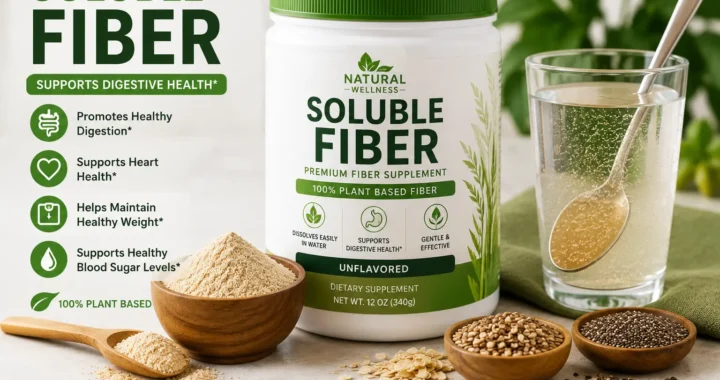
Soluble fiber dissolves in water and forms a gel-like substance in your gut. It slows digestion, helps regulate blood sugar, and can lower cholesterol. Most fiber supplements — psyllium, methylcellulose, inulin, wheat dextrin — are primarily or entirely soluble fiber.
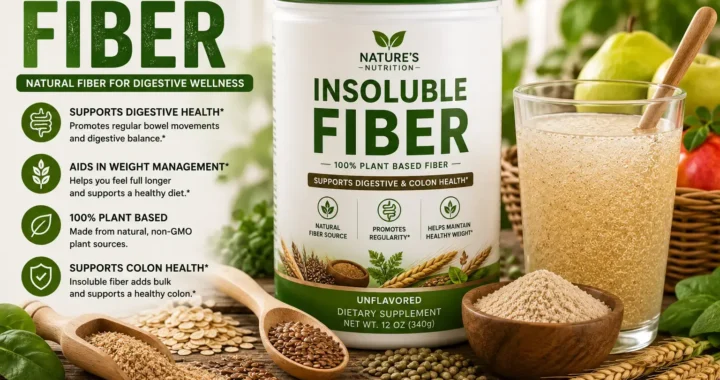
Insoluble fiber doesn’t dissolve. It adds bulk to stool and helps material move through the intestines more quickly. It’s found mostly in whole foods like wheat bran, vegetable skins, and whole grains, and it’s less common as a standalone supplement.
Some fibers, like psyllium, contain both — which is part of why it’s such a versatile everyday option.
Comparing the Main Types of Daily Fiber Supplements
Here’s where competitor articles tend to stop at “here are 5 products.” What actually helps is understanding what’s in those products, because the ingredient — not the brand — determines how it will behave in your body.
| Fiber Type | Soluble/Insoluble | Fermentable? | Best For | Common Side Effect |
| Psyllium husk | Both (mostly soluble) | Partially | General daily use, regularity, cholesterol | Mild bloating if increased too fast |
| Methylcellulose | 100% soluble | No (non-fermentable) | Sensitive stomachs, minimal gas | Rarely causes bloating |
| Wheat dextrin | Soluble | Yes | Mixing into drinks/food, mild taste | Gas in sensitive individuals; contains trace wheat |
| Inulin (chicory root) | Soluble | Highly fermentable | Prebiotic/gut bacteria support | Gas and bloating are common |
| Acacia fiber | Soluble | Slowly fermentable | Gentle daily option, low gas | Generally well tolerated |
| Calcium polycarbophil | Soluble | No | Diarrhea-predominant symptoms | Rare bloating |
| Glucomannan | Soluble | Highly fermentable | Appetite/fullness, weight goals | Bloating; needs lots of water |
<cite index=”3-1″>Psyllium, methylcellulose and calcium polycarbophil are among the fiber supplements healthcare professionals commonly recommend when diet alone doesn’t provide enough fiber.</cite>
Internal resource: if you specifically want a fermentable, gut-bacteria-focused option, see our breakdown of the best soluble fiber supplement options and how they compare on gas and bloating.
Psyllium Husk: The Most Well-Rounded Everyday Pick
If you want one fiber that covers the most ground for the average adult, psyllium is usually it. <cite index=”4-1″>Psyllium contains roughly 70% soluble fiber and 30% insoluble fiber</cite>, which is why it manages to do two things other single-type fibers can’t: it gels and softens stool while also adding bulk that keeps things moving.
It also has one of the deeper research trails of any fiber supplement. In a clinical trial of IBS patients, <cite index=”6-1″>10 grams of psyllium daily reduced perceived abdominal pain by 90 points, meaningfully more than bran or a placebo</cite>. It’s also one of the few fibers with decent evidence for modestly lowering LDL cholesterol when taken consistently.
The tradeoff: because part of it ferments in the colon, some people notice gas, especially in the first week or two. Starting with a small dose and increasing gradually — with plenty of water — usually resolves this.
Internal resources: for product-level picks, see our dedicated guides on the best fiber powder, best fiber pills, and best fiber gummies, depending on which format you’d actually stick with daily.
Methylcellulose: The Low-Gas Alternative
If psyllium leaves you gassy or bloated, methylcellulose is the next thing worth trying. <cite index=”9-1″>Because it’s non-fermentable, it passes through the gut without being broken down by bacteria, which is why it rarely causes the bloating associated with fermentable fibers</cite> like inulin.
It’s a reasonable trade: you generally lose some of the cholesterol-lowering research strength that psyllium has, but you gain predictability and comfort — which, for a daily supplement, is often the deciding factor. A fiber you tolerate well and take consistently beats a “stronger” one you quit after three uncomfortable days.
Inulin and Other Prebiotic Fibers: Good for Gut Bacteria, Not Always Good for Comfort
Inulin shows up in a lot of “everyday fiber” products because it’s cheap, nearly tasteless, and mixes invisibly into drinks and bars. <cite index=”6-1″>As a prebiotic, it’s especially good for feeding beneficial gut bacteria and may support blood sugar and liver-related markers</cite>.
The catch is fermentation. Because gut bacteria break it down almost completely, inulin is one of the more gas-producing fibers on this list. If your goal is specifically gut microbiome support and your digestive system tolerates fermentable fibers well, it’s a solid pick. If your priority is comfortable, predictable regularity, it’s usually not the best starting point.
A Decision Framework: Match the Fiber to Your Goal
Instead of ranking products, use this framework to identify the fiber type that fits your situation — then choose any reputable brand of that type.
If your main goal is general daily maintenance and you have no known sensitivities: → Start with psyllium husk. It’s the most balanced, best-researched everyday option.
If you’ve tried fiber before and got bloated or gassy: → Try methylcellulose or acacia fiber. Both are gentler on a sensitive gut.
If you want to support gut bacteria specifically (not just regularity): → Inulin or partially hydrolyzed guar gum (PHGG) are the more prebiotic-focused choices.
If you have loose stools or diarrhea-predominant symptoms rather than constipation: → <cite index=”7-1″>Non-fermentable options like methylcellulose or wheat dextrin, or calcium polycarbophil, tend to work better than highly fermentable fibers</cite>.
If you’re mixing fiber into food or drinks and want it to be undetectable: → Wheat dextrin dissolves clear and is nearly tasteless, making it easy to add to coffee, water, or soup.
Internal resources: your goal may point you to a more specific guide — see best fiber supplement for women, best fiber supplement for weight loss, or best natural fiber supplement if you’d prefer a whole-food-derived option over a synthetic one.
How Much Fiber Supplement Should You Actually Take Each Day?
This is the part most buying guides skip, and it matters more than which brand you buy.
<cite index=”12-1″>Most fiber supplements provide about 5 grams of fiber per serving, and higher-dose products can cover 50% or more of your daily fiber needs in a single serving.</cite> Rather than jumping straight to a full dose, the safer approach — and the one that avoids most of the bloating complaints you’ll read in reviews — is to build up gradually:
- Start small. Begin with roughly half the label’s suggested serving for the first few days.
- Increase slowly. Add fiber gradually over 1–2 weeks rather than jumping to a full dose immediately.
- Drink enough water. Fiber needs fluid to work properly — without it, some fibers can actually worsen constipation instead of relieving it.
- Watch timing relative to meals or medication. Some fibers, especially psyllium, are recommended before meals for cholesterol or blood sugar benefits; check the specific product’s instructions.
<cite index=”2-1″>Fiber supplements can cause bloating and gas, particularly at first — this is normal for many people and typically settles as the gut adjusts.</cite> If discomfort is severe or persistent, that’s usually a sign to switch fiber type rather than push through it.
Common Mistakes People Make With Daily Fiber Supplements
- Jumping straight to a full dose. This is the single biggest cause of first-week bloating complaints.
- Not drinking enough water. Soluble fibers absorb liquid; without enough, they can become thick and harder to pass rather than easier.
- Assuming all fiber supplements do the same thing. Someone taking inulin expecting psyllium-like bulk and regularity will likely be disappointed — and vice versa.
- Giving up after one bad experience. A poor reaction to one fiber type (often a fermentable one like inulin) doesn’t mean fiber supplements in general are a bad fit — it usually just means the wrong type was tried first.
- Taking fiber supplements at the same time as certain medications. Fiber can affect how some medications are absorbed; spacing doses by a couple of hours is a common, sensible precaution — but check with a pharmacist or healthcare provider about your specific medications.
Who Should Talk to a Healthcare Provider First
Fiber supplements are broadly well tolerated, but they’re not risk-free for everyone. <cite index=”2-1″>People with a history of a blocked bowel or Crohn’s disease should talk to a member of their healthcare team before starting a fiber supplement.</cite> The same caution applies if you have swallowing difficulties, a diagnosed motility disorder, or you’re on medications where timing and absorption matter.
This article is educational and isn’t a substitute for personalized medical advice — if you have an existing digestive condition, checking with a doctor or dietitian before adding a daily fiber supplement is the safer move.
Frequently Asked Questions
Is it safe to take a fiber supplement every single day? <cite index=”2-1″>Taking fiber supplements every day appears to be safe for most people.</cite> It’s still worth introducing them gradually and staying well hydrated.
What’s the difference between “daily fiber” and “everyday fiber” products? There’s no regulated definition — these terms are generally marketing language for supplements designed for consistent, ongoing use rather than occasional, short-term constipation relief. The ingredient inside (psyllium, methylcellulose, etc.) matters far more than the “daily” label on the front.
Can I get too much fiber from a supplement? Yes. Adding too much too quickly is the most common cause of bloating, gas, and cramping. Gradual increases and adequate water intake largely prevent this.
Do fiber supplements help with weight management? Some research suggests fiber can support fullness and modestly reduce calorie intake, largely by slowing digestion, but a fiber supplement works best alongside — not instead of — an overall balanced diet.
Is powder, capsule, or gummy better? There’s no meaningful nutritional difference — the deciding factor is which format you’ll actually take consistently. Powders typically deliver more fiber per serving; capsules are convenient but may require several to match one powder dose; gummies are easy to take but often contain less fiber per serving and some added sugar.
Should I take fiber in the morning or at night? Either can work. What matters more is consistency and pairing the dose with enough water — timing is a personal preference, not a strict requirement, unless a specific product’s label recommends otherwise.
Final Verdict
For most adults looking for a single, well-rounded, everyday fiber supplement, psyllium husk remains the strongest starting point — it combines soluble and insoluble fiber, has the deepest research base among common fiber supplements, and supports both regularity and cardiovascular markers.
If psyllium doesn’t agree with your gut, methylcellulose is the most reliable low-gas alternative, and wheat dextrin or acacia are worth trying if you want something that mixes invisibly into food or drinks.
The real “best” choice, though, isn’t a single product — it’s the fiber type that matches your goal and your gut’s tolerance, taken consistently, with enough water, at a dose you build up to gradually. Get those fundamentals right, and almost any reputable option in the right category will work well.
For a curated list of specific products across these fiber types, see our full best fiber supplement guide.