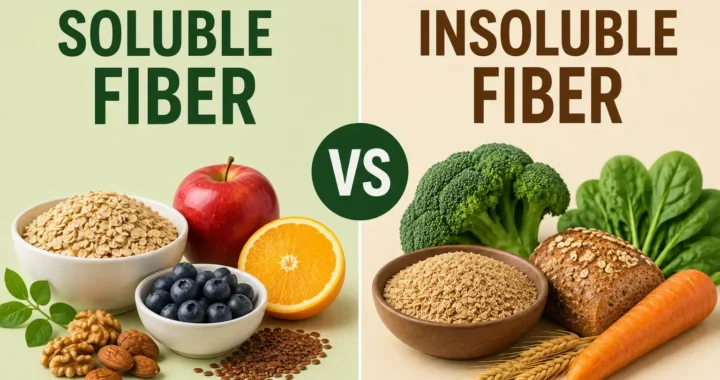

Women’s fiber needs don’t sit still. What works in your 20s can stop working once hormonal shifts from PCOS, pregnancy, or perimenopause start changing how your gut behaves. That’s the piece most “best fiber supplement” roundups skip — they treat fiber as one-size-fits-all, when in practice, the right choice depends heavily on what’s going on in your body at the time.
This guide is built specifically around that reality. It covers how to pick the best fiber supplement for women in general, then breaks down what changes if you’re managing PCOS, pregnancy, breastfeeding, or menopause — three life stages where fiber does measurably different work than a generic gut-health pitch suggests.
Table of Contents
Quick Answer: What Is the Best Fiber Supplement for Women?
For most women without a specific condition, psyllium husk is the best general-purpose fiber supplement. It has the strongest overall evidence base of any fiber type, supports regularity, cholesterol, and blood sugar control, and works well as a daily habit.
But three situations change that answer:
- If you’re managing PCOS, fiber does more than support digestion — low fiber intake is independently linked to worse insulin resistance and higher testosterone levels in women with PCOS, which makes consistent daily fiber (not just “some fiber”) more clinically relevant than for the general population.
- If you’re pregnant, a gentle, non-fermenting fiber like psyllium or methylcellulose is usually better tolerated than fermentable fibers, especially alongside iron supplementation, which is a well-documented cause of pregnancy constipation.
- If you’re in perimenopause or menopause, prebiotic soluble fibers — particularly inulin, FOS, and galactooligosaccharides (GOS) — have specific research behind them for calcium absorption and bone density support, on top of the usual regularity benefits.
The rest of this guide explains the reasoning behind each of these, plus how to choose between fiber types regardless of which stage applies to you.
Why Fiber Needs Differ for Women
Fiber recommendations are usually written as one universal number — around 25 grams a day for adult women, compared with 38 grams for men. But the type of fiber that helps most isn’t universal, because several things that are more common or more pronounced in women’s health directly interact with fiber:
- Hormonal fluctuations across the menstrual cycle affect gut motility, which is why bloating and constipation often cluster around certain cycle phases.
- Iron supplementation, common during reproductive years and pregnancy, is a well-established cause of constipation — and fiber type matters for managing it.
- Estrogen changes during perimenopause and menopause affect both gut motility and calcium regulation, two areas where specific fiber types have direct research support.
- PCOS is associated with measurably lower dietary fiber intake and a stronger link between fiber intake and insulin resistance than is typically seen in women without PCOS.
None of this means women need a “special” fiber gimmick. It means the decision-making framework should account for these factors instead of defaulting to whichever product has the most attractive packaging.
Fiber Supplement Types: How They Compare for Women’s Specific Needs
| Fiber Type | Best For | Why It Matters for Women | Caution |
| Psyllium husk | General regularity, cholesterol, blood sugar, pregnancy-safe bulking | Broadest evidence base; gentle enough to pair with iron supplements | Needs plenty of water to avoid worsening constipation |
| Inulin / FOS / GOS | Perimenopause and menopause, bone health support | Specific research links these prebiotic fibers to improved calcium absorption in postmenopausal women | Highly fermentable — can cause gas/bloating; avoid with IBS-C or SIBO |
| Partially hydrolyzed guar gum (PHGG) | PCOS-related digestive symptoms, IBS, cycle-related bloating | Low-FODMAP and gentle, useful if hormonal fluctuations already cause bloating | Fewer mainstream consumer brands |
| Acacia fiber | Sensitive stomachs, pregnancy, breastfeeding | Slow, gradual fermentation minimizes gas; commonly well-tolerated in pregnancy | Weaker cholesterol-lowering evidence than psyllium |
| Methylcellulose | Iron-supplement-related constipation, non-fermenting needs | Doesn’t ferment, so it won’t add to bloating already caused by iron or hormonal shifts | Less evidence for cholesterol/blood sugar benefits |
| Wheat bran / cellulose | Simple insoluble-fiber constipation | Straightforward bulking effect | Can worsen bloating in IBS or cycle-related sensitivity |
Choosing a Fiber Supplement by Life Stage
Fiber for PCOS
Women with PCOS tend to consume noticeably less dietary fiber than women without the condition, and lower fiber intake in this group is linked to greater insulin resistance, higher fasting insulin, and higher androgen markers. That doesn’t mean a fiber supplement treats PCOS — it doesn’t — but consistent fiber intake is one of the more evidence-supported dietary levers available for supporting insulin sensitivity alongside broader nutrition and medical care.
Practical approach: A soluble, gel-forming fiber like psyllium husk taken before meals is a reasonable starting point, since soluble fiber slows carbohydrate absorption and blunts post-meal blood sugar spikes. If bloating is already a issue — common in PCOS — PHGG is a gentler alternative worth trying first.
Fiber During Pregnancy and Breastfeeding
Constipation is extremely common during pregnancy, driven by hormonal changes and, in many cases, made worse by the high elemental iron content in prenatal supplements. Clinical research on prenatal formulations has found that lower iron doses and better iron/calcium separation meaningfully reduce constipation rates — which tells you fiber choice matters even more when you’re also managing a prenatal supplement.
Practical approach: Gentle, well-tolerated fibers — psyllium, acacia, or methylcellulose — are generally preferred over high-dose inulin during pregnancy, simply because excess gas and bloating are already common complaints and there’s no reason to add to them. Always check with your OB or midwife before starting any new supplement during pregnancy or while breastfeeding, since individual tolerance and medical history vary.
Fiber During Perimenopause and Menopause
This is the life stage with the most fiber-specific research behind it, and it’s the one most competitor articles underexplain. Two findings stand out:
- A clinical trial found that postmenopausal women who supplemented with galactooligosaccharides (a prebiotic fiber) saw a measurable increase in calcium absorption and improved bone-building markers within three months — relevant given how bone density changes after estrogen decline.
- A large population study of over 2,400 peri- and postmenopausal women found that those with the highest fiber intake had a notably lower likelihood of moderate-to-severe hot flashes compared with those eating the least fiber.
Neither finding means fiber supplements are a treatment for menopause symptoms or bone loss. But they do suggest that prebiotic, fermentable fibers — the same ones that can be too aggressive for an IBS-sensitive gut — carry specific upside for women in this life stage, provided they’re tolerated well.
Practical approach: If your gut tolerates fermentable fiber reasonably well, inulin, FOS, or GOS are worth prioritizing during perimenopause and beyond. If bloating is already a problem, start with a gentler fiber like psyllium or acacia and introduce prebiotic fiber gradually, in small amounts, rather than switching all at once.
How to Choose: A Quick Decision Framework
| If this describes you… | Start with… |
| No specific condition, just want general fiber support | Psyllium husk |
| PCOS with insulin resistance concerns | Psyllium husk or PHGG, taken before meals |
| Pregnant or breastfeeding, especially on iron supplements | Psyllium, acacia, or methylcellulose |
| Perimenopause or menopause, tolerates fermentable fiber well | Inulin, FOS, or GOS |
| Perimenopause or menopause with a sensitive gut | Start with acacia or PHGG, add prebiotic fiber slowly |
| Cycle-related bloating most weeks | PHGG or acacia over inulin |
| On iron or calcium supplements | Methylcellulose or psyllium; space fiber and minerals apart |
Common Mistakes Women Make With Fiber Supplements
- Increasing fiber and starting a new iron supplement at the same time. It’s hard to tell which one is causing bloating or constipation if you change both variables at once. Introduce one at a time when possible.
- Choosing inulin-based gummies during a high-bloat phase of the cycle or during perimenopause. Fermentable fiber can intensify bloating that’s already hormonally driven.
- Not adjusting fiber type across life stages. What worked in your 20s isn’t automatically what serves you best in perimenopause or during pregnancy.
- Skipping water intake. This applies to everyone, but it’s especially relevant for pregnant women, who have higher fluid needs generally.
- Assuming fiber supplements treat PCOS, menopause symptoms, or bone loss. The research shows a supportive association, not a cure. Fiber is one piece of a broader approach that should include medical guidance.
Frequently Asked Questions
What is the best daily fiber supplement for women? For most women without a specific condition, psyllium husk is the best daily option, given its broad evidence base for regularity, cholesterol, and blood sugar support. Women in perimenopause or menopause may get additional benefit from prebiotic fibers like inulin or GOS, provided they’re well tolerated.
Is fiber good for hormonal bloating? It depends on the fiber type. Gentle, low-fermentation fibers like PHGG and acacia are less likely to add to hormonal bloating, while highly fermentable fibers like inulin can make it worse in a sensitive gut.
Can fiber supplements help with menopause symptoms? Population research links higher fiber intake to a lower likelihood of moderate-to-severe hot flashes, and specific prebiotic fibers have been shown to improve calcium absorption in postmenopausal women. These are supportive associations, not guaranteed outcomes, and fiber shouldn’t be treated as a stand-alone menopause treatment.
Is it safe to take fiber supplements while pregnant? Generally yes, and fiber can help with pregnancy-related constipation, especially when taking iron supplements. Gentler fibers like psyllium, acacia, or methylcellulose are usually preferred over high-dose fermentable fibers. Always check with your OB or midwife before starting a new supplement during pregnancy.
Does fiber help with PCOS? Fiber isn’t a treatment for PCOS, but women with PCOS tend to eat less fiber than women without the condition, and lower fiber intake is linked to greater insulin resistance and higher androgen levels in this group. Consistent fiber intake, alongside medical care, is a reasonable and evidence-supported part of a broader approach.
What’s the difference between a regular fiber supplement and one marketed “for women”? In most cases, very little — the base fiber ingredients (psyllium, inulin, PHGG, acacia, methylcellulose) are the same regardless of who they’re marketed to. What actually matters is choosing the fiber type suited to your life stage and gut tolerance, not the label on the package.
Final Verdict
There’s no single fiber supplement that’s automatically “best for women” — but there is a clear, evidence-based way to choose one. Start with psyllium husk as a general default. Lean toward PHGG or acacia if your gut is sensitive or you’re managing PCOS-related bloating. Choose gentle, non-fermenting fibers during pregnancy, particularly alongside iron supplementation. And prioritize prebiotic fibers like inulin, FOS, or GOS during perimenopause and menopause, where the research on bone and symptom support is strongest — as long as your gut tolerates them.
Match the fiber to your life stage and your gut, start low, and increase gradually. For a full breakdown of every fiber type, dosing guidance, and format comparisons, see our complete guide to the best fiber supplement.
This article is for educational purposes and does not replace personalized medical advice. Speak with a healthcare provider before starting a new supplement, especially if you are pregnant, breastfeeding, managing PCOS, or taking regular medication.