
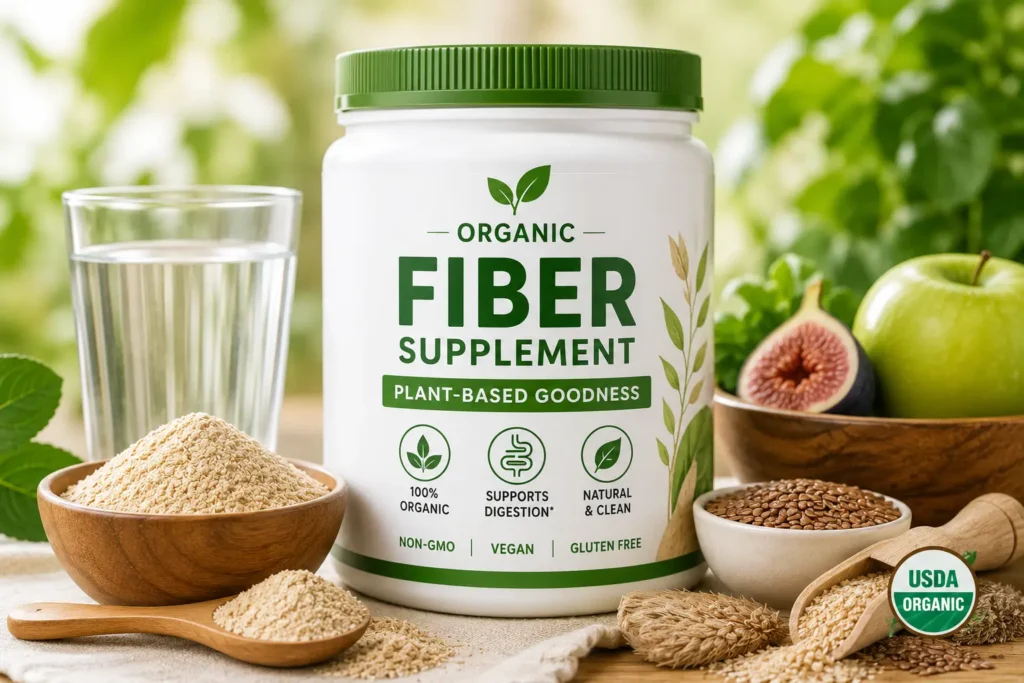
An organic fiber supplement is a fiber product made from plant sources grown without synthetic pesticides or fertilizers, certified under organic farming standards. It comes in two main forms — organic fiber pills (capsules or tablets) and organic fiber powder (mixed into water or food). Both can support regular digestion, feed beneficial gut bacteria, and help fill the gap between the fiber you eat and the fiber your body needs. The right choice depends on your goal, how easily you tolerate powders, and whether you want soluble fiber, insoluble fiber, or a blend of both.
If you’re short on time: powders (like organic psyllium husk) tend to work faster and are more flexible with dosing, while pills are more convenient for travel and consistency. Neither replaces a fiber-rich diet — they’re meant to supplement it.
Table of Contents
What Is an Organic Fiber Supplement?
Fiber supplements are concentrated sources of dietary fiber extracted from plants — think husks, seeds, roots, or fruit. An “organic” fiber supplement simply means the source crop was grown and processed under organic certification standards (in the US, this usually means USDA Organic), without synthetic pesticides, herbicides, or genetically modified ingredients.
This matters to a growing number of people who want to avoid pesticide residue, support more sustainable farming practices, or simply prefer products with fewer processing additives. It’s worth noting that “organic” refers to how the fiber was grown, not necessarily how effective it is — a non-organic psyllium husk supplement works through the same mechanism as an organic one. The organic label is about sourcing, not superior fiber function.
Common organic fiber sources used in supplements include:
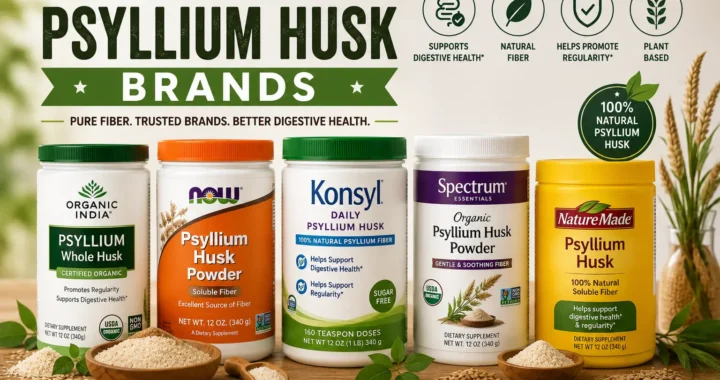
- Psyllium husk – from the Plantago ovata plant, mostly soluble fiber
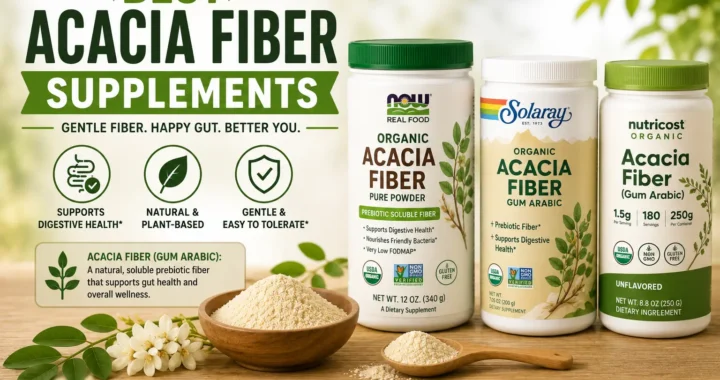
- Acacia fiber – a soluble, low-FODMAP fiber from acacia tree sap
- Chia seed – a mix of soluble and insoluble fiber
- Flaxseed – contains fiber plus lignans and omega-3s
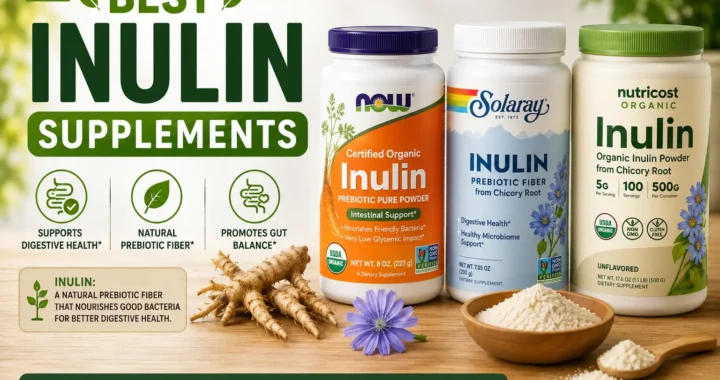
- Inulin/chicory root – a prebiotic soluble fiber
- Oat fiber and oat bran – mostly insoluble with some soluble fiber
If you want a deeper look at how fiber sources differ, our guides on soluble fiber, insoluble fiber, and soluble vs. insoluble fiber break this down in more detail.
Why People Choose Organic Fiber Supplements
Most adults don’t get enough fiber from food alone — average intake in the US sits well below the recommended 25–38 grams per day for most adults. A fiber supplement helps close that gap, and choosing an organic one adds a few specific considerations people care about:
- Fewer synthetic residues. Organic certification restricts synthetic pesticide and fertilizer use during cultivation.
- No GMO ingredients. Organic standards prohibit genetically modified crops.
- Cleaner ingredient philosophy. Organic brands are more likely to skip artificial sweeteners, dyes, and fillers, though this isn’t guaranteed — always check the label.
- Environmental preference. Some people choose organic to support regenerative or lower-impact farming.
None of this changes the core physiological role of fiber. Whether organic or conventional, fiber works the same way once it reaches your digestive system.
How Fiber Supplements Actually Work
Fiber isn’t digested and absorbed the way carbs, fats, or proteins are. Instead, it moves through your gut largely intact, and what it does depends on its type:
Soluble fiber dissolves in water and forms a gel-like substance. This slows digestion, helps regulate blood sugar response, and can help lower LDL cholesterol by binding to bile acids. Psyllium, acacia, and inulin fall into this category.
Insoluble fiber doesn’t dissolve. It adds bulk to stool and helps material move through the intestines more efficiently, which is why it’s commonly associated with easing constipation. Wheat bran and some vegetable fibers are mostly insoluble.
Many organic fiber supplements contain a blend of both, since they serve complementary roles: bulk plus gel-forming texture. If you’re trying to figure out exactly which type your body needs, our article on choosing a fiber supplement walks through the decision step by step.
Organic Fiber Pills vs. Organic Fiber Powder
This is the question most people actually land on this page to answer, and it deserves a direct, practical comparison rather than a vague “it depends.”
| Factor | Organic Fiber Pills | Organic Fiber Powder |
| Convenience | Very high — no mixing, easy to travel with | Requires mixing with water or food |
| Dosage flexibility | Fixed per capsule; harder to fine-tune | Easy to adjust gram by gram |
| Speed of effect | Slightly slower (must dissolve first) | Often faster, especially soluble fiber types |
| Taste/texture issues | None — no taste, no grit | Can feel gritty or thick if under-hydrated |
| Pill count needed | Often 4–8+ capsules for a meaningful dose | Usually 1–2 scoops covers the same amount |
| Best for | People who dislike mixing drinks or are frequently on the go | People who want higher doses or faster digestive effects |
| Hydration requirement | Still needs water, but less critical per dose | Must be taken with plenty of water to avoid discomfort |
A practical example: A typical psyllium husk dose is 5–10 grams. Getting that from capsules alone can mean swallowing 6–10 pills, since most capsules only hold 500–625 mg of fiber. A single rounded teaspoon of powder can deliver that same amount in one go. This is the single biggest practical trade-off between the two formats, and it’s something most articles gloss over.
If your priority is discretion and habit-stacking (like taking it with your morning vitamins), pills usually win. If your priority is hitting a specific daily gram target, powder wins. For more targeted breakdowns, see our guides on best fiber pills and best fiber powder.
Benefits of Organic Fiber Supplements
Based on current nutrition research, fiber supplementation is associated with the following benefits. These are general effects of fiber as a nutrient category — not guarantees, and results vary by individual, fiber type, and dose.
- Supports regular bowel movements by adding bulk or softening stool, depending on fiber type
- May help manage cholesterol, particularly with soluble fibers like psyllium, which have been studied for their cholesterol-lowering effect
- Feeds beneficial gut bacteria, especially prebiotic fibers like inulin and acacia
- May support satiety, helping some people manage appetite as part of a broader eating pattern
- May help moderate post-meal blood sugar spikes, primarily through soluble, gel-forming fibers
If you’re targeting a specific goal — like gut health, cholesterol management, or weight management — the right fiber type matters more than the “organic” label itself.
Who Organic Fiber Supplements Are Good For
Fiber supplements, organic or not, are commonly used by:
- People who don’t eat enough fruits, vegetables, or whole grains
- Those managing occasional constipation or irregularity
- People focused on gut microbiome health
- Anyone trying to avoid synthetic pesticide exposure through diet choices
- People with specific goals like blood sugar or cholesterol support (used alongside, not instead of, medical guidance)
Certain groups — including women, men, seniors, and people managing IBS — often have different tolerance levels and needs, so a one-size-fits-all recommendation rarely works well.
Common Mistakes People Make With Fiber Supplements
Most negative experiences with fiber supplements — bloating, gas, cramping — come down to a handful of avoidable mistakes:
- Increasing intake too fast. Jumping straight to a full dose overwhelms the gut. Start with half a serving and build up over 1–2 weeks.
- Not drinking enough water. Fiber, especially soluble fiber, needs water to work properly. Without it, you risk the opposite of the intended effect.
- Taking it at the wrong time relative to medication. Fiber can affect how some medications are absorbed. Space fiber supplements at least 1–2 hours away from prescription medication unless a doctor advises otherwise.
- Assuming more is always better. More fiber isn’t automatically better fiber. Excess intake can cause bloating and discomfort without added benefit.
- Ignoring fiber type mismatch. Someone dealing with constipation may need more insoluble fiber, while someone managing cholesterol may benefit more from soluble fiber. Using the wrong type for your goal limits results.
Organic Fiber Pills or Powder: Which Should You Choose?
Use this simple decision framework:
- Choose pills if: you travel often, dislike mixing drinks, or want a low-effort daily habit and don’t need a high fiber dose.
- Choose powder if: you want to reach a specific gram target, prefer faster-acting soluble fiber, or don’t mind mixing a drink once or twice a day.
- Choose a blend of both if: you take a low daily maintenance dose in pill form but add powder on days when your diet is lower in fiber.
There’s no universally “better” format — only a better fit for your routine and goals. If you’re still weighing your options across all fiber types (not just organic), our broader guide on natural fiber supplements and daily fiber supplements can help you compare further.
Organic Fiber Supplements vs. Getting Fiber From Food
Supplements are a tool, not a replacement for fiber-rich foods. Whole foods bring additional nutrients — vitamins, minerals, and polyphenols — that isolated fiber supplements don’t provide. A practical approach is to prioritize high-fiber foods first, and use a supplement to close the remaining gap, especially on lower-fiber days. Our comparison on fiber supplements vs. fiber foods covers this trade-off in more depth.
Potential Side Effects and Safety Notes
Fiber supplements are generally well tolerated, but side effects can include:
- Bloating or gas, especially when starting out
- Abdominal cramping if introduced too quickly
- Reduced absorption of certain medications if taken too close together
- Rare allergic reactions, particularly with psyllium in people with plant-based sensitivities
This article is for educational purposes and isn’t a substitute for personalized medical advice. If you have a digestive condition, take prescription medication, or are pregnant or nursing, talk to a healthcare provider before starting any fiber supplement.
Frequently Asked Questions
Is organic fiber powder better than regular fiber powder? Not functionally. Organic certification relates to how the crop was grown, not how effectively the fiber works in your body. Choose organic if avoiding synthetic pesticides and GMOs matters to you; choose based on fiber type and dose if effectiveness is your only concern.
How much organic fiber supplement should I take per day? This depends on your current fiber intake and the specific product, but many people start with 5 grams and gradually work up to 10–15 grams per day, alongside dietary fiber. Always follow the product label and increase gradually.
Can I take organic fiber pills and powder together? Yes, some people use a small pill dose for daily maintenance and add powder when their diet is lower in fiber that day. Just track your total daily fiber intake so you don’t overdo it.
Do organic fiber supplements cause weight loss? Fiber can support satiety and may help with appetite management as part of an overall eating pattern, but it isn’t a standalone weight-loss solution. Our guide on fiber and weight loss explains this relationship more accurately.
Are organic fiber supplements safe for daily long-term use? Fiber supplements are widely used long-term, particularly soluble fibers like psyllium. That said, it’s a good idea to periodically reassess your diet and check in with a healthcare provider, especially if you’re using it to manage a specific condition.
What’s the difference between psyllium and other organic fiber sources? Psyllium is one of the most researched fiber sources, known for its gel-forming, cholesterol-supportive properties. Other organic sources like acacia and inulin are gentler on digestion for some people but work slightly differently. Our dedicated guide on psyllium husk covers this in depth.
Final Verdict
An organic fiber supplement is a straightforward way to add more fiber to your diet while avoiding synthetic pesticide residues and GMO ingredients. Neither pills nor powder are universally “better” — pills win on convenience, powder wins on dosing flexibility and speed. What matters most is matching the fiber type (soluble, insoluble, or a blend) to your specific goal, starting with a low dose, and drinking enough water.
If you’re still narrowing down a specific product, browse our full breakdown of top-rated fiber supplements to compare options across type, format, and use case.