
Soluble fiber is a type of dietary fiber that dissolves in water and forms a thick gel inside your digestive tract. That gel slows digestion, softens stool, feeds beneficial gut bacteria, and helps regulate blood sugar and cholesterol levels. You’ll find it naturally in oats, beans, lentils, apples, citrus fruits, and psyllium husk, or you can get a concentrated dose from a soluble fiber supplement. Most adults fall short of their daily fiber target, so adding more soluble fiber — gradually and with enough water — is one of the simplest, evidence-backed ways to support digestion, heart health, and steady energy levels.
Table of Contents
What Is Soluble Fiber?
Fiber is the part of plant food your body can’t break down or absorb the way it does sugar, protein, or fat. Instead, it passes largely intact through your digestive system, and depending on its type, it behaves very differently once it gets there.
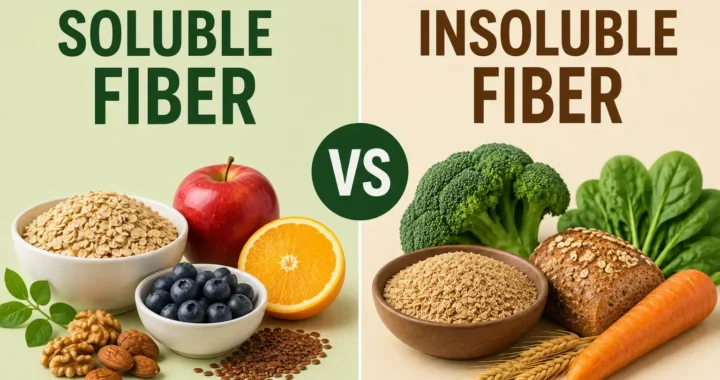
There are two main categories of dietary fiber: soluble and insoluble. <cite index=”11-1″>Soluble fiber attracts water and turns into a gel during digestion, which slows digestion down, while insoluble fiber adds bulk to stool and helps food move more quickly through the stomach and intestines.</cite>
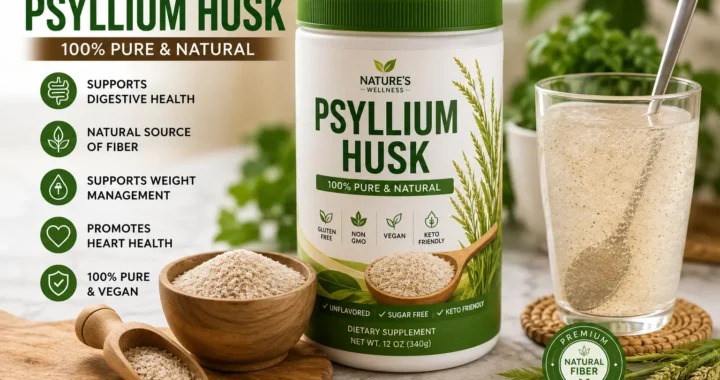
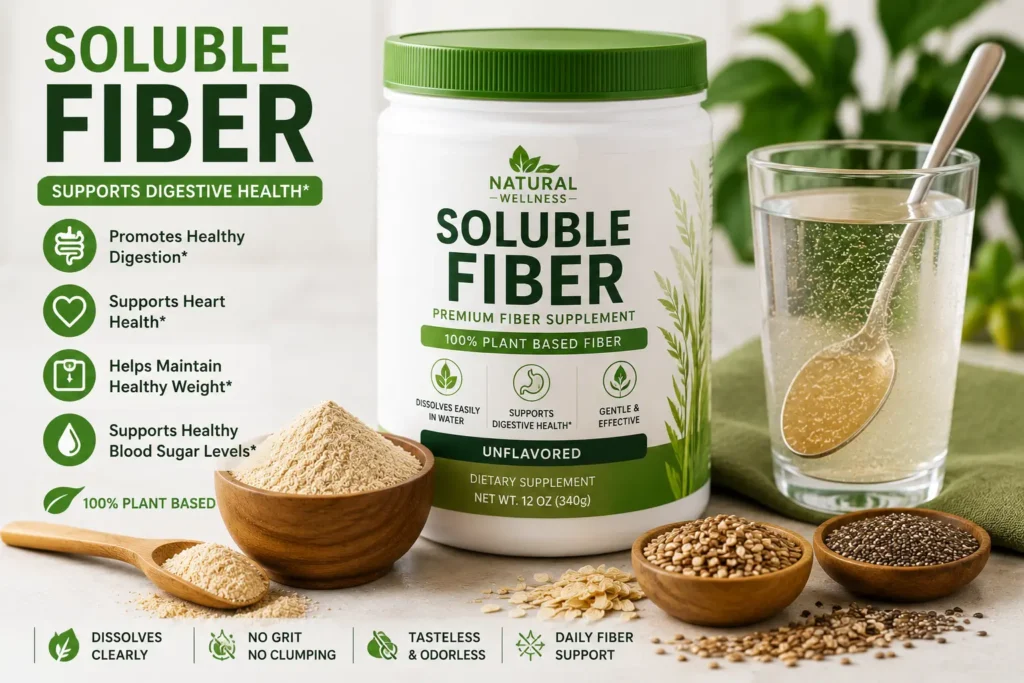
Picture what happens when you stir psyllium husk into a glass of water — within a minute or two, the liquid thickens into a gel. That’s essentially what soluble fiber does inside your stomach and small intestine. That gel-like texture is the reason soluble fiber has such a distinct effect on digestion, blood sugar, and cholesterol compared with its insoluble counterpart.
Most whole plant foods contain a mix of both fiber types, just in different proportions. Oats, for example, are known for soluble fiber, but they contain some insoluble fiber too. This is why eating a variety of whole foods — rather than fixating on one “best” source — is usually the smartest long-term strategy.
How Soluble Fiber Works in Your Body
Understanding the mechanism helps explain why soluble fiber has such wide-ranging effects:
- It dissolves and gels. As soluble fiber travels through your stomach and small intestine, it absorbs water and thickens into a viscous gel.
- It slows gastric emptying. Because the gel is thick, your stomach takes longer to empty its contents into the small intestine. This is a major reason soluble fiber helps you feel full longer.
- It slows sugar absorption. The gel coats and slows the breakdown of carbohydrates, which blunts how quickly glucose enters your bloodstream after a meal.
- It binds bile acids and cholesterol. Soluble fiber can bind to cholesterol-containing bile acids in the gut, carrying them out of the body instead of letting them be reabsorbed. Your liver then pulls more cholesterol out of your blood to make new bile acids, which can lower LDL (“bad”) cholesterol over time.
- It ferments in the colon. Unlike insoluble fiber, most soluble fiber is fermented by gut bacteria. This fermentation produces short-chain fatty acids (SCFAs) like butyrate, which nourish colon cells and support a healthy gut lining.
This combination — slower digestion, blunted blood sugar spikes, cholesterol binding, and bacterial fermentation — is what sets soluble fiber apart from insoluble fiber, which mainly works by adding bulk and speeding up transit time.
Soluble Fiber Benefits
1. Supports Healthier Blood Sugar Levels
<cite index=”2-1″>Foods that contain soluble fiber can slow down your body’s absorption of sugar, which helps you avoid sudden spikes in blood sugar</cite> after eating. Over time, this can help people manage existing blood sugar concerns and may lower the risk of developing type 2 diabetes. This is one of the most consistently supported soluble fiber benefits in nutrition research.
2. Helps Lower LDL Cholesterol
<cite index=”3-1″>Soluble fiber binds cholesterol so that instead of being absorbed by the body, it’s excreted</cite> instead. This cholesterol-lowering effect is well-documented enough that some soluble fibers, like psyllium and oat beta-glucan, carry FDA-recognized heart-health claims when eaten as part of a diet low in saturated fat.
3. Feeds Beneficial Gut Bacteria
Soluble fiber acts as a prebiotic. <cite index=”2-1″>It feeds the healthy bacteria in your gut and helps them multiply</cite>, which supports a more balanced gut microbiome. A healthier gut microbiome has been linked to lower inflammation throughout the body.
4. Increases Satiety and Supports Weight Management
Because the gel slows stomach emptying, <cite index=”3-1″>you wind up feeling fuller for longer</cite> after meals that contain soluble fiber. This can make it easier to manage portion sizes and reduce mindless snacking without any dramatic dietary overhaul.
5. Eases Both Constipation and Mild Diarrhea
This is one of soluble fiber’s more surprising qualities: it can help in both directions. <cite index=”7-1″>The same soluble fiber that helps constipation can also ease symptoms of mild to moderate diarrhea, because it absorbs water and helps form firmer stool</cite>. For constipation, the gel softens and adds moisture to stool; for loose stool, it absorbs excess water and slows transit slightly, firming things up.
6. May Support Colon and Heart Health Long-Term
<cite index=”5-1″>When gut bacteria ferment fiber, they produce short-chain fatty acids like butyrate, which have anti-cancer properties, including inhibiting the growth of cancerous cells</cite>. Meanwhile, <cite index=”5-1″>fiber helps lower LDL cholesterol and regulate blood pressure, supporting overall heart health</cite>. These effects are part of why major health organizations consistently recommend fiber-rich diets for long-term disease prevention — though it’s worth noting fiber works best as one piece of an overall healthy diet, not a stand-alone fix.
A note on evidence: Most of these benefits are supported by well-established research, particularly for blood sugar and cholesterol. Some claims — like specific cancer-prevention effects — are based on promising but still-developing evidence, and fiber should be viewed as a supportive habit rather than a treatment for any disease.
Soluble Fiber vs. Insoluble Fiber
| Feature | Soluble Fiber | Insoluble Fiber |
| Behavior in water | Dissolves, forms a gel | Does not dissolve |
| Main food sources | Oats, beans, lentils, apples, citrus, psyllium | Wheat bran, whole grains, nuts, vegetable skins |
| Effect on digestion | Slows digestion and gastric emptying | Speeds up transit, adds bulk |
| Effect on blood sugar | Slows sugar absorption | Minimal direct effect |
| Effect on cholesterol | Binds and helps remove cholesterol | Minimal direct effect |
| Effect on stool | Softens stool, can firm loose stool | Bulks stool, relieves constipation |
| Fermented by gut bacteria | Mostly yes | Mostly no |
| Best for | Blood sugar, cholesterol, satiety, gut bacteria | Regularity, bulk, transit speed |
You don’t need to choose one over the other. <cite index=”6-1″>Both types of fiber critically influence gut health</cite>, and the healthiest approach is getting a mix of both from a varied diet rather than optimizing for just one.
Best Soluble Fiber Foods
You don’t need supplements to get meaningful amounts of soluble fiber — many everyday foods are excellent sources. <cite index=”4-1″>Soluble fiber can be found in foods such as oats, beans, seeds, apples, carrots and psyllium husk</cite>.
Grains
- Oats and oat bran
- Barley
- Whole rye
Legumes
- Black beans
- Kidney beans
- Lentils
- Chickpeas
- Split peas
Fruits
- Apples (with skin)
- Pears
- Citrus fruits (oranges, grapefruit)
- Figs
- Prunes and dried plums
Vegetables
- Carrots
- Brussels sprouts
- Sweet potatoes
Seeds and Nuts
- Chia seeds
- Flaxseeds
- Psyllium husk
<cite index=”7-1″>Soluble fiber is particularly abundant in black beans, figs, apples, oatmeal, plums, prunes, chia and psyllium seeds, and blackberries.</cite> A simple, practical goal: try to include at least one soluble-fiber-rich food at two meals per day — oatmeal at breakfast and a bean-based side at dinner, for example — rather than trying to overhaul your entire diet at once.
How Much Fiber Do You Actually Need?
<cite index=”4-1″>Government health data shows more than 90 percent of women and 97 percent of men don’t meet the recommended daily intake for dietary fiber, which is 25 grams for women and 38 grams for men, with most people getting only around 15 grams a day.</cite> There’s no separate official target specifically for soluble fiber, but nutrition experts generally suggest aiming for roughly 5–10 grams of soluble fiber per day as part of your total fiber intake, since that’s the range shown to meaningfully affect cholesterol in clinical studies.
If you’re well below your fiber target now, don’t try to jump straight to 25–38 grams a day. A sudden increase — especially from concentrated sources like fiber supplements — commonly causes bloating and gas, because <cite index=”8-1″>fermenting bacteria produce gas as a byproduct when they digest fiber the body can’t break down on its own</cite>. Increasing fiber intake by about 5 grams a week, alongside adequate water intake, gives your gut bacteria time to adjust.
Soluble Fiber Supplements: What to Know
Food should be your primary fiber source, but a soluble fiber supplement can help you close the gap on days your diet falls short, or when you need a more concentrated, consistent dose for a specific goal like cholesterol management. <cite index=”6-1″>Fiber supplements can help with your daily intake, but they should not be your primary source of fiber.</cite>
Common Types of Soluble Fiber Supplements
- Psyllium husk — one of the most researched soluble fibers, commonly used for both regularity and cholesterol support. Available as powder, capsules, or husk.
- Inulin / chicory root fiber — a prebiotic fiber often added to fiber gummies and powders; can cause more gas in sensitive individuals.
- Methylcellulose — a semi-synthetic soluble fiber that ferments less than psyllium, often causing less gas.
- Wheat dextrin — a soluble fiber that dissolves clear in liquid, often used in flavorless powders.
- Acacia fiber — a gentle, well-tolerated soluble fiber, often used for sensitive digestive systems.
Fiber Supplement Format Comparison
| Format | Pros | Cons |
| Powder | Flexible dosing, mixes into drinks/food | Requires mixing, some have gritty texture |
| Capsules/Pills | Convenient, no taste, portable | Need multiple pills for an effective dose |
| Gummies | Palatable, easy for picky eaters | Often lower fiber per serving, added sugars |
How to Choose a Soluble Fiber Supplement
- Check the type of fiber, not just the brand name — psyllium and methylcellulose have more research behind them for cholesterol and regularity than some newer blends.
- Look at grams of fiber per serving, not total powder weight — some products pad servings with fillers.
- Start with a low dose and increase gradually over 1–2 weeks.
- Always take with enough water. Soluble fiber needs liquid to form its gel; taking it without enough water can worsen constipation rather than relieve it.
- Watch for added sugars, especially in gummies, which can offset some of the metabolic benefits you’re trying to get from fiber.
- Talk to a healthcare provider first if you take other medications — soluble fiber can slow the absorption of some oral medications, so timing them a few hours apart is often recommended.
Common Mistakes People Make With Soluble Fiber
- Increasing intake too fast. This is the number one cause of bloating, cramping, and gas complaints — not a food or supplement being “bad” for you.
- Not drinking enough water. Without adequate fluid, soluble fiber supplements (especially psyllium) can worsen constipation instead of relieving it.
- Relying only on supplements. Whole foods provide soluble fiber alongside vitamins, minerals, and antioxidants that supplements can’t fully replicate.
- Taking fiber supplements at the same time as medications. This can reduce how much medication your body absorbs; most experts suggest a 2–4 hour gap.
- Expecting overnight results. Cholesterol and blood sugar improvements from fiber typically show up over weeks of consistent intake, not days.
Who Should Be Cautious With Soluble Fiber
Most people tolerate soluble fiber well, but a few groups should introduce it carefully or check with a doctor first:
- People with a history of bowel obstruction or strictures
- People with swallowing difficulties (fiber supplements need to be taken with plenty of liquid)
- Anyone on medications with a narrow dosing window, since fiber can affect absorption timing
- People with significant, unexplained digestive symptoms — these should always be evaluated by a healthcare provider before self-treating with fiber
This article is educational and doesn’t replace personalized medical advice. If you have a diagnosed digestive or metabolic condition, it’s worth discussing your fiber goals with a doctor or registered dietitian.
Frequently Asked Questions
Is soluble fiber better than insoluble fiber? Neither is “better” — they do different jobs. Soluble fiber is more effective for blood sugar and cholesterol support, while insoluble fiber is more effective for bulking stool and speeding transit. Most healthy diets need both.
Can soluble fiber cause bloating or gas? Yes, especially when intake increases quickly. This happens because gut bacteria ferment soluble fiber, producing gas as a normal byproduct. Increasing intake gradually usually resolves this within a couple of weeks.
Does soluble fiber help you lose weight? It can support weight management indirectly by increasing fullness and slowing digestion, which may reduce overall calorie intake. It isn’t a stand-alone weight-loss solution, but it’s a useful supporting habit alongside a balanced diet.
What’s the best soluble fiber food for lowering cholesterol? Oats and psyllium husk have the strongest research behind them for LDL cholesterol reduction, largely due to their beta-glucan and psyllium gel content.
Can I get too much soluble fiber? Very high intakes, especially from supplements, can cause bloating, gas, or interfere with mineral and medication absorption. Sticking within general fiber guidelines (25–38 grams total fiber per day) while increasing gradually is the safest approach.
Is psyllium husk the same as soluble fiber? Psyllium husk is one specific source of soluble fiber, not a synonym for it. It happens to be one of the most concentrated and well-studied sources, which is why it appears so often in supplements.
Final Takeaway
Soluble fiber is one of the most well-supported, low-effort additions you can make to your diet. It dissolves into a gel that slows digestion, softens and firms stool depending on what your body needs, feeds beneficial gut bacteria, and helps manage both blood sugar and cholesterol. The most sustainable approach is building soluble fiber foods — oats, beans, apples, psyllium — into your regular meals, and using a soluble fiber supplement to fill gaps rather than replace real food. Increase slowly, drink enough water, and give your gut time to adjust, and soluble fiber can become one of the simplest, most consistent habits for long-term digestive and metabolic health.
Related reading: