
Most adults get less than half the fiber they need. National surveys consistently show the average intake sitting around 15 to 17 grams a day, while adult targets run from roughly 25 grams for women to 38 grams for men. That gap is why so many people start looking at a fiber powder — but the supplement aisle isn’t exactly beginner-friendly. Psyllium, inulin, methylcellulose, acacia, glucomannan, wheat dextrin — the labels blur together fast.
This guide breaks down what actually separates one fiber powder from another, so you can match the right type to your specific goal instead of guessing.
There’s no single “best fiber powder” for everyone, because different fibers do different jobs:
- Best all-around / most researched: Psyllium husk — effective for both regularity and cholesterol support
- Best for gut bacteria / prebiotic effect: Inulin or acacia fiber
- Best if you’re sensitive to bloating: Acacia fiber or partially hydrolyzed guar gum (PHGG)
- Best for appetite and fullness: Glucomannan
- Best flavorless, mixes-clear option: Wheat dextrin or acacia fiber
- Best for firming loose stools: Psyllium or methylcellulose
The right pick depends on why you’re supplementing in the first place — a question most buying guides skip over. We’ll walk through that decision process below.
Table of Contents
What Is Fiber Powder, Exactly?
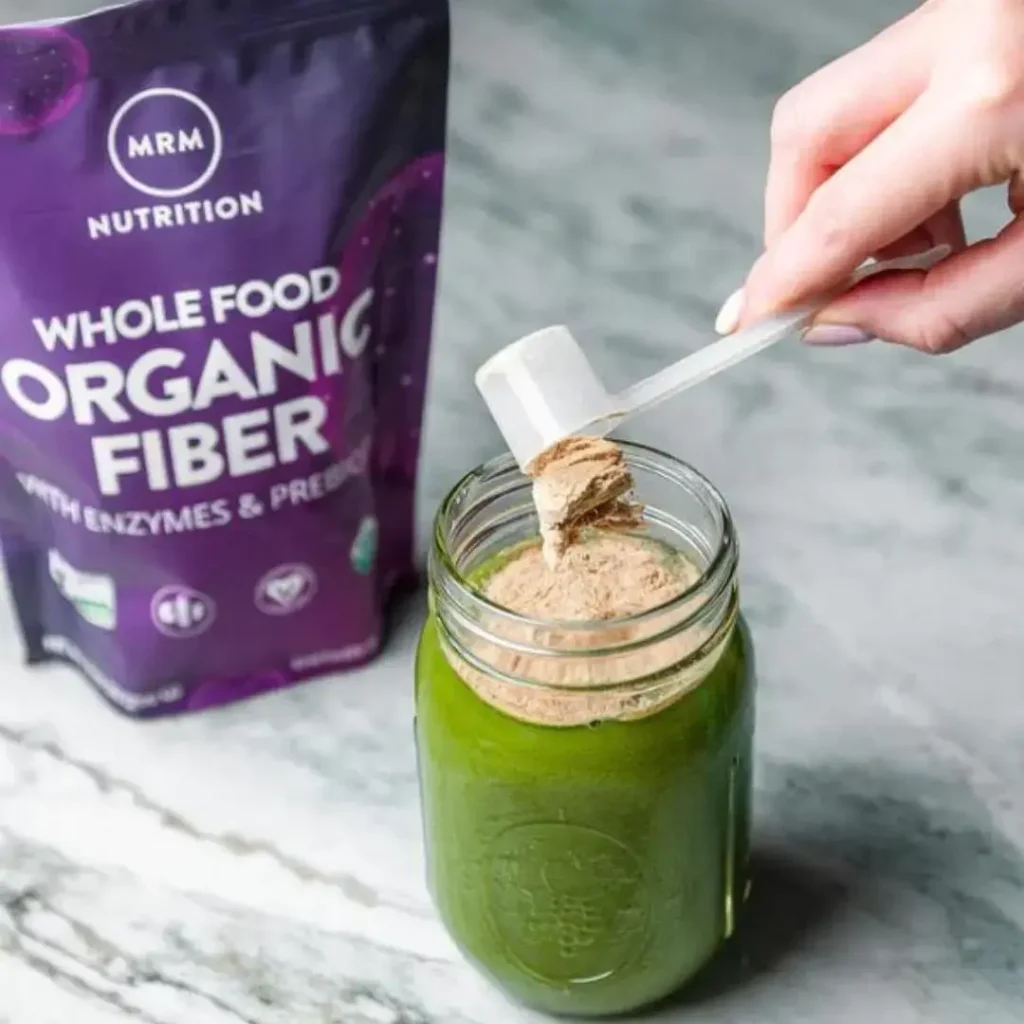
Fiber powder is a concentrated, isolated form of dietary fiber extracted from a plant source — husks, roots, seeds, or tree gum — and ground into a powder you mix into water, a smoothie, or food. It’s meant to supplement the fiber you’re already getting from food, not replace it.
Fiber itself is a type of carbohydrate that your digestive enzymes can’t break down. Instead of being absorbed like sugar or starch, it passes largely intact through your digestive tract, where it does two main jobs depending on the type:
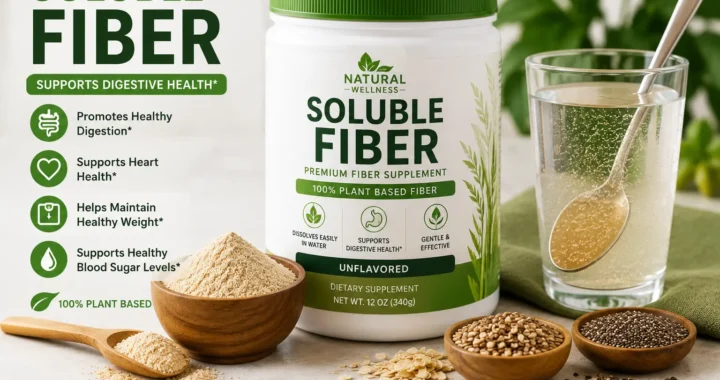
- Soluble fiber dissolves in water and forms a gel-like substance. It slows digestion, helps regulate blood sugar spikes, and can help lower LDL cholesterol.
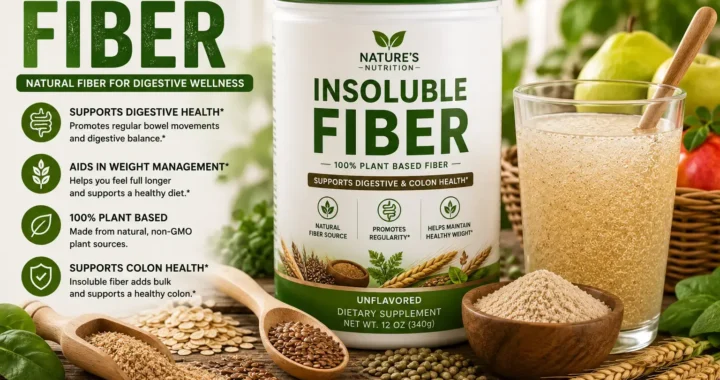
- Insoluble fiber doesn’t dissolve. It adds bulk to stool and helps move waste through the intestines more efficiently.
Most fiber powders lean heavily soluble, though a few (like wheat bran-based products) are mostly insoluble. Many whole foods contain a mix of both.
Why People Use Fiber Powder
The most common reasons people reach for a fiber supplement:
- Constipation or irregularity — adding bulk and moisture to stool
- Diarrhea or loose stools — certain soluble fibers absorb excess water and firm things up
- Cholesterol management — soluble fiber binds to cholesterol-containing bile acids in the gut
- Blood sugar support — slowing carbohydrate absorption after meals
- Appetite control — fiber that expands in the stomach can increase fullness
- Feeding gut bacteria — prebiotic fibers ferment in the colon and support a healthy microbiome
- Closing a dietary gap — a practical backup when whole-food fiber intake is inconsistent
It’s worth being direct about something most product pages gloss over: major health organizations, including Harvard Health and UCSF, note that fiber from whole foods is generally preferable to fiber from supplements, because whole foods also deliver vitamins, minerals, and a broader mix of fiber types. A fiber powder is best thought of as a bridge or a backup — not a replacement for vegetables, legumes, fruit, and whole grains.
The Main Types of Fiber Powder, Compared
This is the part most competitor articles either oversimplify or skip. Here’s how the major fiber types actually differ.
| Fiber Type | Soluble/Insoluble | Fermentable (Prebiotic) | Best For | Bloating Risk |
| Psyllium husk | Mostly soluble, some insoluble | Low-moderate | Regularity, cholesterol, general use | Low-moderate |
| Inulin (chicory root) | Soluble | High | Feeding gut bacteria | High |
| Acacia fiber | Soluble | Moderate | Sensitive stomachs, mixes clear | Low |
| Methylcellulose | Soluble (semi-synthetic) | None (not fermented) | Firming stool, minimal gas | Very low |
| Wheat dextrin | Soluble | Moderate | Flavorless daily use | Low-moderate |
| Glucomannan | Soluble, highly viscous | Moderate | Appetite/fullness | Moderate |
| Partially hydrolyzed guar gum (PHGG) | Soluble | Moderate | Sensitive guts needing prebiotic benefit | Low |
| Wheat bran | Mostly insoluble | Low | Adding bulk, insoluble-fiber gap | Low |
A few practical notes behind this table:
- Inulin and chicory root are popular in “gut health” marketing because they strongly feed beneficial bacteria, but that same fermentation is exactly why they cause more gas and bloating than other options, especially at higher doses.
- Methylcellulose isn’t fermented by gut bacteria at all, which is why it’s often recommended for people who get uncomfortable with fermentable fibers — the tradeoff is a smaller prebiotic benefit.
- Psyllium husk has the deepest body of clinical research behind it, particularly for cholesterol and regularity, which is why it appears as a top pick across most professional and consumer health sources.
How to Choose the Best Fiber Powder for You
Instead of asking “what’s the best fiber powder” in the abstract, ask what you’re actually trying to fix. This decision framework covers the scenarios competitor articles usually treat as an afterthought.
If your main issue is constipation: Look for psyllium husk or methylcellulose. Both add bulk and hold water in the stool, making it easier to pass. Start low and increase gradually — jumping straight to a full dose is the single most common cause of new-user bloating.
If your main issue is loose stools or urgency: Psyllium and methylcellulose can help here too, since they absorb excess liquid and firm up stool consistency. This is one of the lesser-known uses of fiber powder — it isn’t just for constipation.
If you’re trying to support cholesterol or blood sugar: Prioritize soluble fiber with strong research behind it — psyllium is the standard reference point, with oat beta-glucan as a food-based alternative.
If you’re sensitive to gas and bloating: Avoid high-inulin blends initially. Acacia fiber, PHGG, and methylcellulose tend to be gentler starting points.
If you want a flavorless powder that disappears into any drink: Wheat dextrin and acacia fiber dissolve clear and are largely tasteless, which matters if you’re mixing it into coffee, water, or a savory dish rather than a flavored smoothie.
If appetite control is the goal: Glucomannan expands significantly in the stomach when it absorbs water, which is why it’s the fiber most associated with fullness. It needs to be taken with plenty of water to work safely and comfortably.
If you’re building toward a full daily fiber target: Combination blends that pair a fermentable fiber (like inulin or acacia) with a bulking fiber (like psyllium) can cover more ground than a single-source powder, provided your gut tolerates the fermentable portion.
Pros and Cons of Fiber Powder
| Pros | Cons |
| Convenient way to close a fiber gap | Doesn’t replace the nutrients in whole foods |
| Can be dosed precisely | Can cause gas, bloating, or cramping, especially early on |
| Useful for both constipation and loose stools depending on type | Needs adequate water intake to work safely |
| Many options are unflavored and easy to mix in | Can interfere with absorption of some medications if taken too close together |
| Widely available and inexpensive per serving | Overuse can worsen bloating rather than help it |
Common Mistakes People Make With Fiber Powder
- Starting at a full serving on day one. Your gut microbiome needs time to adjust to more fermentable fiber. A gradual increase over one to two weeks — a few grams every few days — causes far less bloating than jumping straight to the label dose.
- Not drinking enough water. Soluble fibers absorb liquid and expand. Without enough fluid, some types (especially glucomannan and psyllium) can actually worsen constipation instead of relieving it.
- Taking it at the same time as medication. Fiber can bind to and slow the absorption of certain oral medications. A general rule is to separate fiber supplements from medications by at least two hours, but check with a pharmacist or doctor for anything time-sensitive.
- Assuming more fiber is automatically better. Past a certain point, extra fiber mostly adds gas and discomfort without adding much extra benefit. Matching intake to your actual target — rather than maximizing it — tends to work better long term.
- Using fiber powder as a stand-in for vegetables and whole grains. It can help close a temporary or ongoing gap, but whole foods still bring fiber diversity, plus vitamins and minerals a powder can’t replicate.
How to Take Fiber Powder Safely
- Start with a small dose (often 2–5 grams) and increase gradually over one to two weeks.
- Mix thoroughly with a full glass of water or liquid, and drink it promptly — some fibers thicken quickly.
- Increase your overall water intake as your fiber intake increases.
- Take it away from medications, generally with a two-hour buffer, unless a healthcare provider advises otherwise.
- Watch for excessive bloating, cramping, or a change in bowel habits that doesn’t improve after a couple of weeks, and speak with a healthcare professional if it persists.
This article is educational and doesn’t replace medical advice. If you have a diagnosed digestive condition, are pregnant, or take regular medication, it’s worth checking with a doctor or dietitian before starting any new fiber supplement.
Fiber Powder vs. Fiber From Food
Fiber powder and whole-food fiber aren’t direct competitors — they solve different problems.
- Whole foods (legumes, oats, fruits, vegetables) deliver a natural mix of soluble and insoluble fiber alongside vitamins, minerals, and other plant compounds. Most nutrition authorities recommend food as the primary source.
- Fiber powder offers precision and convenience. It’s easier to hit an exact gram target, and it’s useful on days when meals don’t naturally include much fiber.
A practical approach: build meals around fiber-rich whole foods first, then use a fiber powder to fill the remaining gap rather than as the main fiber source.
Frequently Asked Questions
What is the best fiber powder for daily use? For most people without a specific sensitivity, psyllium husk has the strongest and broadest research base, covering both regularity and cardiovascular markers. If bloating is a concern, acacia fiber or PHGG are gentler starting points.
Is inulin or psyllium better? They serve different purposes. Inulin more strongly feeds gut bacteria but tends to cause more gas. Psyllium is better documented for regularity and cholesterol support and is usually easier to tolerate. Some people use a smaller amount of each.
Can fiber powder help with weight management? Fiber that expands and slows digestion, like glucomannan or psyllium, can increase feelings of fullness, which may support eating less overall. It’s a supporting tool, not a standalone weight-loss method.
How long does it take for fiber powder to work? For regularity, many people notice a difference within a few days to two weeks of consistent use. Cholesterol and blood sugar effects generally take longer — several weeks of daily use — to show up in lab work.
Does fiber powder cause bloating? It can, especially fermentable types like inulin, and especially when started at a full dose right away. Starting low, increasing gradually, and drinking enough water significantly reduces this risk.
Can I take fiber powder every day? Yes, most fiber powders are designed for daily use, and consistency is what produces the regularity and cholesterol benefits people are looking for. Stick to the labeled serving unless a healthcare provider advises otherwise.
Is fiber powder as good as eating fiber-rich foods? Not entirely. Whole foods provide a broader mix of fiber types plus vitamins and minerals that an isolated fiber powder doesn’t contain. Fiber powder works best as a supplement to a fiber-rich diet, not a replacement for one.
Final Verdict
There isn’t one universal best fiber powder — there’s a best fiber powder for your specific situation. If you want the most well-rounded, well-researched option, psyllium husk is the safest starting point for most people. If your gut is sensitive, start with acacia fiber or PHGG instead. If appetite control is your priority, glucomannan is the type most associated with fullness. Whichever you choose, start low, build up gradually, drink enough water, and treat the powder as a supplement to a fiber-rich diet rather than a substitute for one.
For more specific guidance, see our breakdowns on the best fiber supplement, best fiber supplement for women, best fiber supplement for constipation, best fiber supplement for weight loss, and best soluble fiber supplement.