
If you live with irritable bowel syndrome (IBS), fiber is complicated. Too little, and constipation and bloating creep in. Too much of the wrong kind, and you can end up gassier and more uncomfortable than when you started. That’s why finding the best fiber supplement for IBS isn’t just about picking any product off a shelf — it’s about picking the right type of fiber for your specific gut.
Quick answer: For most people with IBS, a soluble, low-fermentation fiber like psyllium husk is the best place to start. It’s the fiber type with the strongest research behind it for IBS symptoms, it works for both IBS-C (constipation-predominant) and IBS-D (diarrhea-predominant), and it tends to cause less gas and bloating than fermentable fibers like inulin or wheat dextrin. This guide explains why, walks through every major fiber type, and gives you a practical framework for choosing and introducing a supplement without setting off a flare.
This article is educational only. It’s not a substitute for a diagnosis or treatment plan from your doctor or a registered dietitian, especially since IBS symptoms overlap with other conditions that need to be ruled out first.
Table of Contents
Why Fiber Choice Matters So Much More in IBS
In a healthy gut, most fiber types are handled the same way: broken down (fully or partially) by gut bacteria, or passed through mostly intact. In IBS, the gut is more reactive. Research points to visceral hypersensitivity (nerves in the gut that register normal digestion as pain or discomfort) and altered gut motility as core features of the condition.
This means the fermentability of a fiber matters as much as its type. Fibers that ferment quickly produce gas as a byproduct. In a typical gut, that gas passes without much notice. In an IBS gut, the same amount of gas can stretch the intestinal wall enough to trigger pain, bloating, and urgency. This is the single biggest reason generic “fiber supplements” backfire for people with IBS, and it’s also the piece of information most competitor articles gloss over.
Soluble vs. Insoluble Fiber: The Distinction That Actually Matters for IBS
- Soluble fiber dissolves in water and forms a gel-like substance in the gut. It softens stool when there’s constipation and adds bulk when there’s diarrhea, which is why it helps both ends of the IBS spectrum.
- Insoluble fiber doesn’t dissolve; it adds bulk and can speed up transit. In IBS, insoluble fiber (found in wheat bran, for example) is more likely to worsen bloating and cramping for some people, particularly with IBS-D.
For a deeper breakdown of how these two categories work, see our guide to soluble vs. insoluble fiber and our dedicated pages on soluble fiber and insoluble fiber.
But soluble vs. insoluble is only half the picture. The other half — the part most articles miss — is fermentability.
The Missing Piece: Fermentability
| Fiber type | Solubility | Fermentation rate | Typical IBS tolerance |
| Psyllium husk | Soluble | Low/moderate | Generally well tolerated |
| Methylcellulose | Soluble (semi-synthetic) | Not fermented | Generally well tolerated |
| Partially hydrolyzed guar gum (PHGG) | Soluble | Low | Often well tolerated |
| Wheat dextrin | Soluble | Moderate/high | Mixed — can cause gas in sensitive people |
| Inulin / chicory root | Soluble | High | Often poorly tolerated, common trigger |
| Acacia fiber | Soluble | Moderate | Mixed tolerance |
| Wheat bran | Insoluble | Low | Often worsens IBS-D symptoms |
Low-fermentation soluble fibers (psyllium, methylcellulose, PHGG) are consistently the best-tolerated options for IBS. Highly fermentable fibers like inulin, chicory root, and FOS are common ingredients in “gut health” gummies and powders, but they’re also classified as high-FODMAP and are a frequent hidden trigger for bloating in people with IBS.
The Best Fiber Supplements for IBS, Ranked by Evidence and Tolerance
1. Psyllium Husk (Ispaghula) — The Best-Supported Option
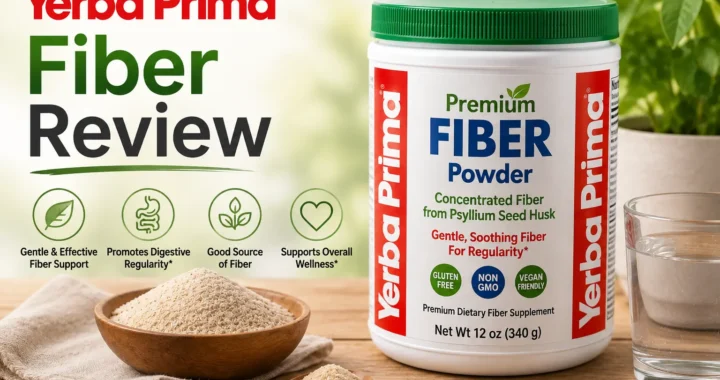
Psyllium has the most consistent research behind it for IBS specifically, and it’s the fiber most commonly recommended by gastroenterologists and dietitians for this condition. It forms a gel that:
- Softens and bulks stool in IBS-C
- Absorbs excess water and firms stool in IBS-D
- Ferments slowly, so it produces less gas than inulin-type fibers
Best for: Both IBS-C and IBS-D, people who want the most evidence-backed choice.
Watch for: Needs to be taken with plenty of water; starting too high too fast can cause temporary bloating.
See our full breakdown in psyllium husk and our picks for best psyllium husk products.
2. Methylcellulose — The Non-Fermenting Option
Methylcellulose is a semi-synthetic soluble fiber that isn’t fermented by gut bacteria at all. That makes it a solid alternative for people who find that even psyllium produces some gas.
Best for: People who are highly sensitive to any fermentable fiber, or who experience gas with psyllium.
Watch for: Less “food-like” than psyllium since it’s processed; some people prefer a more natural-source fiber.
3. Partially Hydrolyzed Guar Gum (PHGG)
PHGG is a soluble fiber that’s fermented slowly and gently. Several small studies suggest it can improve both constipation and diarrhea symptoms in IBS with good tolerability.
Best for: People who want a gentle, dual-action fiber and don’t mind a less well-known ingredient.
Watch for: Fewer large-scale studies compared to psyllium; product quality and dosing vary by brand.
4. Acacia Fiber
A soluble fiber that ferments more slowly than inulin but faster than psyllium. Tolerance is genuinely individual here — some people do fine, others notice bloating.
Best for: People looking for a milder, plant-based alternative to psyllium.
Watch for: Start low; effects on IBS symptoms specifically are less studied than psyllium.
Fibers to Approach with Caution in IBS
- Inulin, chicory root, FOS: Highly fermentable and high-FODMAP. Frequently used in “prebiotic” fiber gummies and powders, but often the first thing to cut when someone is troubleshooting IBS flares.
- Wheat dextrin: Soluble but more fermentable than psyllium; some people tolerate it well, others don’t.
- Wheat bran (insoluble): Can aggravate cramping and urgency, especially in IBS-D.
Comparison Table: Fiber Supplements for IBS at a Glance
| Fiber | Helps IBS-C | Helps IBS-D | Gas/Bloating Risk | Evidence Strength |
| Psyllium husk | Yes | Yes | Low | Strong |
| Methylcellulose | Yes | Moderate | Very low | Moderate |
| PHGG | Yes | Yes | Low | Moderate |
| Acacia fiber | Yes | Moderate | Low–moderate | Limited |
| Wheat dextrin | Yes | Moderate | Moderate | Limited |
| Inulin/chicory root | Yes | No | High | Weak for IBS specifically |
| Wheat bran | Moderate | No | Moderate–high | Weak for IBS specifically |
How to Choose the Right One for Your IBS Subtype
If you have IBS-C (constipation-predominant): Psyllium is typically the first choice, since it both softens stool and adds bulk. PHGG is a reasonable second option if psyllium feels too gas-producing at first.
If you have IBS-D (diarrhea-predominant): Psyllium is still usually the top pick — the same gel-forming action that helps constipation also helps firm up loose stool by absorbing excess water. Methylcellulose is a good non-fermenting alternative.
If you have IBS-M (mixed) or aren’t sure of your subtype: Start with the lowest-fermentation option (psyllium or methylcellulose) since it’s the most likely to be tolerated regardless of which direction your symptoms lean on a given day.
For subtype- and goal-specific comparisons, see best fiber supplement for constipation, best fiber supplement for diarrhea, and best fiber supplement for bloating.
How to Introduce Fiber Without Triggering a Flare
This is the step most people skip, and it’s often why a perfectly good fiber supplement gets blamed for making IBS worse.
- Start low. Begin with roughly a quarter to a half of the labeled serving.
- Increase gradually. Add more only every 5–7 days, not daily.
- Pair it with water. Soluble fiber needs fluid to form its gel; without enough water, it can worsen constipation instead of relieving it.
- Track your symptoms. A simple daily note on bloating, stool consistency, and urgency helps you separate a fiber that’s working from one that’s still adjusting.
- Give it two to four weeks before deciding whether a fiber is right for you — early bloating often settles as your gut adapts.
If you’re unsure where to begin structurally, our guide on how to choose a fiber supplement walks through the decision process in more depth.
Common Mistakes People Make When Choosing Fiber for IBS
- Picking a “gut health” blend without reading the ingredients. Many contain inulin or chicory root as the primary fiber, which is often poorly tolerated in IBS.
- Jumping straight to the full serving size. This is the single most common cause of a bad first impression with fiber.
- Not drinking enough water. This can turn a helpful fiber into a constipating one.
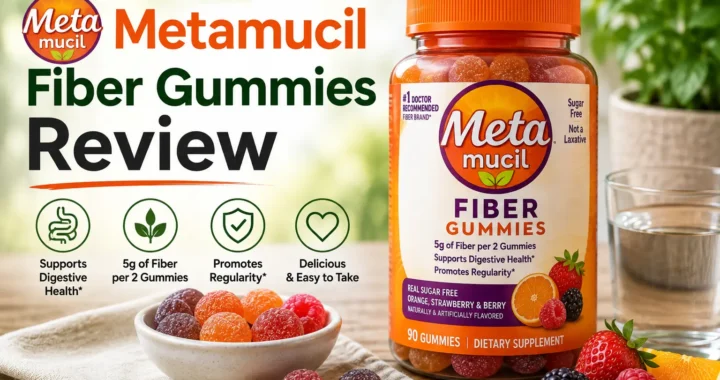
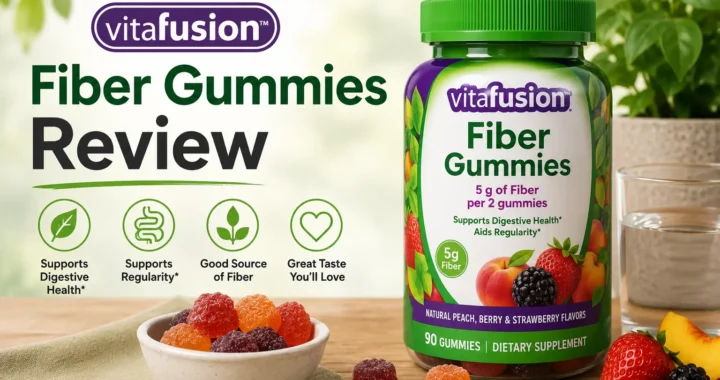
- Assuming all fiber gummies are equal. Gummies often use inulin for texture and sweetness, which can work against you. See our review of best fiber gummies for tolerance notes by brand.
- Giving up after three days. Fiber effects, and gut adaptation, take longer than that to show their true pattern.
Fiber Supplements vs. Fiber-Rich Foods for IBS
Whole foods provide fiber alongside other nutrients, but they also bundle in FODMAPs that can trigger symptoms (certain fruits, legumes, and cruciferous vegetables, for example). A supplement lets you isolate the fiber type and dose more precisely, which is often easier to manage during an IBS flare. That said, food-based fiber remains an important long-term part of gut health once symptoms are more stable. Our comparison of fiber supplements vs. fiber foods and our list of high-fiber foods go into this in more detail.
Frequently Asked Questions
What is the single best fiber supplement for IBS? Psyllium husk has the most consistent evidence and the broadest tolerability across both IBS-C and IBS-D, which is why it’s usually recommended first.
Is psyllium husk safe to take every day for IBS? For most people, yes, when introduced gradually and taken with adequate water. Anyone with swallowing difficulties, bowel obstruction, or specific medical conditions should check with a doctor first.
Why does fiber sometimes make my IBS worse? Usually because the fiber type is highly fermentable (like inulin) or the dose was increased too quickly. Switching to a low-fermentation soluble fiber and increasing slowly often resolves this.
Can I take fiber supplements with IBS medication? Fiber can interact with the timing and absorption of some medications. Take fiber supplements at least a couple of hours apart from medications, and check with your pharmacist or doctor about your specific prescriptions.
How long does it take for a fiber supplement to help IBS symptoms? Many people notice initial changes within a week, but two to four weeks is a more realistic window for the gut to fully adjust and for a clear pattern to emerge.
Is psyllium better than Metamucil-style products? Psyllium is the active ingredient in most Metamucil-style products. What varies between brands is the added sugar, flavoring, and other fillers — not the core fiber itself.
Do fiber gummies work as well as powders for IBS? Gummies typically contain a smaller dose of fiber per serving and often rely on more fermentable fibers like inulin, so they tend to be less predictable for IBS than a measured psyllium powder or capsule.
Final Verdict
For most people with IBS, psyllium husk is the best fiber supplement to start with — it’s the most researched, works across both constipation- and diarrhea-predominant IBS, and is generally the gentlest on a sensitive gut when introduced slowly. Methylcellulose and PHGG are strong alternatives if psyllium still causes gas. Highly fermentable fibers like inulin and chicory root are worth approaching with more caution, since they’re a common hidden trigger in otherwise appealing “gut health” products.
The right fiber for your IBS ultimately comes down to your subtype, how your gut responds to fermentation, and how gradually you introduce it. If you want a deeper dive into specific product picks, explore our guides on best fiber powder, best fiber pills, and best fiber for gut health.
This article is for educational purposes only and does not replace personalized medical advice. If you have persistent or severe digestive symptoms, talk to a doctor or registered dietitian before starting a new supplement.