
Table of Contents
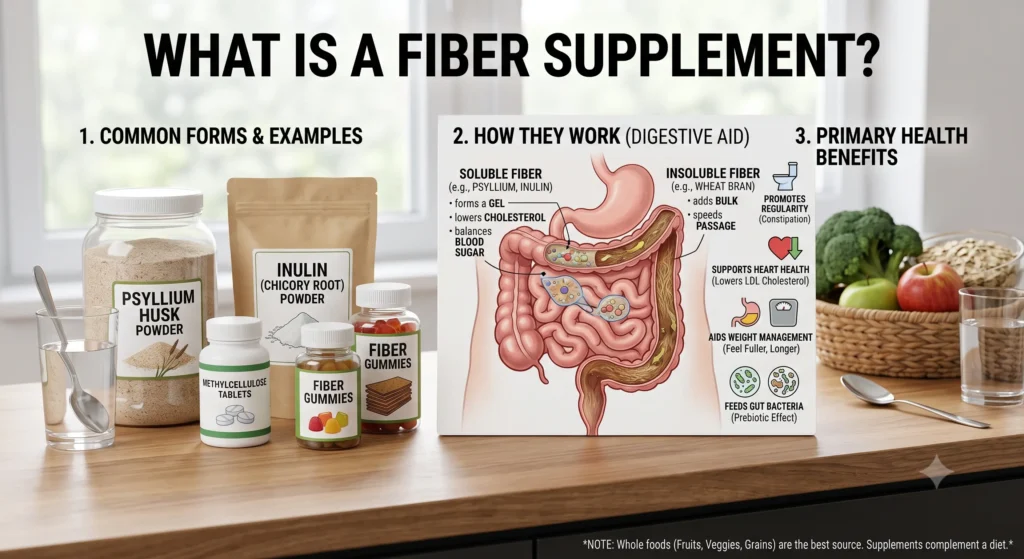
A fiber supplement is a product — usually a powder, pill, capsule, or gummy — that delivers a concentrated dose of dietary fiber without the extra calories, sugar, or bulk of whole food. Most fiber supplements are made from a single source, such as psyllium husk, methylcellulose, wheat dextrin, inulin, or calcium polycarbophil. They’re designed to help you close the gap between what you actually eat and the amount of fiber your body needs — something the vast majority of adults don’t get from food alone.
Why This Question Matters More Than People Think
Here’s a number that surprises most people: <cite index=”7-1″>roughly 94% of American adults and children fail to meet the recommended daily intake of fiber</cite>. Most of us eat somewhere <cite index=”9-1″>around 15 grams of fiber a day</cite>, while the actual target sits <cite index=”7-1″>closer to 25 grams for women and 38 grams for men</cite>.
That gap is exactly why fiber supplements exist. But “fiber supplement” is a broad term that covers several very different products, and understanding what you’re actually taking — and why — makes a real difference in whether it helps you or just gives you gas and bloating.
This guide breaks down what a fiber supplement actually is, how it works inside your body, the different types available, and how to decide if (and which) one makes sense for you.
What Is Dietary Fiber, First?
Before fiber supplements make sense, it helps to understand fiber itself.
Dietary fiber is the part of plant food your body can’t digest or absorb. It passes through your stomach and small intestine largely intact and reaches your colon, where it either absorbs water, feeds gut bacteria, or adds bulk to stool — depending on the type.
Fiber falls into two broad categories:
- Soluble fiber — dissolves in water and forms a gel-like substance. It slows digestion, helps soften stool, and can support healthy cholesterol and blood sugar levels.
- Insoluble fiber — does not dissolve in water. It adds bulk to stool and helps material move through the digestive tract more quickly.
Most whole foods contain a mix of both. If you want a deeper breakdown of how these two types differ and which foods contain each, see our full guides on soluble fiber, insoluble fiber, and the head-to-head comparison of soluble vs. insoluble fiber.
So, What Is a Fiber Supplement?
A fiber supplement is a concentrated, isolated source of one specific type of fiber, sold in a form that’s easy to take on a regular basis — a scoopable powder, a swallowable pill, a chewable tablet, or a gummy.
Unlike food, a fiber supplement usually:
- Contains one fiber source, not a mix of dozens found in whole foods
- Has little to no protein, vitamins, minerals, or antioxidants
- Is measured in precise grams per serving, so intake is easy to track
- Is designed to be convenient — no prep, no cooking, no chewing a huge salad
Common brand names people search for include Metamucil (psyllium), Citrucel (methylcellulose), and Benefiber (wheat dextrin), but the ingredient matters far more than the brand, since each type behaves differently in your body.
It’s worth being upfront about something most product pages gloss over: <cite index=”5-1″>experts generally agree it’s better to get fiber from whole foods than from supplements, because supplements don’t provide the vitamins, minerals, and other nutrients that food does</cite>. A fiber supplement is a tool to fill a gap — not a replacement for vegetables, fruit, legumes, and whole grains.
How Fiber Supplements Actually Work in Your Body
The mechanism depends on the type of fiber, but the general process looks like this:
- You take it with a full glass of water (this step matters — more on that below).
- It travels through your stomach undigested. Human enzymes can’t break fiber down.
- It reaches your intestines, where soluble fibers absorb water and swell into a gel, while insoluble fibers add physical bulk.
- It changes stool consistency and transit time — softening hard stool, or adding structure to loose stool, depending on the fiber and the person.
- Some fibers ferment in the colon, feeding beneficial gut bacteria and producing short-chain fatty acids linked to gut health.
This is why fiber supplements are most commonly used for constipation relief, but also show up in conversations about cholesterol, blood sugar, and appetite control.
Types of Fiber Supplements
Not all fiber supplements are the same ingredient in different packaging. Here’s how the most common types compare:
| Fiber Type | Soluble or Insoluble | Fermentable | Common Use | Notes |
| Psyllium husk | Mostly soluble | Partially | Constipation, cholesterol, blood sugar | Most researched type; forms a gel; needs plenty of water |
| Methylcellulose | Soluble (non-fermentable) | No | Constipation | Causes less gas/bloating since it isn’t fermented by gut bacteria |
| Wheat dextrin | Soluble | Yes | General fiber boost | Dissolves clear in liquid, mild taste, but can cause gas in some people |
| Inulin / chicory root | Soluble, prebiotic | Highly | Gut bacteria support | Popular in food products; can cause noticeable bloating at higher doses |
| Calcium polycarbophil | Insoluble | No | Constipation or diarrhea | Absorbs water without fermenting; used for both loose and hard stool |
| Glucomannan | Soluble | Partially | Fullness, appetite, blood sugar | Expands significantly in water; needs to be taken with enough fluid |
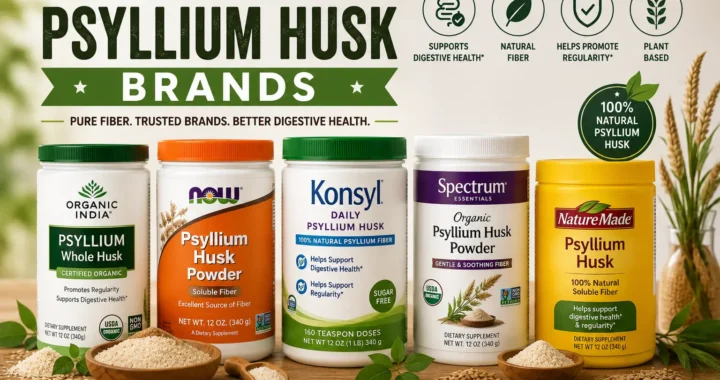
If you want a deep dive on the most widely studied option specifically, read our guide to psyllium husk or our picks for the best psyllium husk supplements.
Fiber Supplements vs. Fiber From Food
This is the comparison most articles skip, and it’s the one that actually helps you decide what to do.
| Factor | Fiber Supplement | Whole Food Fiber |
| Fiber types included | Usually one isolated type | Multiple types together |
| Extra nutrients | Little to none | Vitamins, minerals, antioxidants, protein |
| Precision | Exact grams per serving | Estimated, varies by portion |
| Convenience | High — no prep required | Requires cooking, planning, chewing |
| Calories | Typically very low | Varies, but includes other nutrition |
| Best used for | Filling a specific gap or symptom | Long-term, foundational fiber intake |
The practical takeaway: food should be your foundation, and a supplement is a reasonable add-on when your diet consistently falls short, or when you need a more precise, predictable dose for a specific reason (like managing constipation). For food-based options, our high-fiber foods guide is a useful companion to this article.
What Fiber Supplements Are Used For
People typically reach for a fiber supplement to help with:
- Occasional constipation — the most common and best-supported use
- Maintaining regularity when travel, medication, or diet changes disrupt normal bowel habits
- Supporting healthy cholesterol levels, particularly with soluble fibers like psyllium
- Helping manage blood sugar spikes after meals
- Increasing feelings of fullness, which some people use as part of a broader weight-management approach
- Closing a fiber gap for people who genuinely struggle to eat enough produce, legumes, or whole grains
If any of these match your situation, our targeted guides go deeper: best fiber supplement for constipation, best fiber supplement for weight loss, and best fiber supplement for women.
Forms of Fiber Supplements: Powder, Pills, and Gummies
Fiber supplements aren’t limited to one format, and the format affects both convenience and dosage.
| Form | Pros | Cons |
| Powder | Highest fiber per dose; mixes into drinks; most economical | Requires mixing; texture can be off-putting to some |
| Pills / Capsules | Portable, no taste, easy to travel with | Often need several pills to match one powder serving |
| Gummies | Pleasant taste, easy to remember to take | Usually lowest fiber per serving; may contain added sugar |
If you’re deciding between formats, our comparisons of fiber powder, fiber pills, and fiber gummies break down which works best for different routines.
How to Choose the Right Fiber Supplement: A Simple Decision Framework
Instead of guessing, work through these four questions in order:
1. What’s your main goal?
- Constipation relief → look for psyllium or methylcellulose
- Cholesterol or blood sugar support → look for psyllium or glucomannan
- General daily gap-filling → wheat dextrin or inulin (start with low doses)
2. How sensitive is your gut to gas and bloating?
- If you’re sensitive, avoid highly fermentable fibers like inulin, and consider methylcellulose, which tends to cause less gas since it isn’t fermented.
3. Do you prefer taste-free or flavored?
- Methylcellulose and wheat dextrin are typically flavorless and dissolve clear.
- Psyllium has more texture and a mild taste, though flavored versions exist.
4. How much fiber do you actually need to add?
- Calculate your current intake gap (most adults are short by 10–20 grams a day) and match the supplement’s per-serving fiber content accordingly, rather than picking based on packaging alone.
For a full side-by-side of top-rated products across categories, see our best fiber supplement roundup, our best soluble fiber supplement picks, our best natural fiber supplement list, and our best daily fiber supplement recommendations.
Common Mistakes People Make With Fiber Supplements
- Starting with a full dose immediately. <cite index=”7-1″>Gradually increasing fiber intake by 2 to 3 grams every few days</cite> gives your gut and its bacteria time to adjust, which sharply reduces gas and bloating.
- Not drinking enough water. Soluble fibers like psyllium and glucomannan absorb large amounts of liquid — without enough water, they can actually worsen constipation or, in rare cases, cause choking or blockage if taken too dry or too fast.
- Assuming more is always better. More fiber isn’t automatically better if it isn’t paired with adequate fluid and a gradual ramp-up.
- Taking fiber supplements too close to medications. Fiber can interfere with the absorption of certain medications, so it’s often recommended to space fiber supplements and medications a couple of hours apart — check with a pharmacist or doctor if you take prescription medication regularly.
- Expecting a supplement to replace vegetables entirely. Whole foods bring fiber types and nutrients supplements simply don’t contain.
Pros and Cons of Fiber Supplements
| Pros | Cons |
| Precise, consistent dosing | Missing vitamins, minerals, and antioxidants found in food |
| Convenient — no prep needed | Can cause gas, bloating, or cramping, especially at first |
| Helpful for closing a real dietary gap | Not a substitute for a fiber-rich diet |
| Widely available in multiple forms | Some types may interact with medication absorption |
| Useful for targeted needs (e.g., constipation) | Effects vary by fiber type — one size doesn’t fit all |
Are Fiber Supplements Safe?
For most healthy adults, fiber supplements are considered safe when introduced gradually and taken with enough water. That said, evidence on long-term outcomes from fiber supplements specifically — compared to fiber from whole foods — is more limited than many marketing claims suggest, so it’s reasonable to treat supplements as a support tool rather than a guaranteed health fix.
People who should check with a doctor before starting a fiber supplement include those with:
- A history of bowel obstruction or difficulty swallowing
- Inflammatory bowel conditions (Crohn’s disease, ulcerative colitis) during flare-ups
- Diabetes or conditions requiring close blood sugar monitoring, since fiber can affect medication timing
- Any prescription medication taken on a strict schedule
Frequently Asked Questions
Is a fiber supplement the same as a laxative? Not exactly. Bulk-forming fiber supplements (like psyllium or methylcellulose) work more gently than stimulant laxatives — they add bulk and moisture to stool rather than forcing contractions in the intestines. They’re often used as a first-line, gentler option before stronger laxatives.
Can I take a fiber supplement every day? Yes, most fiber supplements are designed for daily use. Consistency tends to matter more than occasional large doses for effects on regularity, cholesterol, and blood sugar.
Do fiber supplements cause weight gain or weight loss? Neither directly. Some soluble fibers increase feelings of fullness, which may support eating less overall, but a fiber supplement alone isn’t a weight-loss solution — it works best alongside overall diet and lifestyle habits.
What’s the difference between soluble and insoluble fiber supplements? Soluble fiber dissolves in water and forms a gel, helping with cholesterol, blood sugar, and softening stool. Insoluble fiber doesn’t dissolve and mainly adds bulk to help material move through the intestines faster. Many people benefit from a mix of both, depending on their main goal.
How long does it take for a fiber supplement to work? For regularity, many people notice a difference within 1 to 3 days, though it can take a couple of weeks of consistent use for full effects, especially for cholesterol or blood sugar-related benefits.
Can fiber supplements replace vegetables and fruit? No. Fiber supplements can help close a gap, but whole foods provide a broader mix of fiber types plus vitamins, minerals, and antioxidants that isolated supplements don’t contain.
Final Verdict
A fiber supplement is simply a concentrated, convenient way to add a specific type of fiber to your diet — not a replacement for eating well, but a practical tool when your food intake consistently falls short. The right choice depends on your goal, your gut’s tolerance, and the form that fits your routine.
If you’re ready to compare specific products, start with our full best fiber supplement guide, or narrow it down by need with our guides on the best fiber supplement for constipation or the best fiber supplement for women.
This article is for educational purposes only and is not a substitute for professional medical advice. Talk to a doctor or registered dietitian before starting any new supplement, especially if you have an existing health condition or take medication.