
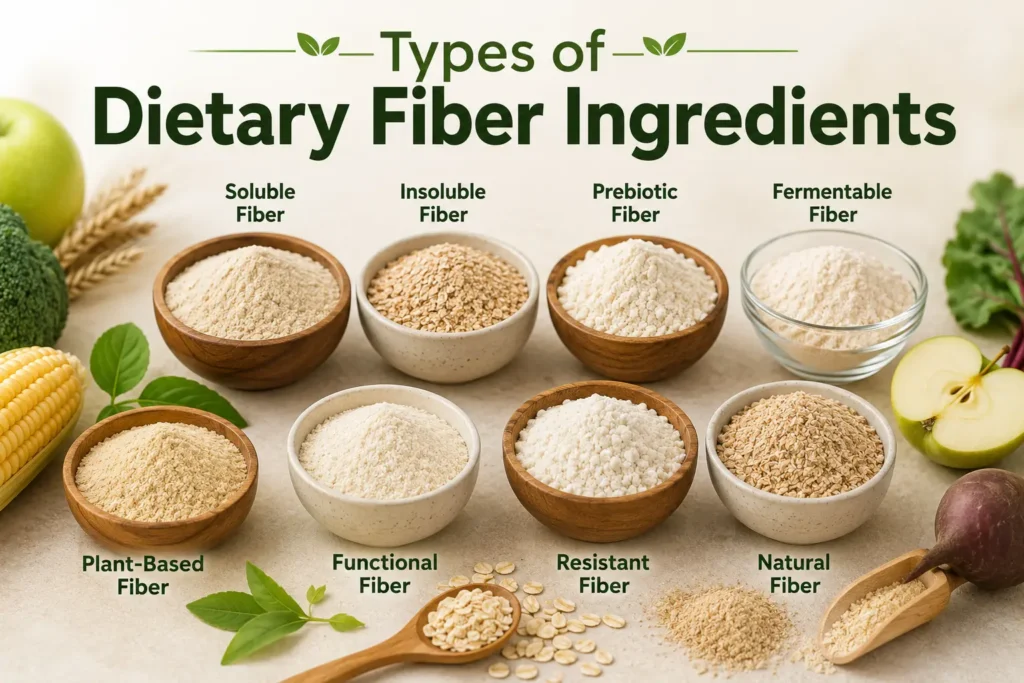
Types of Dietary Fiber Ingredients fall into two broad categories — soluble and insoluble — but within those categories are dozens of distinct fibers, each with its own texture, fermentation behavior, and best use case. Some, like psyllium husk, form thick gels. Others, like cellulose, add bulk without dissolving. Still others, like inulin, are prized mainly for feeding gut bacteria. Understanding these differences is the fastest way to stop guessing and start choosing a fiber that actually matches what you’re trying to accomplish, whether that’s regularity, gut health, blood sugar support, or simply meeting your daily fiber target.
This guide breaks every major fiber ingredient down by type, mechanism, and practical use, and links out to a full breakdown of each one.
Table of Contents
The Two Core Categories: Soluble vs. Insoluble Fiber
Every dietary fiber ingredient starts from one of two broad classifications, though many fall somewhere in between.
Soluble fiber dissolves in water and typically forms a gel-like substance in the digestive tract. This gel can slow digestion, increase fullness, and — depending on the specific fiber — feed gut bacteria through fermentation.
Insoluble fiber doesn’t dissolve in water. Instead, it adds physical bulk to stool and helps speed up transit time through the intestines with minimal fermentation.
Most whole foods contain a mix of both, but fiber ingredients used in supplements and food products are often isolated to lean heavily toward one category, which is exactly why understanding the specific ingredient matters more than just knowing “fiber” in general. Our full breakdown of soluble vs. insoluble fiber covers this foundational distinction in more depth.
A third, less commonly discussed axis matters just as much: fermentability — how much of a fiber gut bacteria break down in the colon. Highly fermentable fibers tend to have stronger prebiotic effects but also a higher likelihood of gas and bloating. This is often the real reason two “soluble fibers” can feel completely different in the body.
Complete Comparison of Dietary Fiber Ingredients
This is the kind of side-by-side view most single-topic articles don’t offer, because they only cover one fiber at a time. Seeing them together makes the differences far easier to understand.
| Fiber Ingredient | Type | Fermentability | Gel-Forming | Best Known For |
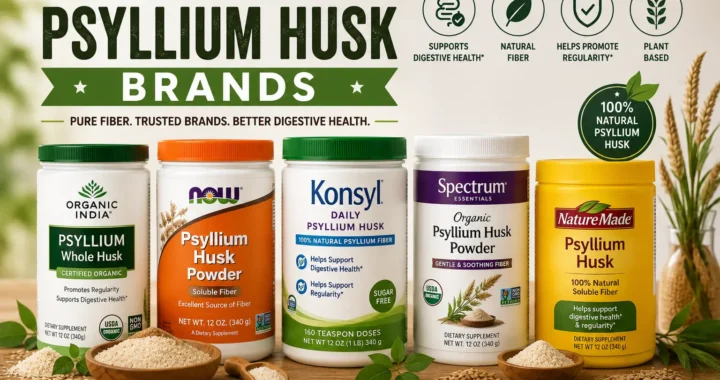
| Psyllium husk | Mostly soluble | Partial | Strong | Regularity, most-studied bulk-forming fiber |
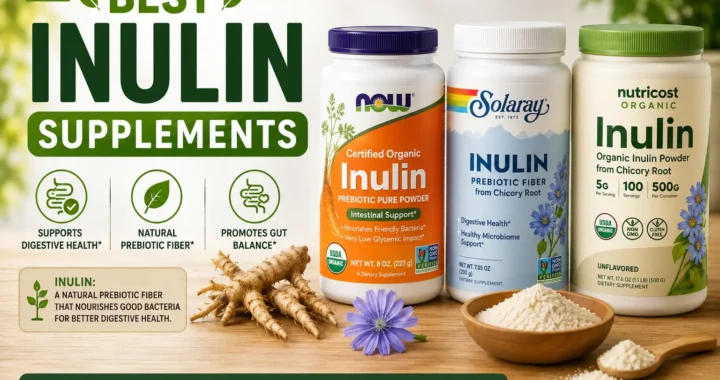
| Inulin | Soluble | Very high | Mild | Prebiotic gut support |
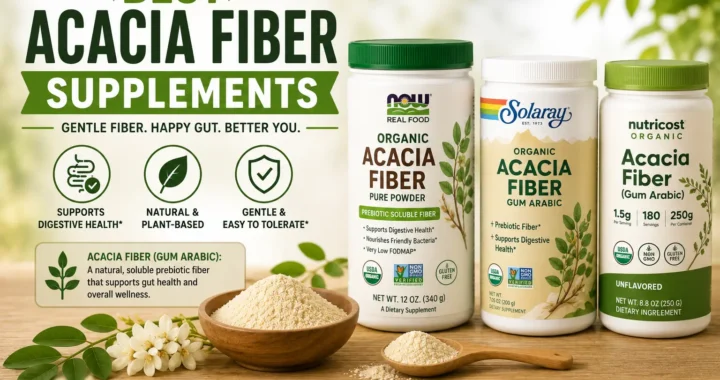
| Acacia fiber | Soluble | Moderate | Mild | Gentle tolerance, low gas |
| Wheat dextrin | Soluble | Moderate | Mild | Mixes easily, mild regularity support |
| Methylcellulose | Soluble (modified) | None | Moderate | Regularity without fermentation/gas |
| Resistant dextrin | Soluble | Moderate | Mild | Low-glycemic, food fortification |
| PHGG (partially hydrolyzed guar gum) | Soluble | High | Mild | Gentle gut tolerance |
| Guar gum fiber | Soluble | High | Strong | Thickening, viscosity |
| Oat fiber / beta-glucan | Mixed | Moderate | Moderate | Cholesterol-related research |
| Apple pectin | Soluble | Moderate–High | Strong | Gel formation, fruit-derived |
| Citrus pectin | Soluble | Moderate–High | Strong | Gel formation, fruit-derived |
| Chicory root fiber | Soluble | Very high | Mild | Prebiotic, inulin source |
| Cellulose fiber | Insoluble | Low | None | Pure bulk, low gas |
| Flaxseed fiber | Mixed (20:80) | Partial | Moderate | Dual bulk + gel, omega-3s |
| Glucomannan (konjac fiber) | Soluble | Partial | Very strong | Appetite support, fullness |
| Arabinoxylan fiber | Mixed | High | Mild | Cereal-based, prebiotic/glycemic |
| Pea fiber | Mostly insoluble | Low | None | Gluten-free bulking agent |
| Corn fiber | Mixed (bran vs. soluble form) | Low–Moderate | Mild | Low-glycemic food fortification |
| Sugar beet fiber | Mixed | Moderate | Mild | High water-holding capacity |
Fiber Ingredients Grouped by What You’re Trying to Achieve
Rather than just listing fibers, it helps to group them by the outcome you’re actually looking for — this is the kind of decision framework most competitor pages skip entirely.
If your main goal is regularity and bulk
Psyllium husk, cellulose fiber, pea fiber, and methylcellulose are built primarily around adding bulk or forming a gel that softens stool, with minimal gas.
If your main goal is gut bacteria/prebiotic support
Inulin, chicory root fiber, PHGG, and arabinoxylan are highly fermentable, feeding gut bacteria more actively — though this comes with a higher likelihood of gas for some people.
If your main goal is gentle digestion with low gas
Acacia fiber, methylcellulose, and cellulose tend to be the better-tolerated options for people who are sensitive to bloating.
If your main goal is appetite or fullness support
Glucomannan has the strongest gel-forming, appetite-related research among common fiber ingredients, though it requires careful water intake due to its expansion properties.
If your main goal is a food-fortification or supplement-manufacturing use
Soluble corn fiber, wheat dextrin, resistant dextrin, and sugar beet fiber are commonly used behind the scenes in packaged foods for their neutral taste and functional properties.
If your main goal is getting more than one nutrient at once
Flaxseed fiber stands out for combining fiber with omega-3 fatty acids, while whole-grain sources of arabinoxylan bring along B vitamins and minerals.
Natural Food Sources vs. Isolated Fiber Ingredients
This distinction is often lost in supplement-focused content: many of the fiber ingredients above exist naturally in whole foods before they’re ever extracted and purified.
- Cellulose, pea fiber, and arabinoxylan occur naturally in vegetables, legumes, and grains.
- Pectin is naturally present in the flesh and skin of apples and citrus fruit.
- Inulin occurs naturally in chicory root, garlic, onions, and asparagus.
- Beta-glucan is naturally present in oats and barley.
Eating these fibers as part of whole foods provides additional nutrients — vitamins, minerals, antioxidants — that isolated supplement forms typically don’t include. For most people, prioritizing high-fiber foods as a foundation, with supplements used to fill specific gaps, is a reasonable, balanced approach. Our comparison of fiber supplements vs. fiber foods goes deeper into that decision.
Common Mistakes People Make When Choosing a Fiber Ingredient
- Assuming all fibers work the same way. A gel-forming fiber like psyllium and a purely bulking fiber like cellulose produce very different digestive effects.
- Choosing a highly fermentable fiber without easing into it. Fibers like inulin can cause significant gas if introduced too quickly.
- Overlooking hidden fiber ingredients in processed foods. Many packaged products already contain fibers like soluble corn fiber, wheat dextrin, or pea fiber, which affects how much additional supplementation is actually needed.
- Picking a fiber based on marketing rather than mechanism. The right fiber depends on your specific goal — regularity, prebiotic support, appetite, or blood sugar — not which one is trending.
- Not drinking enough water. This applies across nearly every fiber type, but is especially critical for high-viscosity fibers like psyllium and glucomannan.
Frequently Asked Questions
What are the main types of dietary fiber ingredients? Broadly, fiber ingredients are classified as soluble or insoluble, with a further distinction based on fermentability. Within those categories are specific ingredients like psyllium, inulin, cellulose, pectin, and many others, each with distinct properties.
Which fiber ingredient is best for constipation? Psyllium husk has the most extensive research supporting its use for constipation, though cellulose, flaxseed, and methylcellulose are also commonly used for bulk-based regularity support.
Which fiber ingredient causes the least gas? Methylcellulose, cellulose, and pea fiber tend to cause the least gas, since they’re minimally fermented by gut bacteria compared to highly fermentable fibers like inulin.
Are soluble fibers better than insoluble fibers? Neither is inherently “better” — they serve different functions. Soluble fibers tend to support gel formation and gut bacteria, while insoluble fibers primarily add bulk. Most people benefit from a mix of both.
Can I get enough fiber from food alone, or do I need a supplement? Many people can meet fiber goals through whole foods like vegetables, fruits, legumes, and whole grains, but supplements can help close specific gaps, especially for people with limited dietary variety or specific digestive goals.
How do I know which fiber ingredient is right for me? Start with your primary goal — regularity, gut health, appetite support, or blood sugar management — and match it to the fiber types best associated with that outcome, as outlined in the goal-based breakdown above.
Final Verdict
There is no single “best” dietary fiber ingredient — there’s only the fiber that’s best matched to what you’re trying to accomplish. Bulk-forming insoluble fibers like cellulose and pea fiber support regularity with minimal gas. Gel-forming soluble fibers like psyllium and glucomannan add viscosity and fullness. Highly fermentable fibers like inulin and chicory root fiber lean into gut bacteria support. And several, like flaxseed and arabinoxylan, blend properties from more than one category.
The most useful thing you can do is stop treating “fiber” as one interchangeable ingredient and start choosing based on mechanism and goal. If you’re still narrowing things down, our guide on how to choose a fiber supplement walks through the decision step by step, and each fiber linked throughout this guide has its own dedicated breakdown for a deeper look.