
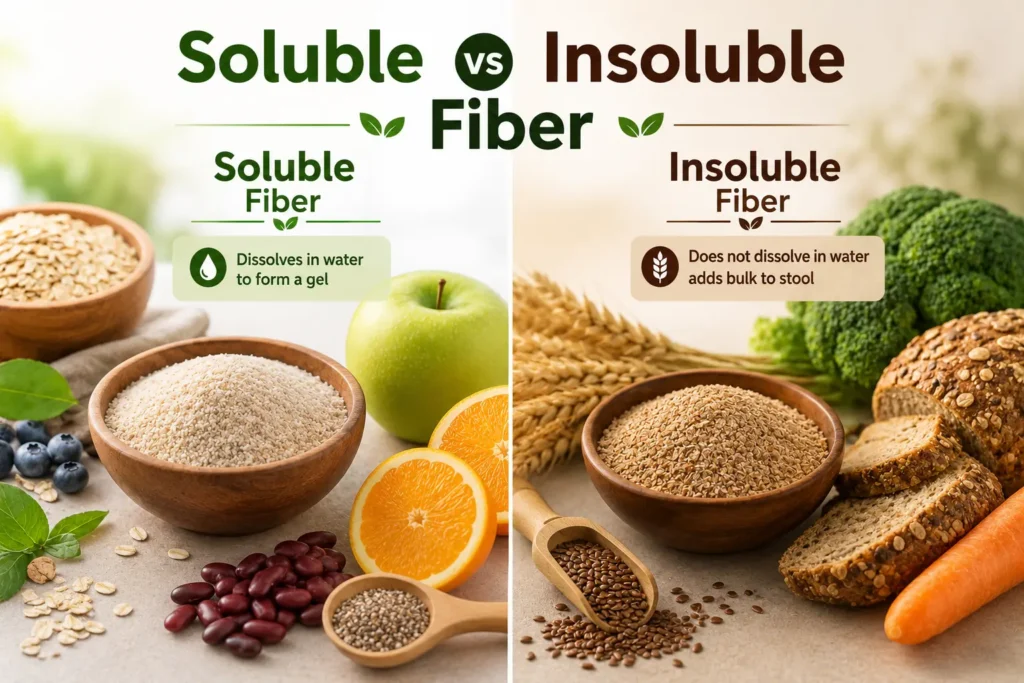
Soluble vs Insoluble Fiber: Soluble fiber dissolves in water and turns into a gel-like substance in your gut. It slows digestion, helps manage blood sugar, and lowers cholesterol. Insoluble fiber does not dissolve in water. It adds bulk to stool and speeds up how quickly food moves through your digestive system, which helps prevent constipation.
Most people don’t need to pick one over the other. Your body benefits from both, and most whole foods actually contain a mix of the two. The real question isn’t “which is better,” it’s whether you’re getting enough of either.
Table of Contents
What Is Fiber, and Why Does It Get Split Into Two Types?
Fiber is the part of plant food your body can’t fully break down. Unlike carbs, fats, and proteins, it passes through much of your digestive tract largely intact. That might sound like a downside, but it’s actually the whole point. Fiber’s job isn’t to be digested for energy — it’s to do mechanical and chemical work as it travels through you.
Scientists split fiber into soluble and insoluble based on one simple property: how it behaves in water. That single difference explains almost everything else about how each type acts in your body.
Soluble Fiber: Definition and How It Works
Soluble fiber mixes with water in your digestive tract and forms a thick, gel-like substance. Think of what happens when you soak chia seeds or cook oatmeal — that thickening effect is soluble fiber at work.
How it functions in your body:
- Slows the emptying of your stomach, which extends fullness after meals
- Slows sugar absorption into the bloodstream, softening post-meal blood sugar spikes
- Binds to bile acids in the gut, which the liver uses cholesterol to replace — a process linked to modestly lower LDL cholesterol over time
- Feeds beneficial gut bacteria, since many soluble fibers are fermentable
Common food sources of soluble fiber:
- Oats and oat bran
- Barley
- Beans, lentils, and chickpeas
- Apples, pears, and citrus fruit
- Carrots
- Psyllium husk
If you want a closer look at how this fiber type behaves and where to get it, our dedicated soluble fiber guide and list of soluble fiber foods break it down further.
Insoluble Fiber: Definition and How It Works
Insoluble fiber does not dissolve in water. Instead, it stays mostly intact as it moves through your gut, acting like a scrub brush and bulking agent at the same time.
How it functions in your body:
- Adds physical bulk to stool
- Speeds up transit time through the intestines
- Helps food and waste move more efficiently through the colon
- Provides structural support that can ease certain types of constipation
Common food sources of insoluble fiber:
- Wheat bran
- Whole grains like brown rice and whole wheat
- Nuts and seeds
- The skins of fruits and vegetables
- Cauliflower, green beans, and leafy greens
For more detail, see our full breakdown of insoluble fiber and this list of insoluble fiber foods.
Soluble vs Insoluble Fiber: Side-by-Side Comparison
| Feature | Soluble Fiber | Insoluble Fiber |
| Behavior in water | Dissolves, forms a gel | Does not dissolve |
| Main digestive effect | Slows digestion | Speeds up transit |
| Best known for | Blood sugar and cholesterol support | Regularity and stool bulk |
| Fermented by gut bacteria | Usually yes | Usually limited |
| Texture in food | Thick, gummy, viscous | Coarse, gritty, bran-like |
| Common sources | Oats, beans, psyllium, citrus | Wheat bran, whole grains, vegetable skins |
| Typical use case | Cholesterol, glucose control, satiety | Constipation, digestive regularity |
Why Most Foods Aren’t “Purely” One Type
This is where a lot of articles stop short. In reality, whole foods rarely contain only one type of fiber. An apple, for example, has soluble pectin in its flesh and insoluble fiber in its skin. Oats contain mostly soluble beta-glucan but still carry some insoluble fiber in the bran layer.
This matters practically: you don’t need to mentally sort every food into a “soluble” or “insoluble” bucket. Eating a variety of whole plant foods — vegetables, fruits, legumes, whole grains — naturally gives you both types without any extra math.
Do You Need More Soluble or More Insoluble Fiber?
This depends on what you’re trying to address, not on which fiber is “healthier” in general.
Soluble fiber may be more useful if you’re focused on:
- Managing cholesterol levels
- Smoothing out blood sugar responses
- Feeling fuller for longer between meals
Insoluble fiber may be more useful if you’re focused on:
- Constipation or infrequent bowel movements
- Slow digestive transit
A mix of both is usually the better goal if you’re dealing with:
- General digestive health
- Bloating or irregular bowel patterns, where the ratio matters as much as the total amount
If bloating is your main issue rather than regularity, our guide on fiber supplements and bloating covers how fiber type and dose both play a role.
Common Mistakes People Make With Fiber
Increasing fiber intake too quickly. A sudden jump from low to high fiber intake — especially insoluble fiber — is one of the most common causes of gas, bloating, and cramping. Gradual increases over one to two weeks give your gut time to adjust.
Not drinking enough water. Both fiber types rely on adequate fluid intake. Soluble fiber needs water to form its gel, and insoluble fiber needs water to keep stool soft as it adds bulk. Without enough fluid, insoluble fiber can actually worsen constipation instead of relieving it.
Assuming more fiber is automatically better. Fiber needs vary by individual, and some digestive conditions (like certain cases of IBS) respond better to specific fiber types rather than simply “more fiber.” If you have a diagnosed digestive condition, discuss fiber changes with a healthcare provider.
Ignoring fiber from supplements vs. whole foods. Whole foods deliver fiber alongside vitamins, minerals, and antioxidants that supplements don’t replicate. Supplements can help close a gap, but they work best alongside food, not as a full replacement. Our comparison of fiber supplements vs. fiber foods goes deeper on this distinction.
How Much Fiber Do You Actually Need?
General guidelines from major health authorities recommend around 25 grams per day for adult women and 38 grams per day for adult men, though needs can vary with age and individual health status. Most people fall well short of this, regardless of which type they’re eating.
Rather than tracking soluble and insoluble grams separately, a simpler approach works for most people: build meals around vegetables, fruit, legumes, and whole grains, and let the fiber types take care of themselves.
If you’re not able to hit your target through food alone, a fiber supplement can help fill the gap — our guide on how to choose a fiber supplement walks through matching a supplement type to your specific goal, whether that’s constipation, cholesterol, or general gut health.
Frequently Asked Questions
Is soluble or insoluble fiber better for constipation? Insoluble fiber is generally more associated with relieving constipation because it adds bulk and speeds transit. However, some people with constipation respond better to soluble fiber sources like psyllium, since the gel-forming action can soften stool. Individual response varies, which is why starting slowly and adjusting matters more than picking one type upfront.
Can you have too much of one fiber type? Yes. A diet extremely high in insoluble fiber with too little fluid can worsen bloating or constipation rather than help it. Balance and hydration matter more than maximizing one type.
Does cooking change whether fiber is soluble or insoluble? Cooking can soften the texture of insoluble fiber and make it easier to tolerate, but it does not convert one fiber type into the other. The chemical structure stays the same.
Are fiber supplements soluble or insoluble? It depends on the ingredient. Psyllium husk, inulin, and acacia fiber are primarily soluble. Wheat dextrin and methylcellulose vary in solubility. Cellulose-based supplements are typically insoluble. Check the label or our types of dietary fiber ingredients guide before choosing one for a specific goal.
Do soluble and insoluble fiber affect weight management differently? Soluble fiber’s gel-forming effect tends to increase feelings of fullness, which may support appetite control. Insoluble fiber contributes less to satiety but supports regularity, which indirectly affects comfort during a weight management plan. Our guide on fiber supplements for weight loss covers this in more detail.
Final Verdict
Soluble and insoluble fiber aren’t competitors — they’re teammates. Soluble fiber works on what happens to nutrients and cholesterol during digestion. Insoluble fiber works on how efficiently waste moves through your system. Most whole foods give you both, and the practical goal for most people is simply eating more total fiber from varied plant sources, not choosing sides.
If you already know which effect you’re after — smoother blood sugar, lower cholesterol, or more regular digestion — you can lean toward foods or supplements higher in the fiber type that supports that goal, while still keeping the other type in your diet.
This article is for educational purposes and does not replace personalized medical advice. If you have a digestive condition or are making significant changes to your fiber intake, consult a healthcare provider.