
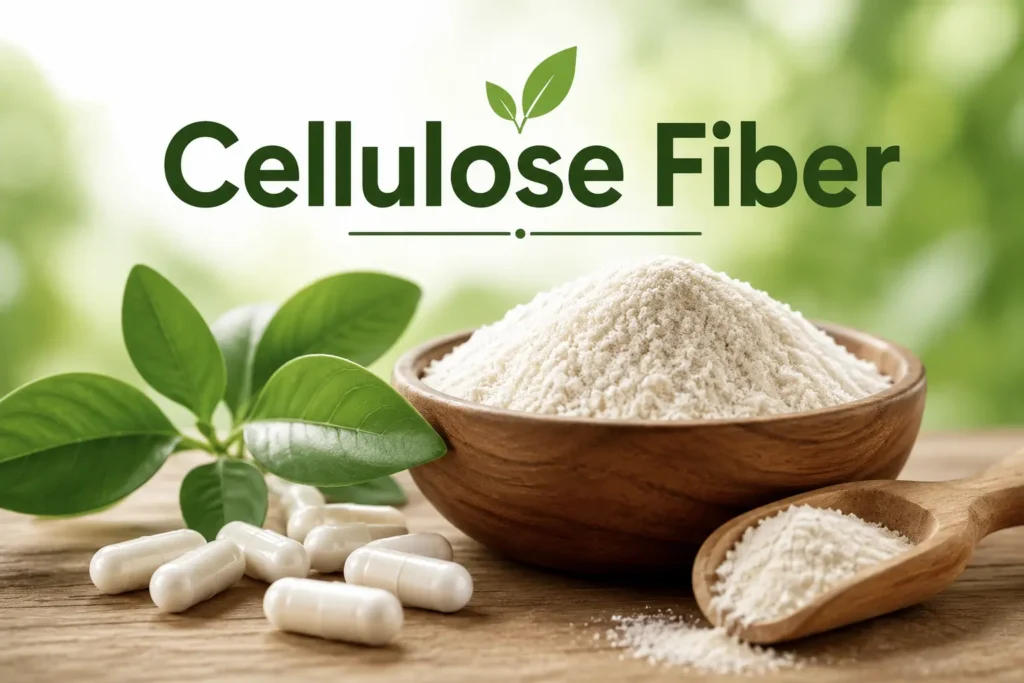
Cellulose fiber is a type of insoluble dietary fiber found naturally in the cell walls of fruits, vegetables, grains, and other plants. It doesn’t dissolve in water, doesn’t ferment much in the gut, and passes through the digestive system largely intact. Its main job is to add bulk to stool and help move waste through the intestines more efficiently. You’ll find it both as a natural component of whole foods and as a purified additive in some fiber supplements, baked goods, and processed foods.
If you’re looking for a fiber that supports regularity without much bloating or gas, cellulose is worth understanding. But it isn’t the right choice for every digestive goal — and knowing where it fits compared to other fibers matters more than most articles let on.
Table of Contents
What Is Cellulose Fiber?
Cellulose is the most abundant organic compound on Earth. It’s a structural carbohydrate made of long chains of glucose molecules linked together in a way that the human digestive system cannot break down. This is what gives plants their rigidity — think of the crunch in celery or the fibrous strands in broccoli stalks.
In simple terms: cellulose is the “skeleton” of a plant cell wall. When you eat plant foods, you’re eating cellulose whether you notice it or not.
Because human digestive enzymes can’t break the bonds holding cellulose together, it travels through the small intestine largely unchanged. This is exactly why it’s classified as insoluble dietary fiber — a fiber that doesn’t dissolve in water and isn’t significantly fermented by gut bacteria, unlike soluble fibers such as psyllium husk or inulin.
Natural Sources vs. Purified Cellulose
There are two ways cellulose shows up in your diet:
- Naturally, in whole foods — vegetables (especially the fibrous parts), whole grains, legumes, nuts, and fruit skins all contain cellulose as part of their natural fiber content.
- As a purified food additive — manufacturers extract cellulose from sources like wood pulp or cotton and process it into a fine powder. This purified form is used as a bulking agent, anti-caking agent, or thickener in processed foods, and it also appears in some fiber supplements under names like “powdered cellulose” or “microcrystalline cellulose.”
This distinction matters. Eating cellulose as part of a vegetable is very different from consuming isolated cellulose powder added to a packaged product, even though the chemical structure is the same.
How Cellulose Fiber Works in the Body
Cellulose fiber works mechanically rather than chemically. Here’s the general process:
- It resists digestion. Enzymes in the stomach and small intestine can’t break cellulose’s glucose bonds, so it isn’t absorbed as a nutrient or calorie source.
- It absorbs some water. While not as water-absorbent as soluble fibers, cellulose does hold a modest amount of water, which helps soften stool.
- It adds physical bulk. As cellulose moves through the colon largely undigested, it increases stool volume and weight.
- It speeds up transit time. The added bulk stimulates the intestinal walls, which can help move waste through the colon more efficiently.
- It exits mostly unchanged. Unlike fermentable fibers, cellulose isn’t a major food source for gut bacteria, so it produces less gas during digestion.
This is the key functional difference between cellulose and fermentable fibers: cellulose works primarily through bulk and mechanical stimulation, not through fermentation or prebiotic activity.
Cellulose Fiber vs. Other Types of Fiber
Competitors covering this topic tend to define cellulose in isolation without showing how it actually behaves next to the fibers people are more familiar with. Here’s a practical comparison.
| Fiber Type | Solubility | Fermentability | Main Effect | Gas/Bloating Risk |
| Cellulose | Insoluble | Low | Adds bulk, speeds transit | Low |
| Psyllium husk | Mostly soluble | Partial | Forms gel, softens & bulks stool | Low–Moderate |
| Inulin | Soluble | High | Feeds gut bacteria (prebiotic) | Moderate–High |
| Methylcellulose | Soluble (modified cellulose) | None | Forms gel without fermenting | Very Low |
| Wheat dextrin | Soluble | Moderate | Softens stool, mild prebiotic effect | Moderate |
| Oat fiber (beta-glucan) | Soluble | Moderate | Supports cholesterol, adds bulk | Moderate |
A quick way to think about it: if soluble fiber works like a sponge that absorbs and gels, cellulose works more like a broom that sweeps material through. Both matter — they just do different jobs. For a deeper breakdown, see our guide on soluble vs. insoluble fiber.
Interestingly, methylcellulose — a chemically modified version of cellulose — actually behaves like a soluble fiber because the modification changes how it interacts with water. This is a detail most articles skip entirely, and it’s worth knowing if you’ve seen “cellulose” and “methylcellulose” used interchangeably (they shouldn’t be). We cover this in more depth in our methylcellulose fiber guide.
Potential Benefits of Cellulose Fiber
Based on how insoluble fiber generally functions in the digestive system, cellulose is associated with:
- Supporting regular bowel movements by adding bulk to stool, which can help ease occasional constipation.
- Reducing straining during bowel movements due to softer, bulkier stool.
- Contributing to a feeling of fullness, since it adds volume without adding calories.
- Supporting overall stool consistency, which can be helpful for people whose stools tend to be too loose or too hard.
It’s worth being clear here: cellulose is not typically marketed or studied for cholesterol reduction, blood sugar management, or prebiotic gut health benefits the way soluble and fermentable fibers are. If those are your primary goals, a fiber like oat fiber or inulin may be more aligned with what you’re looking for.
Cellulose Fiber Supplements: What to Know
Purified cellulose does appear in some fiber supplement products, usually in powder or capsule form, sometimes labeled as “powdered cellulose” or blended with other insoluble fibers. It’s generally chosen for its:
- Neutral taste and texture
- Low fermentability (helpful for people sensitive to gas or bloating)
- Ability to add bulk without significant calories
However, cellulose is far less common as a standalone fiber supplement compared to psyllium husk, methylcellulose, or wheat dextrin. Most commercial “fiber supplements” use one of those instead, and cellulose more often shows up as a secondary or filler ingredient. If you’re comparing supplement options broadly, our guide on how to choose a fiber supplement walks through what to look for on a label.
Who Might Consider a Cellulose-Based Fiber Product
- People who experience gas or bloating with fermentable fibers and want a gentler bulking option
- People looking to increase stool bulk specifically, rather than soften stool through gel formation
- People adding fiber to a low-fiber diet who want a neutral-tasting option
Who Might Look Elsewhere
- People managing cholesterol or blood sugar, where soluble fermentable fibers have more supporting evidence
- People with diagnosed conditions like IBS, diverticulitis, or swallowing difficulties, who should speak with a healthcare provider before adding any bulk-forming fiber
- People wanting a gel-forming fiber for looser stools, where psyllium tends to be better studied
Side Effects and Safety Considerations
Cellulose fiber is generally well tolerated, but a few points are worth knowing:
- Adequate water intake matters. Because cellulose adds bulk without gelling much, taking it without enough fluid can worsen constipation rather than relieve it.
- Gradual increases are safer. Adding any fiber too quickly can cause temporary bloating, gas, or stomach discomfort — this is common across fiber types, not unique to cellulose.
- Not a substitute for medical care. Chronic constipation, sudden changes in bowel habits, or persistent digestive symptoms should be evaluated by a healthcare provider rather than self-managed with fiber alone.
- Purified cellulose as a food additive (in packaged foods) is generally recognized as safe by regulatory bodies when used within typical amounts, though whole-food sources remain the more nutrient-dense option overall.
This article is educational and does not replace personalized medical advice. If you have a diagnosed digestive condition or take medications, check with a doctor or dietitian before starting any fiber supplement.
Common Mistakes People Make With Cellulose Fiber
- Assuming all “fiber” works the same way. Cellulose and soluble gel-forming fibers produce very different effects — using the wrong one for your goal leads to disappointing results.
- Not drinking enough water. Insoluble fiber needs fluid to do its job properly; skipping this step is one of the most common reasons people feel “more constipated” after adding fiber.
- Confusing cellulose with methylcellulose. They share a name root but behave differently in the gut — one is insoluble, the other soluble.
- Expecting prebiotic or cholesterol benefits. Cellulose isn’t the right tool for those specific goals; it’s built for bulk and transit time.
- Increasing intake too fast. Sudden large increases in any fiber type can cause temporary bloating — a gradual increase over 1–2 weeks is more comfortable.
Frequently Asked Questions
Is cellulose fiber the same as regular fiber? Cellulose is one specific type of dietary fiber — specifically an insoluble one. “Fiber” is a broad category that includes many types (soluble, insoluble, fermentable, non-fermentable), and cellulose is just one member of that group.
Is cellulose fiber good or bad for you? As part of a normal diet from whole foods, cellulose is considered a beneficial component of a fiber-rich eating pattern. As a purified additive in processed foods, it’s generally recognized as safe in typical amounts, though it doesn’t carry the same nutritional value as fiber eaten within whole vegetables, fruits, and grains.
Does cellulose fiber cause bloating? Cellulose tends to cause less gas and bloating than highly fermentable fibers like inulin, because gut bacteria don’t break it down as extensively. Some people still experience mild bloating when increasing intake too quickly.
Can you get too much cellulose fiber? Very high intakes without adequate water can worsen constipation or cause digestive discomfort. As with any fiber, moderation and hydration are key.
Is powdered cellulose in food safe to eat? Powdered cellulose used as a food additive is permitted by food safety authorities within regulated limits and is commonly found in shredded cheese, baked goods, and processed snacks as an anti-caking or bulking agent.
What foods are highest in cellulose? Vegetables like broccoli, cabbage, and celery; whole grains; legumes; and the skins of fruits and root vegetables are among the richest natural sources of cellulose. Explore more in our list of high-fiber foods.
Final Verdict
Cellulose fiber is a well-established, insoluble structural fiber that plays a supporting role in digestive regularity by adding bulk and helping move waste through the intestines. It’s gentle, low in fermentability, and generally well tolerated — making it a reasonable option for people who want bulk-forming benefits without the gas that comes with highly fermentable fibers.
That said, it isn’t a specialty fiber. If your goal is cholesterol support, blood sugar management, or prebiotic gut health, other fibers are better researched for those specific outcomes. For general bulking and regularity, cellulose does a straightforward, dependable job — especially when it comes from whole foods rather than as an isolated additive.
If you’re still deciding which fiber fits your needs, our guide on choosing a fiber supplement or our comparison of soluble vs. insoluble fiber can help you match the fiber type to your specific goal.