
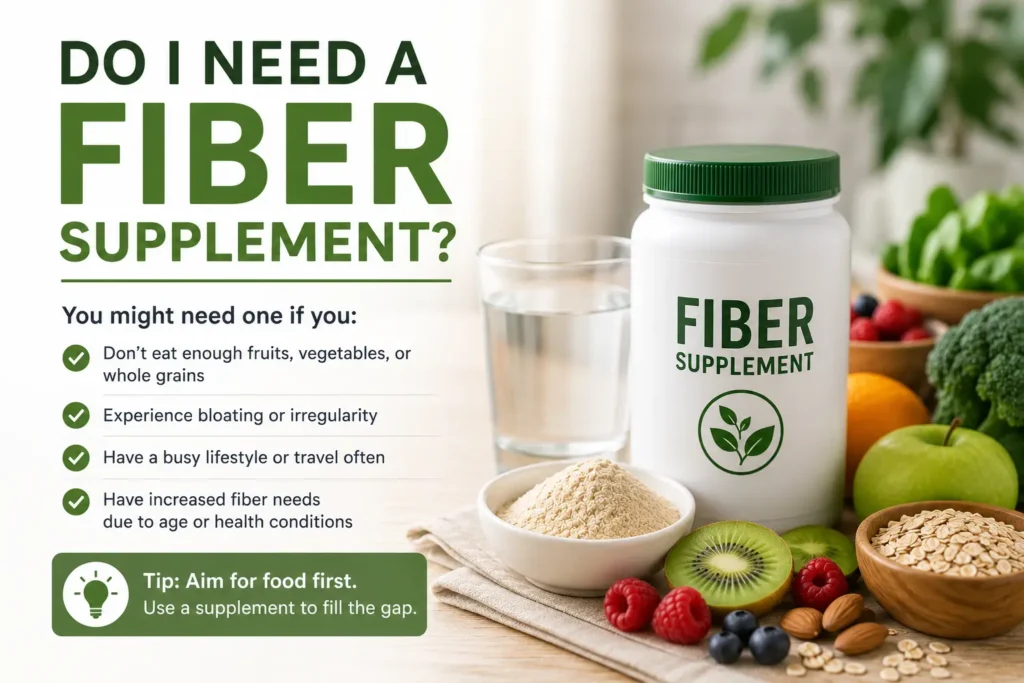
You probably need a best fiber supplement if you regularly eat low-fiber meals, deal with constipation or irregular bowel movements, or have been told by a doctor to increase your fiber intake for cholesterol or blood sugar reasons. Most adults fall short of the recommended 25–38 grams of fiber a day, and a supplement can help close that gap when food alone isn’t enough. That said, whole foods should always come first — a supplement fills in what your diet is missing, not replaces it.
If you’re still not sure, the rest of this guide walks through the exact signs to look for, who benefits most, and how to make the call with confidence.
Table of Contents
Why This Question Is Harder Than It Looks
Fiber isn’t glamorous. It doesn’t get the attention that protein or omega-3s get, so most people don’t think about it until something feels off — bloating, irregularity, or a lab result that flags high cholesterol.
The honest answer to “do I need a fiber supplement” depends on three things: how much fiber you’re already eating, what symptoms you’re experiencing, and what your health goals are. There’s no single number that applies to everyone, but there are clear patterns worth checking against your own habits.
How Much Fiber Do You Actually Need?
The general guideline from major health authorities is:
- Women: around 25 grams of fiber per day
- Men: around 38 grams of fiber per day
- Adults over 50: slightly lower targets (21g for women, 30g for men), since calorie needs typically decrease with age
Most people eating a typical Western diet get closer to 15 grams a day — roughly half of what’s recommended. That gap is exactly where a fiber supplement tends to become useful.
If you want a full breakdown of fiber-rich foods and how to track your intake without a supplement first, this guide on high-fiber foods is a good place to start.
Signs You Might Need a Fiber Supplement
You don’t need a lab test to get a reasonable read on this. Look for these patterns over the last few weeks, not just today:
- Irregular or infrequent bowel movements — fewer than three per week is a common clinical marker of constipation
- Straining or hard stools that are difficult to pass
- Feeling bloated after meals, especially ones low in vegetables, fruit, or whole grains
- A diet built around refined carbs — white bread, white rice, packaged snacks, fast food
- Recent changes in routine — travel, medication changes, or reduced physical activity, all of which can slow digestion
- A doctor has flagged high LDL cholesterol or blood sugar and recommended more fiber
- You rarely eat vegetables, legumes, or whole grains in a typical day
If two or more of these sound familiar, a fiber supplement is worth considering — alongside dietary changes, not instead of them.
Who Benefits Most From a Fiber Supplement
Some groups tend to see more noticeable benefits than others:
People with occasional constipation. Soluble fiber sources like psyllium husk are well studied for softening stool and improving regularity. If this is your main concern, psyllium husk is generally considered the most evidence-backed option.
People managing cholesterol. Soluble fiber can help lower LDL cholesterol modestly by binding to bile acids in the digestive tract. This guide on fiber for cholesterol covers the specifics.
People with limited vegetable or whole grain intake. If your schedule or appetite makes it hard to hit 25–38g through food, a supplement is a practical bridge — though it shouldn’t be the permanent solution.
People with IBS or sensitive digestion. Fiber can help or worsen symptoms depending on the type and how it’s introduced. It’s worth reading fiber supplements for IBS before starting, since the wrong type can increase gas and bloating.
Older adults. Fiber needs don’t disappear with age, but appetite and food variety often decrease. See fiber supplements for seniors for age-specific considerations.
Pregnant individuals. Hormonal changes and prenatal vitamins (particularly iron) commonly slow digestion. This is covered in more detail in fiber supplements during pregnancy.
Who Probably Doesn’t Need One
A fiber supplement isn’t automatically necessary if:
- You already eat vegetables, fruit, legumes, and whole grains at most meals
- Your bowel movements are regular and comfortable
- You have no specific cholesterol, blood sugar, or digestive concern flagged by a doctor
- You’re already tracking your fiber intake and consistently hitting 25g+ (women) or 38g+ (men) through food
In these cases, a supplement adds cost and isn’t solving a problem you actually have. Food-based fiber also comes with additional nutrients — vitamins, antioxidants, and water content — that isolated fiber supplements don’t provide. For a side-by-side look at this trade-off, see fiber supplements vs. fiber foods.
Fiber Supplement vs. Eating More Fiber: A Practical Comparison
| Factor | Fiber Supplement | Whole Food Fiber |
| Speed of results | Often noticeable within 1–3 days | Gradual, depends on diet change |
| Convenience | High — mix, chew, or swallow | Requires meal planning |
| Extra nutrients | None (isolated fiber only) | Vitamins, minerals, antioxidants |
| Cost | Ongoing recurring cost | Often cheaper, especially with staples like beans, oats |
| Best for | Filling a specific, measurable gap | Long-term, sustainable fiber intake |
| Risk of side effects | Gas, bloating if increased too fast | Lower, if increased gradually |
Neither option is universally “better” — they solve different problems. Most people get the best results using both: real food as the foundation, and a supplement to cover shortfalls on busy days.
How Fiber Supplements Actually Work
Fiber supplements generally fall into two categories, and understanding the difference matters more than most product labels suggest.
Soluble fiber dissolves in water and forms a gel-like substance in the gut. It slows digestion, helps regulate blood sugar spikes, and can lower cholesterol. Psyllium, inulin, and oat-based fibers are common soluble sources. More detail is available in this soluble fiber guide.
Insoluble fiber doesn’t dissolve and instead adds bulk to stool, helping it move through the digestive tract more efficiently. Wheat bran and cellulose-based supplements fall into this category — covered in the insoluble fiber guide.
Many supplements blend both types. If you’re unsure which one matches your symptoms, this comparison of soluble vs. insoluble fiber breaks down which to choose for constipation, cholesterol, or general maintenance.
Common Mistakes People Make With Fiber Supplements
Starting at full dose immediately. This is the single biggest cause of bloating and gas complaints. Fiber needs to be increased gradually — typically over 1–2 weeks — to let gut bacteria adjust.
Not drinking enough water. Fiber, especially soluble fiber like psyllium, needs adequate fluid to work properly. Without it, some supplements can actually worsen constipation.
Assuming more is always better. Exceeding recommended amounts doesn’t speed up results and often increases discomfort. More isn’t the goal — consistent, adequate intake is.
Taking it at the wrong time relative to medications. Fiber can affect how some medications are absorbed. Spacing fiber supplements and medications by a couple of hours is a common precaution — see when to take fiber supplements for timing guidance.
Choosing based on marketing instead of fiber type. A product labeled “fiber supplement” doesn’t tell you whether it’s soluble, insoluble, or a blend — and that distinction matters more than the brand name.
How to Decide: A Simple Framework
Ask yourself these three questions in order:
- Am I eating fiber-rich foods most days? If no, try adjusting your diet first for 1–2 weeks before adding a supplement.
- Am I still experiencing symptoms (irregularity, bloating, flagged cholesterol) after that? If yes, a supplement is a reasonable next step.
- Do I know which type of fiber matches my symptom? Constipation generally responds well to soluble fiber like psyllium; general bulk and regularity often benefit from a blend.
If you’ve answered “yes” to steps 2 and worked through step 3, you have a clear, evidence-based reason to try a fiber supplement — not just a guess.
For help narrowing down which product fits your specific situation, see how to choose a fiber supplement.
Frequently Asked Questions
Should I take fiber every day, or only when I have symptoms? Consistency matters more than timing around symptoms. Fiber works best as a steady daily habit, since gut bacteria and bowel regularity respond to sustained intake, not occasional use.
Can a fiber supplement replace vegetables and whole grains? No. Supplements provide isolated fiber but not the vitamins, minerals, and antioxidants found in whole foods. They’re best used to supplement a diet, not substitute for one.
How long does it take to notice a difference? Many people notice changes in bowel regularity within a few days to a week. Cholesterol-related benefits typically take longer — often several weeks of consistent use — to show up in lab results.
Is it normal to feel bloated when starting a fiber supplement? Mild bloating or gas is common in the first week, especially if the dose increases too quickly. It typically settles down once your gut adjusts and intake is increased gradually.
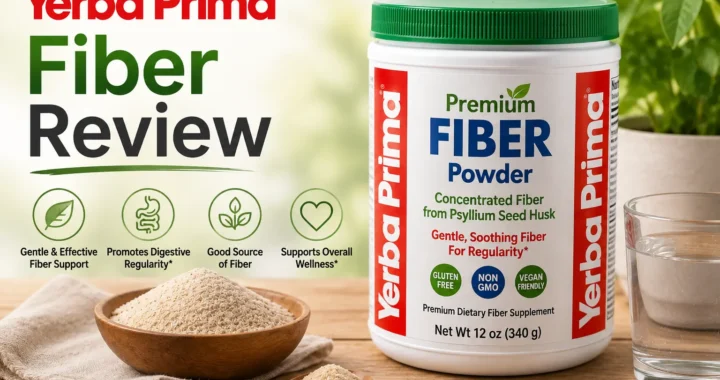
What type of fiber supplement is best for beginners? Psyllium husk is one of the most researched and versatile options, making it a common starting point. See the best psyllium husk guide for specific product considerations.
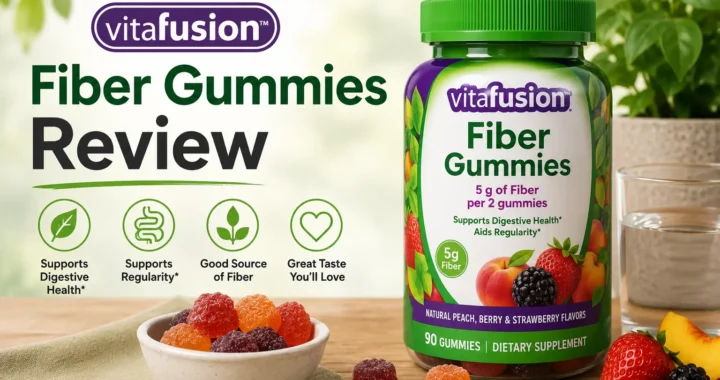
Are fiber gummies as effective as powders or pills? It depends on the fiber content per serving. Gummies often contain less fiber per dose than powders, so check the label rather than assuming the format matters more than the amount. Details are in the fiber gummies guide.
Final Verdict
Do you need a fiber supplement? If your diet is consistently low in fruits, vegetables, legumes, and whole grains, or if you’re dealing with irregularity, bloating, or a cholesterol number your doctor wants improved, then yes — a fiber supplement is a reasonable, low-risk addition to try.
If you’re already eating a fiber-rich diet and have no specific symptoms or medical guidance pointing you toward more fiber, you likely don’t need one right now — and that’s a perfectly fine answer too.
Start with food first, track how you feel for a couple of weeks, and use a supplement to close the gap rather than as the first solution. If you decide to move forward, browse the best fiber supplements to compare options suited to your specific goal, whether that’s constipation, weight management, or general daily fiber support.
This article is for educational purposes and does not replace personalized medical advice. If you have ongoing digestive symptoms, a chronic health condition, or take regular medication, talk to a doctor or registered dietitian before starting a fiber supplement.