
Most people don’t get enough fiber. The typical adult eats roughly half the recommended 25–38 grams a day, and that gap shows up as irregular digestion, blood sugar swings, and a gut microbiome that isn’t getting fed properly. A natural fiber supplement is one of the simplest ways to close that gap without relying on synthetic additives or ultra-processed “fiber-fortified” products.
Quick answer: For most people, a 100% natural psyllium husk powder is the best all-around natural fiber supplement. It’s a soluble and insoluble fiber blend, backed by the largest body of clinical research, well tolerated, and effective for constipation, diarrhea, cholesterol, and blood sugar control. Acacia fiber is the better pick if you need something gentler and low-gas, and glucomannan (konjac root) is the top choice if appetite control and weight management are your priority.
This guide walks through every major type of natural fiber supplement, how they actually work in your body, how to choose between them, and the mistakes that cause most people to quit before they see results.
Table of Contents
What Counts as a “Natural” Fiber Supplement?
A natural fiber supplement is one derived directly from a whole plant source — a seed husk, root, bean, or fruit — with little to no chemical processing. This is different from synthetic or semi-synthetic fibers like methylcellulose or wheat dextrin, which are manufactured or heavily modified in a lab.
Common all-natural fiber sources used in supplements include:
- Psyllium husk — from the seeds of Plantago ovata
- Acacia fiber (gum arabic) — sap from the acacia tree
- Inulin — extracted from chicory root
- Glucomannan — from konjac root
- Ground flaxseed and chia seed — whole seed fiber
- Partially hydrolyzed guar gum (PHGG) — from guar beans
“Natural” doesn’t automatically mean “best for you.” Each fiber type behaves differently in the gut, and the right one depends on your specific goal — which is exactly what most competitor articles skip over.
Soluble vs. Insoluble Fiber (Why This Matters More Than the Brand)
Before comparing products, it helps to understand the two basic categories, because this determines what a fiber supplement will actually do for you.
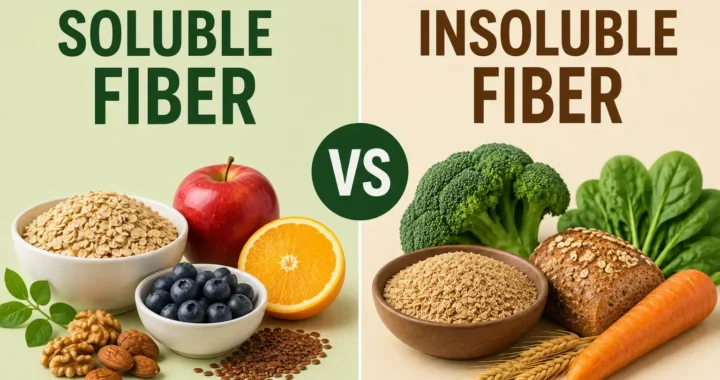
- Soluble fiber dissolves in water and forms a gel. It slows digestion, softens stool, feeds gut bacteria, and helps regulate blood sugar and cholesterol. Psyllium, acacia, inulin, and glucomannan are all primarily soluble.
- Insoluble fiber does not dissolve. It adds bulk and speeds up transit time, which helps prevent constipation. Ground flaxseed and wheat bran are largely insoluble.
Most people benefit from a mix of both — which is one reason psyllium (a naturally occurring husk-and-seed blend) performs so well across studies: it isn’t purely one or the other.
The Best Natural Fiber Supplements, Compared
| Fiber Type | Soluble/Insoluble | Best For | Gas/Bloating Risk | Taste & Texture |
| Psyllium husk | Mostly soluble, some insoluble | Constipation, diarrhea, cholesterol, blood sugar, general gut health | Low (minimally fermented) | Forms a thick gel; mix quickly |
| Acacia fiber | Soluble | Sensitive stomachs, IBS, gentle prebiotic support | Low–moderate (slow fermentation) | Tasteless, dissolves clearly |
| Inulin (chicory root) | Soluble | Feeding gut bacteria, mild sweetness in recipes | Moderate–high (fast fermentation) | Slightly sweet, dissolves well |
| Glucomannan (konjac) | Soluble | Appetite control, satiety, weight management | Moderate | Very gel-forming; needs plenty of water |
| Ground flaxseed | Insoluble + some soluble | Regularity, added omega-3s | Low | Nutty, gritty texture |
| PHGG (guar-based) | Soluble | IBS-C, very sensitive digestive systems | Very low | Dissolves without thickening |
This table alone should answer the question most competitor pages leave hanging: fiber type isn’t one-size-fits-all, and “best” depends entirely on your symptom and tolerance.
Psyllium Husk: The Most Evidence-Backed Natural Fiber Supplement
Psyllium is the fiber most frequently recommended by dietitians and referenced in clinical guidelines for a simple reason: it has the longest track record and the widest range of proven benefits.
What it does:
- Absorbs water and forms a soft, bulky gel that normalizes stool consistency in both constipation and diarrhea
- Slows glucose absorption, which can help stabilize blood sugar after meals
- Binds bile acids in the gut, contributing to modest reductions in LDL cholesterol
- Ferments slowly, so it produces less gas than inulin or many synthetic fibers
Watch for: Many commercial psyllium products (like flavored Metamucil varieties) contain added sugar, sucralose, or artificial dyes. If you want a genuinely all-natural fiber supplement, look for plain, unflavored 100% psyllium husk powder or capsules with no additives.
If you’re specifically shopping for this category, our best fiber supplement and best fiber powder guides break down specific product picks.
Acacia Fiber: The Gentlest Option for Sensitive Guts
Acacia fiber (also called gum arabic) is sourced from the sap of the acacia tree. It’s a soluble, prebiotic fiber that ferments more slowly than inulin, which means less bloating for people with sensitive digestion or IBS.
It’s not as heavily studied as psyllium, and the evidence for constipation relief specifically is weaker in comparison. But for people who’ve tried psyllium and found it too thick or gel-forming, acacia is often the next fiber worth trying — it dissolves cleanly without thickening liquids.
Inulin: A Strong Prebiotic, But Not for Everyone
Inulin, derived from chicory root, is one of the most researched prebiotic fibers for feeding beneficial gut bacteria like Bifidobacteria. It’s also nearly flavorless and mildly sweet, which is why it shows up in protein bars and “high fiber” packaged foods.
The tradeoff: inulin ferments quickly, and that fast fermentation is exactly what causes the gas and bloating many people report after starting it. If you have IBS or a sensitive gut, inulin is usually the fiber most likely to cause discomfort — start with a very small dose (1–2 grams) if you try it at all.
Glucomannan: Best for Appetite and Weight Management
Glucomannan, extracted from konjac root, absorbs an unusually large amount of water relative to its weight, expanding into a thick gel in the stomach. This is why it’s the fiber most associated with appetite control and satiety.
It needs to be taken with plenty of water — taking glucomannan capsules without enough liquid has been linked to esophageal blockage in rare cases, so this is one fiber where following dosing instructions carefully actually matters.
If weight management is your main goal, see our dedicated guide: best fiber supplement for weight loss.
Ground Flaxseed: The Whole-Food Option
Flaxseed isn’t a processed “fiber extract” — it’s a whole seed, ground for absorption. It provides a mix of soluble and insoluble fiber along with omega-3 fatty acids, making it a reasonable choice for people who want fiber and other nutritional benefits in one step. The downside is a gritty texture and a lower fiber concentration per serving compared to psyllium or glucomannan, so you generally need more of it to hit the same fiber target.
How to Choose the Best Natural Fiber Supplement for You
Rather than asking “what’s the single best fiber,” ask what you’re actually trying to solve:
- Constipation → Psyllium husk (proven, well-tolerated) — see best fiber supplement for constipation
- Sensitive stomach or IBS → Acacia fiber or PHGG (low gas)
- Cholesterol or blood sugar support → Psyllium husk (soluble gel-forming fiber)
- Appetite control / weight management → Glucomannan
- Feeding gut bacteria specifically → Inulin or acacia (start low with inulin)
- General maintenance, no strong symptoms → Psyllium husk or a psyllium-acacia blend
Women managing hormone-related digestive changes may want to see our best fiber supplement for women guide, and if you prefer capsules over powder, our best fiber pills and best fiber gummies roundups compare specific formats. If you specifically want soluble fiber only, our best soluble fiber supplement page narrows that down further.
Pros and Cons of Natural Fiber Supplements
| Pros | Cons |
| No synthetic additives when you choose plain, unflavored versions | Can cause temporary gas or bloating during the first 1–2 weeks |
| Backed by decades of research (especially psyllium) | Needs to be taken with adequate water, or it can worsen constipation |
| Supports regularity, cholesterol, blood sugar, and gut bacteria | Can interfere with absorption of certain medications if taken too close together |
| Widely available in powder, capsule, or whole-seed form | Not a substitute for fiber from whole foods long-term |
Common Mistakes People Make With Fiber Supplements
- Increasing the dose too fast. Jumping straight to 20+ grams a day is the single biggest cause of bloating and gas. Start with 3–5 grams and increase gradually over 1–2 weeks.
- Not drinking enough water. Soluble fibers absorb large amounts of liquid. Without enough water, they can make constipation worse instead of better.
- Choosing a flavored product with added sugar. Many “fiber supplements” on store shelves aren’t truly natural — check the label for added sweeteners, gums, or artificial colors.
- Taking fiber at the same time as medication. Fiber can slow or reduce absorption of some prescription drugs. A general rule is to separate fiber supplements and medications by at least 2 hours — but always confirm timing with a pharmacist or doctor for your specific medication.
- Expecting overnight results. Most people need 1–2 weeks of consistent use before bowel regularity and gut bacteria composition noticeably shift.
Is It Safe to Take a Fiber Supplement Every Day?
For most healthy adults, yes — daily use of a natural fiber supplement like psyllium is generally considered safe and is often recommended as a long-term habit rather than a short-term fix. That said, fiber supplements are not appropriate for everyone. People with a history of bowel obstruction, difficulty swallowing, or certain gastrointestinal conditions should talk to a doctor before starting one. This article is for educational purposes and isn’t a substitute for personalized medical advice.
Frequently Asked Questions
What is the healthiest natural fiber supplement? Psyllium husk has the strongest overall evidence base for digestive regularity, cholesterol, and blood sugar support, which is why it’s most often recommended as a first choice. The “healthiest” option ultimately depends on your individual digestive tolerance and goal.
Can I get all my fiber from supplements instead of food? No. Fiber supplements are meant to fill gaps, not replace whole foods. Fruits, vegetables, legumes, and whole grains provide fiber alongside vitamins, minerals, and antioxidants that isolated fiber supplements don’t contain.
Which natural fiber supplement causes the least bloating? Psyllium husk and PHGG (partially hydrolyzed guar gum) tend to cause the least gas because they ferment slowly. Inulin tends to cause the most, since gut bacteria break it down quickly.
How much natural fiber supplement should I take per day? Most products are designed to provide 3–7 grams of fiber per serving. A common approach is to start with one serving daily, taken with a full glass of water, and adjust based on tolerance and your existing dietary fiber intake.
Is psyllium husk better than Metamucil? Plain psyllium husk powder and Metamucil use the same core ingredient, but many Metamucil products include added sugar or artificial sweeteners. If you want an all-natural fiber supplement, choose unflavored, additive-free psyllium husk.
Can fiber supplements help with weight loss? Viscous, gel-forming fibers like glucomannan and psyllium can increase feelings of fullness, which may support portion control as part of a broader weight management approach. They aren’t a standalone weight-loss solution.
Final Verdict
If you want one natural fiber supplement that works for the widest range of people and goals, psyllium husk is the best-supported choice — it’s backed by more clinical research than any other natural fiber, handles both constipation and diarrhea, and supports heart and blood sugar health at the same time. If psyllium’s gel texture doesn’t agree with you, acacia fiber is the best gentle alternative, and glucomannan is worth considering specifically for appetite control.
Whichever type you choose, look for a plain, unflavored, single-ingredient product, start with a small dose, and drink plenty of water. That combination — more than any specific brand — is what determines whether a natural fiber supplement actually works for you.