
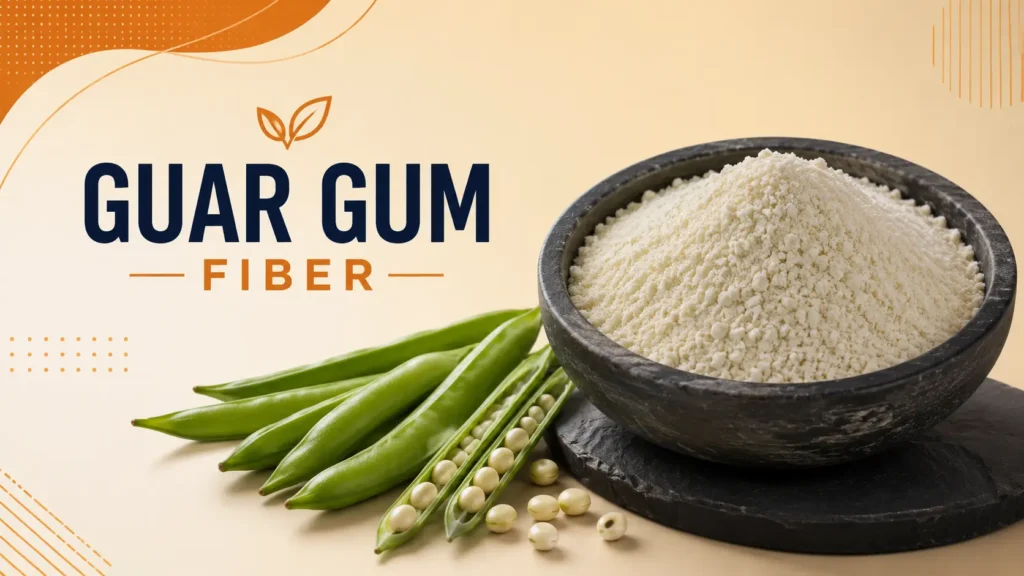
Guar gum fiber is a soluble, highly viscous dietary fiber extracted from the seed of the guar plant (Cyamopsis tetragonoloba). In supplement form, it’s most often sold as partially hydrolyzed guar gum (PHGG), a version processed to be gentler on digestion while keeping most of its benefits.
Guar gum fiber is best known for:
- Supporting regular bowel movements and improving stool consistency in both constipation and diarrhea
- Slowing sugar absorption, which may help moderate post-meal blood sugar spikes
- Modestly lowering LDL (“bad”) cholesterol
- Feeding beneficial gut bacteria as a prebiotic
- Promoting fullness after meals
It’s generally well tolerated at typical doses, though full-strength (non-hydrolyzed) guar gum can cause gas, bloating, and cramping — one reason PHGG has become the preferred form for supplements.
Table of Contents
What Is Guar Gum Fiber?
Guar gum comes from the guar plant, a legume grown mainly in India and Pakistan, with some cultivation in the southern United States. The fiber is extracted from the endosperm of the guar seed, which can make up more than 40% of the seed’s weight. Once separated and ground, it becomes the fine powder used in food, industry, and supplements.
Chemically, guar gum is a galactomannan — a long chain of sugar molecules that absorbs water and forms a thick gel. This gel-forming ability is what makes guar gum so useful, both as a food thickener (in sauces, ice cream, and baked goods) and as a fiber supplement.
There are two forms worth knowing:
- Native (whole) guar gum — the raw, unprocessed fiber. Extremely viscous and effective, but more likely to cause gas and bloating in the amounts needed for a therapeutic effect.
- Partially hydrolyzed guar gum (PHGG) — guar gum broken down enzymatically into shorter chains. It dissolves more easily, produces a thinner gel, and is far better tolerated, which is why it’s the form used in most modern fiber supplements and clinical research on IBS and constipation.
If you want a deeper technical comparison between the two, see our dedicated guide to PHGG (partially hydrolyzed guar gum).
Is Guar Gum Soluble or Insoluble Fiber?
Guar gum is a soluble fiber. That means it dissolves in water rather than passing through the gut largely intact the way insoluble fiber does.
When soluble guar gum mixes with water in the stomach and intestines, it forms a thick, viscous gel. This gel:
- Slows down how quickly the stomach empties
- Slows the absorption of sugar and cholesterol in the small intestine
- Adds bulk and softness to stool in the large intestine
This is the same general mechanism used by other soluble fibers like psyllium husk, oat beta-glucan, and inulin — though guar gum’s viscosity and fermentation rate are notably higher, which explains both its stronger blood-sugar effects and its greater potential for gas if introduced too quickly. If you’re still deciding between fiber types, our soluble vs. insoluble fiber comparison breaks this down further.
How Guar Gum Fiber Works in the Body
- In the stomach: Guar gum absorbs water and swells, forming a viscous gel that slows gastric emptying. This contributes to a longer-lasting feeling of fullness after meals.
- In the small intestine: The thick gel coats the intestinal lining and slows the diffusion of glucose and cholesterol across the gut wall, which is the mechanism behind its blood sugar and cholesterol effects.
- In the large intestine: Unlike some fibers, guar gum is almost completely fermented by gut bacteria. This fermentation produces short-chain fatty acids (SCFAs) — acetate, propionate, and butyrate — which nourish colon cells and support a healthy gut microbiome. This fermentability is also why guar gum (especially the native form) tends to cause more gas than fibers that ferment more slowly.
Guar Gum Fiber Benefits
1. Digestive Regularity (Constipation and Diarrhea)
Guar gum is a common bulk-forming ingredient in laxative formulas because it helps hold water in the stool. Research on PHGG specifically has shown improvements in stool frequency, consistency, and ease of passage in people with constipation, and it has also been studied as a way to firm up loose stools in diarrhea — a dual effect that’s fairly unusual among fiber types. If constipation is your main concern, compare options in our guide to the best fiber supplement for constipation.
2. Blood Sugar Management
Because the gel slows carbohydrate digestion and absorption, guar gum has been studied for its effect on post-meal blood sugar. Clinical trials in people with type 2 diabetes have shown improvements in post-meal glucose response and, in some longer trials, better long-term glycemic control. This should be viewed as a supportive dietary strategy, not a treatment — anyone managing diabetes should coordinate fiber use with their physician.
3. Cholesterol Support
Soluble fibers like guar gum bind to bile acids in the gut, which prompts the liver to pull more cholesterol from the blood to make new bile acids. Some studies in people with elevated cholesterol have reported meaningful reductions in LDL cholesterol with regular guar gum use, alongside modest improvements in triglycerides.
4. Irritable Bowel Syndrome (IBS)
PHGG has one of the better evidence bases among fiber types for IBS specifically. Clinical trials suggest it can reduce abdominal pain and improve bowel habits and quality of life in people with IBS, likely because its gentler fermentation profile causes less of the gas and bloating that often limits fiber use in this group. See our full best fiber supplement for IBS guide for more.
5. Prebiotic, Gut-Feeding Effects
As guar gum ferments in the colon, it feeds beneficial bacteria and increases production of short-chain fatty acids, which support the gut lining and may play a role in metabolic health. This places guar gum in the same broad category as other prebiotic fiber supplements.
6. Appetite and Fullness
By slowing stomach emptying, guar gum can increase feelings of fullness after a meal. However, it’s worth being clear-eyed here: a well-known meta-analysis of randomized trials found that guar gum did not produce meaningful weight loss on its own. If weight management is your primary goal, it’s better viewed as one supporting habit within a broader plan — see best fiber supplement for weight loss for more realistic expectations.
Guar Gum Fiber: Pros and Cons
| Pros | Cons |
| Strong evidence for digestive regularity in both constipation and diarrhea | Native (unhydrolyzed) form is thick and can be unpleasant to mix or drink |
| One of the better-studied fibers for IBS symptom relief | Can cause gas, bloating, or cramping — especially if increased too quickly |
| Supports post-meal blood sugar control | High doses may cause GI discomfort or, rarely, obstruction if not taken with enough fluid |
| May help lower LDL cholesterol | Not an effective standalone weight-loss tool |
| Acts as a prebiotic, feeding beneficial gut bacteria | Some people may have a guar or legume sensitivity |
| PHGG form is well tolerated even at therapeutic doses | Effects on glucose/cholesterol are modest, not a substitute for medication |
Guar Gum Fiber Dosage
There’s no single official recommended dose, since guar gum is used at different amounts depending on the goal and the form (native vs. PHGG). As a general reference point from clinical research:
| Use Case | Typical Studied Dose | Notes |
| General digestive support | 5–10 g/day | Usually split across 2–3 doses with meals |
| IBS symptom relief (PHGG) | 5–6 g/day | Often for 4–12 weeks in trials |
| Blood sugar / cholesterol support | 9–15 g/day | Higher end typically used under supervision |
| Constipation | 15 g/day (upper range studied) | Most studies found doses up to this level well tolerated |
Practical tips:
- Start low and increase gradually. Beginning with 2–5 grams and increasing over 1–2 weeks reduces the risk of gas and bloating.
- Drink plenty of water. Because guar gum absorbs large amounts of liquid, taking it without enough fluid can cause it to thicken in the throat or esophagus — a genuine choking/obstruction risk that’s specific to viscous gel-forming fibers like this one.
- PHGG is usually the better starting point for most people, since it delivers similar benefits with less gas than native guar gum.
This is general educational information, not a personalized dosage recommendation. If you’re pregnant, have a swallowing disorder, or take medication that could interact with delayed absorption, talk to a healthcare provider before starting. For pregnancy-specific guidance, see best fiber supplement for pregnancy.
Side Effects of Guar Gum Fiber
Most people tolerate guar gum well, particularly the PHGG form, and most published research has not found evidence of serious toxicity. Reported side effects are generally mild and digestive:
- Gas and bloating
- Abdominal cramping
- Diarrhea or loose stools (especially at higher doses or with native guar gum)
- Nausea in sensitive individuals
Less common but important:
- Esophageal or intestinal obstruction has been reported, almost always linked to taking guar gum (or guar-containing weight-loss products) without enough water, or in tablet/capsule form that swells before fully dissolving. This is rare but is the reason guar gum is generally not recommended in capsule form for weight loss.
- Allergic reaction is possible in people with a legume or guar sensitivity.
- Blood sugar interactions: because guar gum can lower post-meal blood sugar, people on diabetes medication should monitor for low blood sugar and adjust under medical guidance.
If you experience severe abdominal pain, chest pain, or difficulty swallowing after taking a guar gum product, stop use and seek medical attention — these can be signs of obstruction.
Guar Gum vs. Psyllium Husk vs. Inulin
A common question is how guar gum stacks up against other popular soluble fibers.
| Fiber | Viscosity | Fermentation Speed | Best Known For | Typical GI Tolerance |
| Guar gum (PHGG) | High | Fast, complete | IBS, blood sugar, cholesterol | Good (PHGG) / Moderate (native) |
| Psyllium husk | High | Slow, partial | Constipation, cholesterol, stool bulking | Very good |
| Inulin | Low | Very fast | Prebiotic/gut bacteria support | Poor at high doses (gas-prone) |
Key takeaway: Psyllium tends to be gentler for general bulk-forming constipation relief, guar gum (PHGG) has a stronger track record specifically for IBS and blood sugar support, and inulin is the most fermentable but also the most likely to cause gas at effective doses. For a full side-by-side, see our best soluble fiber supplement guide.
Who Should Consider Guar Gum Fiber?
Guar gum fiber may be worth considering if you:
- Struggle with IBS symptoms and want a fiber with clinical backing for that specific condition
- Deal with alternating constipation and diarrhea and want a fiber that can help with both
- Are managing prediabetes or type 2 diabetes and want dietary support alongside medical care
- Have elevated cholesterol and want a food-based approach to complement treatment
- Want a prebiotic fiber that’s gentler than inulin
It may be less ideal if you:
- Have a history of swallowing difficulties or esophageal narrowing
- Are looking primarily for a weight-loss aid (the evidence doesn’t support this use)
- Prefer a fiber you can take without carefully controlling water intake
If you’re not sure guar gum is the right fit, our guide on how to choose a fiber supplement walks through the decision process by goal, and do I need a fiber supplement is a good starting point if you’re new to fiber supplementation altogether.
Common Mistakes People Make With Guar Gum Fiber
- Jumping straight to a high dose. This is the single biggest cause of bloating and gas complaints. Build up gradually over 1–2 weeks.
- Not drinking enough water. Guar gum needs fluid to work safely and effectively — skipping this increases both discomfort and obstruction risk.
- Using native guar gum when PHGG would be better tolerated. Many people give up on guar gum after a bad experience with the unhydrolyzed form, without realizing PHGG exists.
- Expecting weight-loss results. The research doesn’t support guar gum as a standalone weight-loss tool, even though it does promote fullness.
- Taking it at the same time as medications. Because it slows absorption, guar gum can reduce or delay the absorption of some oral medications. A general rule is to separate guar gum from medications by 1–2 hours, but check with a pharmacist for specific drugs.
Frequently Asked Questions
Is guar gum the same as PHGG? No. PHGG (partially hydrolyzed guar gum) is a processed version of native guar gum, broken into shorter chains to reduce viscosity and improve tolerability. Both come from the same source, but PHGG causes fewer digestive side effects at effective doses.
Is guar gum fiber safe to take daily? For most healthy adults, yes — guar gum, especially PHGG, has been used daily in clinical trials lasting several months without evidence of serious harm. As with any supplement, it’s worth checking with a healthcare provider if you have an existing digestive or swallowing condition.
Does guar gum cause gas? It can, particularly the native (unhydrolyzed) form or if you increase your dose too quickly. Because guar gum ferments almost completely in the colon, some gas production is a normal part of how it works. PHGG tends to cause noticeably less gas.
Can guar gum help with weight loss? Not reliably as a standalone strategy. It may support fullness after meals, but a well-known meta-analysis of clinical trials found no significant weight-loss benefit from guar gum supplementation alone.
Is guar gum gluten-free? Yes. Guar gum comes from a legume, not a grain, and is naturally gluten-free — which is also why it’s commonly used as a gluten-free thickener in baking.
What’s the difference between guar gum and xanthan gum? Both are used as thickeners, but xanthan gum is produced by bacterial fermentation of sugar, while guar gum comes directly from a plant seed. As a fiber supplement, guar gum (particularly PHGG) has a much larger body of clinical research behind it; xanthan gum is used almost exclusively as a food additive rather than a fiber supplement.
Can I take guar gum with other fiber supplements? It’s possible, but it’s best to introduce one fiber source at a time so you can track tolerance. Combining multiple viscous fibers at high doses without enough water increases the risk of digestive discomfort.
Final Verdict
Guar gum fiber, particularly in its partially hydrolyzed (PHGG) form, is one of the more clinically supported soluble fibers available — with genuine evidence for digestive regularity, IBS symptom relief, and modest blood sugar and cholesterol benefits. It’s not a weight-loss shortcut, and it does require attention to dosing and water intake to avoid digestive side effects. For most people looking for a well-researched, gut-friendly soluble fiber, PHGG-based guar gum is a reasonable and evidence-backed choice — especially when introduced gradually.
For a broader look at how guar gum compares to other options, browse our full fiber supplement library, including guides on psyllium husk, inulin fiber, and acacia fiber.
This article is for educational purposes only and is not a substitute for professional medical advice. Talk to a healthcare provider before starting any new supplement, especially if you have a medical condition or take medication.