
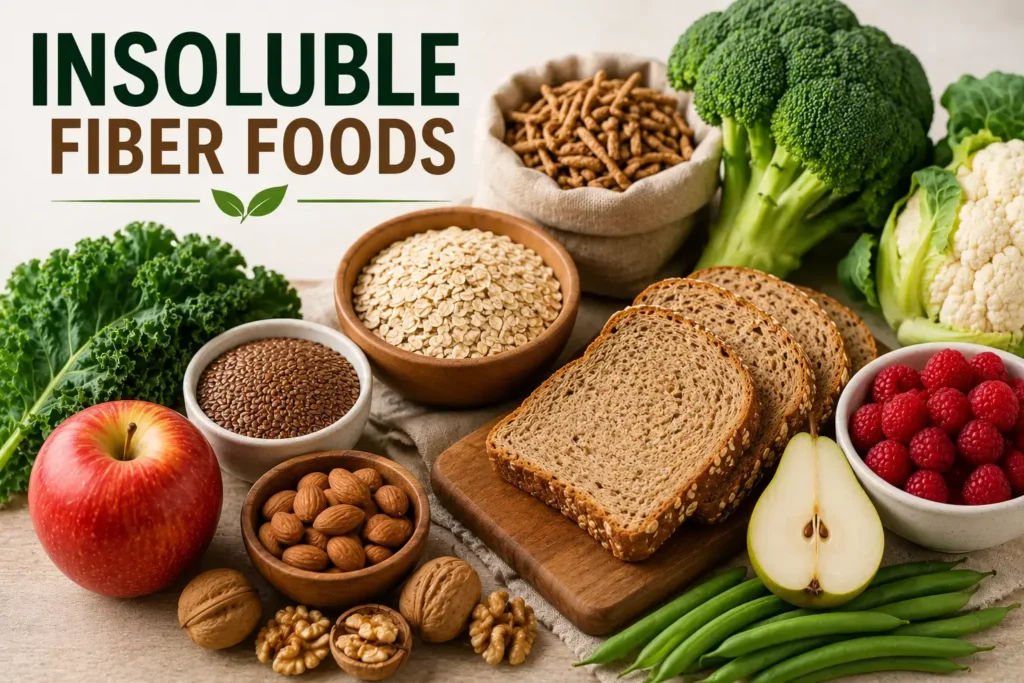
If you’ve ever been told to “eat more fiber” for constipation or sluggish digestion, insoluble fiber foods are usually what your doctor or dietitian means. Unlike soluble fiber, which dissolves into a gel, insoluble fiber passes through your digestive tract mostly intact, adding bulk to stool and helping things move along.
Quick answer: The best insoluble fiber foods include wheat bran, whole wheat products, brown rice, quinoa, legumes, nuts, seeds, leafy greens like kale and spinach, cruciferous vegetables such as broccoli and cauliflower, and fruits and vegetables with the skin left on, like apples, pears, and potatoes. Most adults should aim for 25 to 38 grams of total fiber per day, spread across both soluble and insoluble sources.
This guide covers exactly which foods are highest in insoluble fiber, how much you need, how it compares to soluble fiber, and how to add it to your diet without triggering bloating or discomfort — something competitor lists often skip.
Table of Contents
What Is Insoluble Fiber, Exactly?
Fiber is the part of plant food your body can’t fully digest. It’s generally split into two categories based on how it behaves in water:
- Insoluble fiber does not dissolve in water. It stays mostly intact as it travels through your gut, adding bulk and structure to stool. This is the fiber most associated with easing constipation and supporting regular bowel movements.
- Soluble fiber dissolves in water and forms a gel-like substance. It’s more closely linked to lowering cholesterol and steadying blood sugar.
Most whole plant foods contain a mix of both types — very few foods are purely one or the other. When a food is described as “high in insoluble fiber,” it simply means insoluble fiber makes up the larger share of its total fiber content.
If you want a deeper breakdown of how the two types differ, see our guide on soluble vs. insoluble fiber.
Insoluble Fiber Foods List (By Category)
Below is a practical, categorized list of foods high in insoluble fiber. Amounts are approximate per standard serving and can vary by brand, ripeness, and preparation method.
Whole Grains
| Food | Serving | Approx. Insoluble Fiber |
| Wheat bran | ¼ cup | 6 g |
| Whole wheat bread | 2 slices | 3–4 g |
| Brown rice, cooked | 1 cup | 3 g |
| Quinoa, cooked | 1 cup | 4 g |
| Bulgur wheat, cooked | 1 cup | 5 g |
| Popcorn, air-popped | 3 cups | 3 g |
Legumes
| Food | Serving | Approx. Insoluble Fiber |
| Black beans, cooked | ½ cup | 3 g |
| Lentils, cooked | ½ cup | 3–4 g |
| Chickpeas, cooked | ½ cup | 3 g |
| Green peas | 1 cup | up to 15 g (total fiber, mostly insoluble) |
Vegetables
| Food | Serving | Approx. Insoluble Fiber |
| Broccoli, cooked | 1 cup | 4 g |
| Cauliflower, cooked | 1 cup | 4 g |
| Carrots | 1 cup | 3 g |
| Green beans | 1 cup | 3 g |
| Spinach, cooked | 1 cup | 4–5 g |
| Swiss chard, cooked | 1 cup | 3 g |
| Potato, with skin | 1 medium | 2–3 g |
Nuts and Seeds
| Food | Serving | Approx. Insoluble Fiber |
| Almonds | 1 oz | 3–4 g |
| Walnuts | 1 oz | 2 g |
| Flaxseeds, ground | 2 tbsp | 2–3 g |
| Chia seeds | 2 tbsp | 3 g |
Fruits (With Edible Skin)
| Food | Serving | Approx. Insoluble Fiber |
| Apple, with skin | 1 medium | 1.5–2 g |
| Pear, with skin | 1 medium | 3 g |
| Raspberries | ½ cup | 2 g |
| Strawberries | 1 cup | 2–3 g |
| Prunes | 4 medium | 1.5–2 g |
Practical tip most competitor lists miss: Peeling fruits and vegetables removes a meaningful share of their insoluble fiber, since much of it is concentrated in the skin. Leaving the skin on apples, pears, potatoes, and cucumbers is one of the easiest ways to raise your intake without changing your grocery list.
Insoluble vs. Soluble Fiber: A Quick Comparison
| Insoluble Fiber | Soluble Fiber | |
| Behavior in water | Does not dissolve | Dissolves into a gel |
| Main benefit | Adds bulk, speeds transit, eases constipation | Slows digestion, may lower cholesterol and steady blood sugar |
| Top food sources | Wheat bran, whole grains, vegetable skins, nuts | Oats, beans, apples, citrus, chia seeds |
| Best for | Constipation, irregularity | Cholesterol management, blood sugar control |
Because most whole foods contain both types, you don’t need to track them separately meal by meal. The simplest approach is to eat a wide variety of whole grains, vegetables, fruits, legumes, and nuts — you’ll naturally get a mix of both. If you’re comparing supplement options instead of whole foods, our guide to the best soluble fiber supplement and insoluble fiber supplement options breaks this down further.
How Insoluble Fiber Helps Digestion
Insoluble fiber works mechanically rather than chemically. As it moves through your intestines largely undigested, it:
- Adds bulk to stool, which helps it pass more easily and consistently
- Speeds up transit time, reducing the time waste spends sitting in the colon
- Stimulates the intestinal walls, encouraging regular muscle contractions that move stool along
- May support long-term bowel health by reducing straining and pressure in the colon
This is why insoluble fiber is the type most often recommended for constipation, while soluble fiber tends to be recommended more for cholesterol and blood sugar goals. If constipation is your main concern, our best fiber supplement for constipation guide covers supplement options alongside food-based strategies.
How Much Insoluble Fiber Do You Need Per Day?
There’s no official separate daily target for insoluble fiber alone — recommendations cover total dietary fiber (soluble and insoluble combined). General guidance is:
- Women 50 and under: about 25 grams of total fiber per day
- Men 50 and under: about 38 grams of total fiber per day
- Women over 50: about 21–25 grams per day
- Men over 50: about 28–30 grams per day
Most adults fall well short of these numbers, typically getting closer to 15 grams a day. Since insoluble fiber makes up the majority of fiber in most vegetables, whole grains, and skins, simply hitting your total fiber target from a variety of whole foods will usually cover your insoluble fiber needs too.
For age- and life-stage-specific guidance, see our breakdowns for fiber supplements for seniors, women, and men.
How to Add More Insoluble Fiber Without Bloating or Gas
This is the part most competitor articles leave out: fiber is only helpful if your body tolerates it well. A sudden jump in insoluble fiber intake is one of the most common causes of bloating, gas, and cramping.
- Increase gradually. Add 3–5 grams of extra fiber every few days rather than doubling your intake overnight.
- Drink more water as you add fiber. Insoluble fiber needs fluid to do its job properly; without enough water, it can worsen constipation instead of relieving it.
- Spread intake across meals. Eating all your fiber at dinner is harder on digestion than spreading it across breakfast, lunch, and dinner.
- Cook some vegetables instead of eating everything raw. Cooking softens cellulose structures, which can make vegetables easier to tolerate while you build up your fiber intake.
- Pair fiber with movement. Light activity like walking after meals can help reduce the bloated feeling some people experience when increasing fiber.
If you experience persistent bloating even after these adjustments, a fiber supplement that doesn’t cause gas may be a gentler starting point than jumping straight to high-fiber whole foods.
Common Mistakes When Trying to Eat More Insoluble Fiber
- Peeling fruits and vegetables. As noted above, this removes a large share of the insoluble fiber they contain.
- Increasing fiber without increasing water. This is the single most common reason fiber backfires and worsens constipation instead of easing it.
- Relying only on fruit for fiber. Fruit is a good source, but whole grains, legumes, and vegetables generally contain more fiber per serving.
- Assuming all “wheat” products are high in fiber. Many products labeled “wheat bread” are made mostly from refined flour. Look for “100% whole wheat” or “whole grain” as the first ingredient.
- Ignoring soluble fiber entirely. Since digestive and metabolic health both benefit from a mix, focusing exclusively on insoluble sources can leave gaps in cholesterol and blood sugar support.
Foods High in Insoluble Fiber vs. Foods High in Soluble Fiber (At a Glance)
| Mostly Insoluble Fiber | Mostly Soluble Fiber |
| Wheat bran | Oat bran |
| Whole wheat products | Barley |
| Brown rice | Chia seeds |
| Cauliflower, broccoli | Beans, lentils |
| Nuts, seeds | Citrus fruits |
| Fruit and vegetable skins | Apples (pulp), pears (pulp) |
For a broader list that isn’t split by fiber type, see our full guide to high fiber foods.
Frequently Asked Questions
What is the single best food source of insoluble fiber? Wheat bran is one of the most concentrated sources, offering several grams of insoluble fiber in a small serving. However, no single food should replace a varied diet — different foods contribute different fiber structures and nutrients.
Can too much insoluble fiber be a problem? Yes. Increasing insoluble fiber too quickly, or without enough water, can cause bloating, gas, and in some cases worsen constipation rather than relieve it. People with certain digestive conditions, such as active flare-ups of inflammatory bowel disease, may also be advised to limit insoluble fiber temporarily. Always check with a healthcare provider if you have a diagnosed digestive condition.
Is oatmeal high in insoluble or soluble fiber? Oats are mostly known for soluble fiber (beta-glucan), though they do contain some insoluble fiber as well. If you’re focused on insoluble fiber specifically, pair oats with wheat bran or ground flaxseed.
Do insoluble fiber foods help with weight loss? Insoluble fiber adds bulk and can increase feelings of fullness, which may support portion control. It’s not a weight-loss tool on its own, but it can be a useful part of a broader eating pattern. Our fiber supplement for weight loss guide explores this in more depth.
Should I get insoluble fiber from food or supplements? Whole foods are generally the better first choice, since they also provide vitamins, minerals, and other plant compounds that supplements don’t. Supplements can be useful when food intake alone isn’t meeting your needs. See our comparison of fiber supplements vs. fiber foods for a full breakdown.
The Bottom Line
Insoluble fiber foods — wheat bran, whole grains, legumes, vegetables, nuts, seeds, and fruit and vegetable skins — are the most reliable dietary tool for supporting regular bowel movements and easing constipation. Because most whole foods naturally contain a mix of soluble and insoluble fiber, the simplest strategy is to eat a wide variety of minimally processed plant foods, increase your intake gradually, and drink enough water along the way.
If you’ve made these changes and still struggle to hit your daily fiber target, browse our guide to choosing a fiber supplement to find an option that fits your goals.
This article is for educational purposes only and is not a substitute for personalized medical advice. Speak with a healthcare provider before making significant changes to your fiber intake, especially if you have an existing digestive condition.