
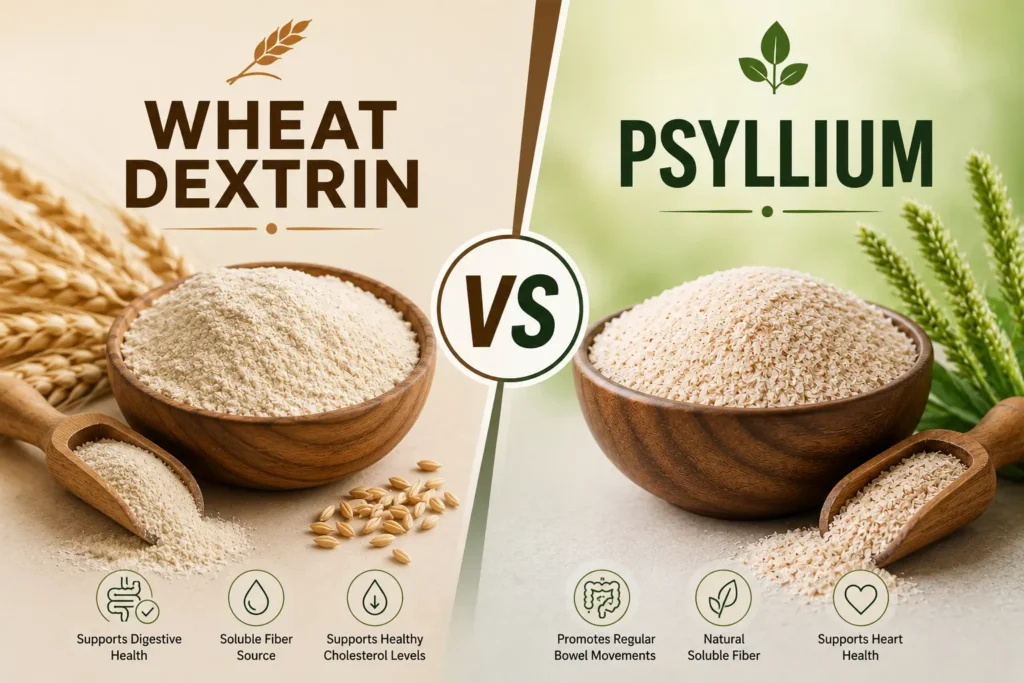
Wheat dextrin and psyllium are both soluble fibers, but they don’t behave the same way once they’re in your body, and the difference isn’t small. Wheat dextrin — the fiber behind products like Benefiber — is a non-viscous, highly fermentable fiber. It dissolves completely and invisibly in liquid without thickening it, which makes it easy to add to drinks and food, but it does not form a gel. Psyllium husk is viscous and gel-forming, and that gel is the mechanical reason it works for regularity, cholesterol, and blood sugar in ways wheat dextrin doesn’t.
This isn’t just theory. A randomized, controlled 3-month clinical trial that compared the two head-to-head found that psyllium significantly lowered LDL (“bad”) cholesterol by about 17% and total cholesterol by about 11%, while wheat dextrin — used as the study’s non-viscous comparison — showed no such effect. If your goal is cholesterol management, constipation, diarrhea, or blood sugar support, psyllium is the better-evidenced choice. If you want a tasteless, undetectable way to nudge up daily fiber intake and gently feed gut bacteria, wheat dextrin is a reasonable, low-effort option.
Table of Contents
What Is Wheat Dextrin?
Wheat dextrin is a soluble fiber made by processing wheat starch, breaking it down and modifying it so it dissolves completely in water or other liquids without adding thickness or texture. This is why it’s marketed as an “invisible” fiber — it doesn’t change the taste, texture, or color of the drink or food it’s mixed into.
Key characteristics:
- Soluble fiber only, with no meaningful insoluble fraction
- Non-viscous — dissolves clear, doesn’t gel
- Highly fermentable by gut bacteria, which functions as a prebiotic but also increases the likelihood of gas and bloating, especially early on
- Derived from wheat starch, so trace gluten is possible even though many products are labeled gluten-free (typically under 20 ppm)
- The main ingredient in Benefiber and similar “tasteless” fiber products
Wheat dextrin’s biggest practical advantage is convenience: it disappears into coffee, water, or soup with no grittiness or thickening. For a closer look at where it fits among fermentable fibers, see our wheat dextrin guide and resistant dextrin comparison.
What Is Psyllium Husk?
Psyllium husk comes from the seed coating of Plantago ovata, a plant grown mainly in India. Unlike wheat dextrin, it is roughly 70% soluble and 30% insoluble fiber, and — critically — it is minimally fermented rather than rapidly broken down by gut bacteria.
Key characteristics:
- Viscous, gel-forming — absorbs many times its weight in water to create a thick gel
- Largely resists fermentation, which is part of why it tends to cause less gas than wheat dextrin over time
- Holds an FDA-recognized health claim: 7g/day of psyllium soluble fiber, as part of a diet low in saturated fat and cholesterol, may reduce heart disease risk
- Naturally gluten-free, since it comes from a seed husk, not a wheat source
- The most clinically studied fiber supplement available, with decades of trial data behind it
For more detail, see our psyllium husk guide and psyllium husk benefits page.
Wheat Dextrin vs Psyllium: Side-by-Side Comparison
| Factor | Wheat Dextrin | Psyllium Husk |
| Source | Modified wheat starch | Husk of Plantago ovata seeds |
| Fiber type | Soluble only | ~70% soluble, ~30% insoluble |
| Viscosity | Non-viscous — dissolves without thickening | Highly viscous — forms a thick gel |
| Fermentability | High (acts as a prebiotic) | Low to moderate |
| Texture in drinks | Invisible, no thickening | Noticeably thickens, slightly gritty |
| Cholesterol evidence | No meaningful effect shown in head-to-head trials | Clinically shown to lower LDL and total cholesterol |
| Regulatory health claim | None specific to heart health | FDA-recognized cholesterol-reduction claim |
| Constipation/diarrhea relief | Limited — lacks the gel mechanism needed for bulk-forming laxative effect | Effective for both, due to its gel |
| Gluten content | Trace amounts possible, even in “gluten-free” labeled products | Naturally gluten-free |
| Best known for | Discreet, tasteless daily fiber boost; prebiotic gut support | Regularity, cholesterol, blood sugar, IBS support |
The Study Competitors Mention but Rarely Explain
Several sources reference a study titled “Psyllium Is Superior to Wheat Dextrin for Lowering Elevated Serum Cholesterol,” but few explain what it actually tested or why the result makes physiological sense. It’s worth breaking down, because it’s the clearest real-world illustration of why these two fibers aren’t interchangeable.
The trial was a 3-month, randomized, controlled study comparing psyllium husk (about 3.4g) against wheat dextrin (about 3.5g), each taken three times daily before meals in adults with elevated cholesterol. The result: psyllium lowered LDL cholesterol by roughly 17% and total cholesterol by roughly 11%, with no significant change in HDL. Wheat dextrin, used as the non-viscous comparison fiber, did not produce the same cholesterol-lowering effect.
The explanation isn’t that wheat dextrin is a “worse” fiber overall — it’s that cholesterol-lowering and blood sugar benefits are tied specifically to viscosity, not to fiber content in general. Psyllium’s gel physically traps bile acids and cholesterol-containing compounds in the gut, prompting the liver to pull more LDL cholesterol from the blood to make more bile acids. Wheat dextrin, lacking that gel-forming structure, simply doesn’t create the same mechanical effect, regardless of how much fiber it contributes on a nutrition label.
How They Work in the Body
Wheat dextrin’s main site of action is the large intestine, where gut bacteria rapidly ferment it. This fermentation feeds beneficial bacteria (a genuine prebiotic benefit) but produces gas as a byproduct, which is why bloating is a commonly reported side effect, especially when starting out or increasing the dose quickly.
Psyllium’s gel begins working earlier, forming as soon as it contacts liquid in the stomach and small intestine. That gel slows gastric emptying, moderates how quickly sugar is absorbed, binds bile acids for excretion, and adds both bulk and moisture to stool as it moves through the large intestine. This dual soluble/insoluble, low-fermentation profile is part of why it’s often used as the reference example in our soluble vs insoluble fiber guide.
Benefits: Where Each One Actually Wins
Cholesterol Management
Psyllium wins clearly here, both by mechanism and by direct clinical comparison, as detailed above. Wheat dextrin has not demonstrated a comparable cholesterol-lowering effect in controlled research. See best fiber supplement for cholesterol for more on viscous fibers that do have supporting evidence.
Constipation and Diarrhea
Psyllium’s gel gives it a dual action — bulking and softening stool for constipation, while also helping firm up loose stool. Wheat dextrin lacks the gel-forming structure needed for a meaningful bulk-forming laxative effect, making it a weaker choice for either issue. For targeted options, see best fiber supplement for constipation and best fiber supplement for diarrhea.
Blood Sugar Support
Viscosity is again the deciding factor. Psyllium’s gel slows carbohydrate absorption and has supporting evidence for blunting post-meal blood sugar spikes. Wheat dextrin’s non-viscous, rapidly fermented profile does not produce the same effect.
Gut Microbiome / Prebiotic Support
This is wheat dextrin’s strongest category. Its rapid fermentability means it actively feeds gut bacteria, functioning as a genuine prebiotic. Psyllium offers some prebiotic activity too, but far less, since it resists fermentation. If gut bacteria support is the main goal, compare options in best prebiotic fiber supplement.
Everyday Convenience
Wheat dextrin’s biggest practical strength is that it’s genuinely invisible — no grit, no thickening, easy to add to coffee or a smoothie without changing the experience. Psyllium requires more intentional mixing and is noticeably thicker, which some people find harder to get used to.
Side Effects and Practical Considerations
| Wheat Dextrin | Psyllium Husk | |
| Common side effects | Gas and bloating, especially early on, due to fast fermentation | Gas, bloating, or fullness, especially if introduced too quickly |
| Water requirement | Standard fluid intake | Important — must be taken with a full glass of water |
| Gluten concern | Derived from wheat; trace gluten possible even in labeled gluten-free versions | Naturally gluten-free |
| Texture tolerance | Easy — no thickening | Some people dislike the gel texture; capsules are an alternative, see psyllium husk capsules |
| Medication interaction | Minimal reported concern | Can affect absorption of some medications; space doses by roughly two hours |
| Not ideal for | Anyone needing a laxative or cholesterol effect specifically | People who dislike gel texture or have a diagnosed psyllium allergy |
This is educational information, not medical advice. People with celiac disease or a significant gluten sensitivity should choose a certified gluten-free fiber product or opt for psyllium, and should discuss any wheat-derived supplement with a healthcare provider first.
Common Mistakes People Make With These Two Fibers
- Choosing wheat dextrin for constipation relief because it’s “easier to take.” Convenience doesn’t translate to laxative effect — the lack of viscosity is precisely why it underperforms psyllium for regularity.
- Assuming all “soluble fiber” products have the same cholesterol benefit. As the clinical comparison above shows, viscosity — not just fiber solubility — determines whether a fiber lowers cholesterol.
- Overlooking gluten content in wheat dextrin products. Even gluten-free-labeled versions may carry trace amounts; this matters for anyone with celiac disease.
- Increasing either fiber too quickly. Wheat dextrin’s fast fermentation and psyllium’s gel formation can both cause bloating if the dose isn’t ramped up gradually, as outlined in how to choose a fiber supplement.
- Expecting wheat dextrin to help with blood sugar control. Its non-viscous profile means it doesn’t slow carbohydrate absorption the way psyllium does.
Can You Use Both Together?
Yes, and it’s a genuinely complementary pairing. Wheat dextrin can serve as a low-effort, background prebiotic added to daily drinks, while psyllium is used more intentionally around meals for its gel-based regularity, cholesterol, and blood sugar benefits. If combining, increase both gradually to avoid stacking gas-producing effects. For a broader look at pairing fibers with different mechanisms, see types of dietary fiber ingredients.
Decision Framework: Which One Should You Choose?
Choose wheat dextrin if:
- You want a completely tasteless, texture-free way to boost daily fiber intake
- Your main goal is gentle, ongoing prebiotic support for gut bacteria
- You don’t have celiac disease or a significant gluten sensitivity
Choose psyllium if:
- You want research-backed support for cholesterol or blood sugar
- You need help with constipation, diarrhea, or general bowel irregularity
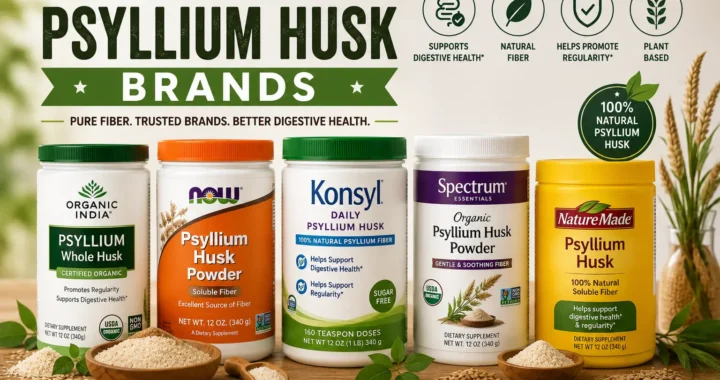
- You need a naturally gluten-free fiber source — see best psyllium husk options
Choose both if:
- You want the discreet, everyday convenience of wheat dextrin alongside the targeted physiological benefits of psyllium
Frequently Asked Questions
Is wheat dextrin as effective as psyllium for lowering cholesterol? No. A randomized, controlled head-to-head trial found psyllium significantly lowered LDL and total cholesterol, while wheat dextrin did not produce the same effect. This comes down to viscosity — psyllium gels, wheat dextrin doesn’t.
Does wheat dextrin contain gluten? Wheat dextrin is derived from wheat starch. Processing removes most gluten, and many products are labeled gluten-free (typically under 20 parts per million), but trace amounts are still possible. People with celiac disease should either choose a certified gluten-free product or use psyllium instead, which is naturally gluten-free.
Which fiber is better for constipation, wheat dextrin or psyllium? Psyllium is the stronger choice. Its gel-forming action bulks and softens stool in a way wheat dextrin’s non-viscous structure doesn’t replicate.
Why does wheat dextrin cause more gas than psyllium? Wheat dextrin is rapidly fermented by gut bacteria, and gas is a natural byproduct of that fermentation process. Psyllium resists fermentation much more, which generally makes it gentler over time, though it can still cause gas if introduced too quickly.
Can I take wheat dextrin and psyllium at the same time? Yes, there’s no known issue combining them. Many people use wheat dextrin as a background daily fiber boost and psyllium more intentionally for regularity or cholesterol support.
Is wheat dextrin a good substitute for psyllium in Metamucil-type products? Not for the same purposes. Products like Benefiber (wheat dextrin) and Metamucil (psyllium) are both fiber supplements, but they aren’t functionally interchangeable — see our psyllium husk vs metamucil and metamucil vs benefiber comparisons for more on how these specific products differ.
Final Verdict
Wheat dextrin and psyllium are both legitimate soluble fibers, but they aren’t solving the same problem. Wheat dextrin is a convenient, tasteless way to add fiber to your day and gently support gut bacteria through fermentation — but it lacks the gel-forming structure needed for meaningful cholesterol, blood sugar, or laxative effects. Psyllium is the more clinically proven option for those specific goals, with a direct head-to-head trial showing a real cholesterol benefit that wheat dextrin didn’t match. If you need a fiber supplement to actually do something measurable for regularity, cholesterol, or blood sugar, psyllium is the better-supported choice. If you simply want an easy, background way to close a small daily fiber gap, wheat dextrin is a reasonable option — just don’t expect it to replace what a gel-forming fiber does.
For more comparisons involving psyllium, see psyllium husk vs inulin or browse our full best fiber supplement rankings.
This article is for educational purposes only and is not a substitute for medical advice. Speak with a healthcare provider before starting any new fiber supplement, especially if you have celiac disease, a digestive condition, or take medication.