
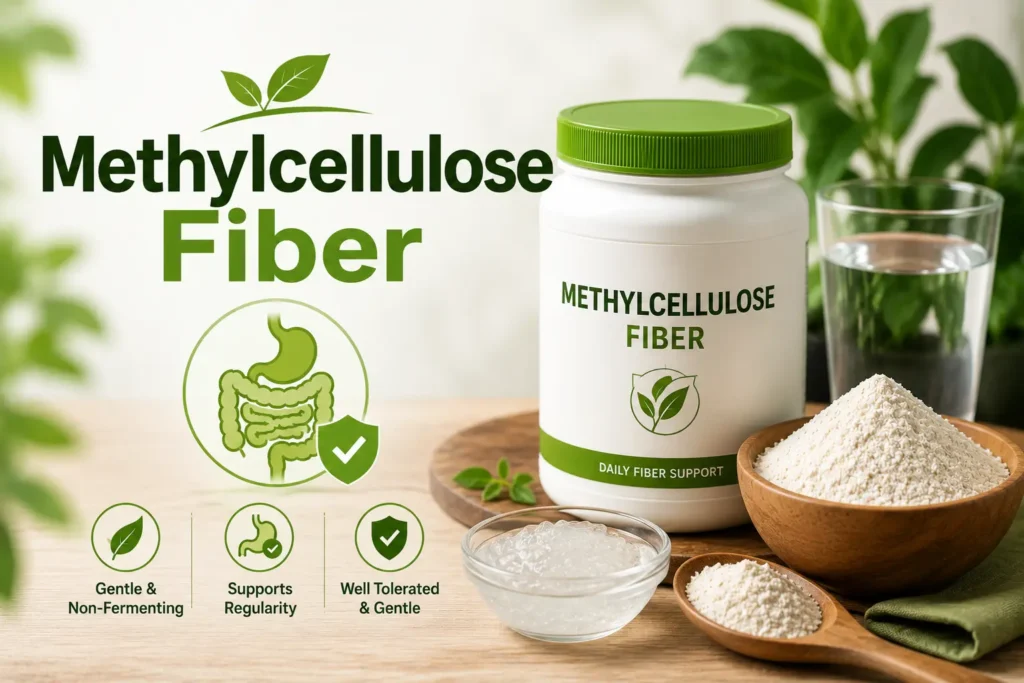
Methylcellulose fiber is a plant-derived, semi-synthetic soluble fiber best known under the brand name Citrucel. Unlike most fibers, gut bacteria can’t ferment it, so it passes through the colon largely unchanged, absorbing water and adding bulk without producing much gas. That makes it a common recommendation for people with occasional constipation who also want to avoid the bloating that other fibers can cause. It typically works within 12 to 72 hours, is considered gluten-free, and is generally safe for daily short-term use, though it isn’t meant to be a permanent fix without medical guidance.
If you’re new to fiber supplements generally, our overview of what a fiber supplement does is a useful starting point before diving into methylcellulose specifically.
Table of Contents
What Is Methylcellulose Fiber?
Methylcellulose is made by chemically modifying cellulose, the structural fiber found in the cell walls of plants. Manufacturers treat plant cellulose with methyl groups to make it soluble in water, which is why it’s sometimes described as “semi-synthetic” even though its starting material is entirely plant-based.
The result is a fiber that behaves very differently from most others on the market. When mixed with water, it forms a thick, gel-like solution. Once swallowed, that gel holds onto water as it travels through the digestive tract, adding bulk and softness to stool. The defining trait of methylcellulose, and the one most competitor pages gloss over, is that it’s non-fermentable. Gut bacteria in the colon largely leave it alone, which means it doesn’t get broken down into gas the way fermentable fibers like inulin or wheat dextrin do.
This single property explains almost everything about how methylcellulose is marketed and used: it’s positioned as the fiber option for people who want the bulking, stool-softening benefits of fiber without the bloating that often comes with it.
You’ll see it labeled as methylcellulose, methylcellulose fiber, or under the brand name Citrucel, which is sold as caplets, an unflavored powder, and a flavored (orange) powder.
How Methylcellulose Works in the Body
Methylcellulose’s mechanism is mechanical rather than microbial, and understanding that distinction is the key to understanding this fiber:
- It absorbs and holds water. As the gel-forming fiber moves through the intestines, it draws water into the stool, increasing its volume and softening its texture.
- It stimulates the bowel through bulk, not chemicals. The added bulk stretches the intestinal wall slightly, which triggers the natural muscle contractions (peristalsis) that move stool along. This is different from stimulant laxatives, which force contractions through chemical irritation.
- It resists fermentation. Because gut bacteria can’t break it down efficiently, it doesn’t produce the short-chain fatty acids or gas byproducts associated with fermentable fibers. This is the main reason it’s marketed as a lower-gas option.
- It doesn’t feed the microbiome the way fermentable fibers do. This is a genuine trade-off worth understanding: methylcellulose’s low-gas advantage comes at the cost of the prebiotic, bacteria-feeding benefit that fibers like inulin, acacia, or wheat dextrin provide. It’s a mechanical bulking agent first, not a gut-bacteria food source.
In practical terms, this makes methylcellulose especially useful for people who’ve tried other fiber supplements and found the gas and bloating intolerable, but who still need help with stool consistency and regularity.
Methylcellulose vs. Other Common Fiber Types
| Fiber Type | Fermented by Gut Bacteria? | Gas/Bloating Risk | Mechanism | Best For |
| Methylcellulose | No | Low | Mechanical bulking, water retention | Constipation relief without gas, sensitive stomachs |
| Psyllium husk | Partially | Moderate | Gel-forming bulk + mild fermentation | Constipation, cholesterol, blood sugar |
| Wheat dextrin | Yes, slowly | Low to moderate | Slow fermentation, mild bulking | Invisible daily fiber, gentle maintenance |
| Inulin | Yes, quickly | Higher | Fast fermentation, prebiotic feeding | Prebiotic/gut bacteria support |
| Acacia fiber | Yes, slowly | Low | Slow fermentation | Gentle daily fiber, low bloating |
For more detail on the alternatives in this table, see our guides to psyllium husk, wheat dextrin, and inulin fiber.
Benefits of Methylcellulose Fiber
Relieves occasional constipation. This is methylcellulose’s primary, well-established use. It typically produces a bowel movement within 12 to 72 hours by softening stool and adding bulk.
Lower gas and bloating than many fermentable fibers. Because it isn’t broken down by gut bacteria, methylcellulose is often the fiber recommended to people who’ve had uncomfortable reactions to psyllium, inulin, or other fermentable fibers. Manufacturer testing has specifically highlighted this reduced-gas profile as a differentiator from other bulk-forming fibers.
Predictable, mechanical action. Because its effect depends on water retention and physical bulk rather than bacterial activity, its response tends to be more consistent from person to person than fermentable fibers, whose effects can vary depending on an individual’s gut microbiome.
Naturally gluten-free. Since methylcellulose is derived from plant cellulose rather than wheat starch, it doesn’t carry the labeling questions that come with wheat-derived fibers. This makes it a straightforward option for people avoiding gluten, though anyone with celiac disease should still confirm a specific product’s manufacturing and labeling.
Doesn’t appear to cause dependency. Unlike stimulant laxatives, bulk-forming fibers like methylcellulose work with the body’s natural bowel function and are not associated with the tolerance or rebound constipation sometimes seen with long-term stimulant laxative use.
Pros and Cons of Methylcellulose Fiber
| Pros | Cons |
| Produces less gas than most fermentable fibers | No prebiotic benefit — doesn’t feed gut bacteria |
| Predictable, mechanical bulking action | Requires significant water intake to work safely |
| Naturally gluten-free | Slower onset (12–72 hours) than some may expect |
| Available in caplets and powder for different preferences | Labels caution against use beyond one week without medical advice |
| Doesn’t appear to cause laxative dependency | Choking/blockage risk if taken without enough fluid |
Types and Forms of Methylcellulose Supplements
- Caplets — pre-dosed, convenient, no mixing required, but require swallowing several at a time and drinking a full glass of water with each dose.
- Unflavored powder — mixes into water or juice, dissolves into a gel rather than staying clear like wheat dextrin.
- Flavored powder (orange) — designed to be taken like a drink, often available in regular and sugar-free versions.
If you prefer a fiber you swallow rather than mix, fiber pills or fiber capsules compare the pill-based options across fiber types. If you’d rather compare powder formats broadly, see best fiber powder.
How to Use Methylcellulose Correctly
Match the dose to the form. Caplet labels typically direct up to two caplets, several times a day, not exceeding the maximum listed on the package. Powder is generally measured by the scoop or tablespoon and dissolved in a full glass of water.
Always take it with a full glass of water (about 8 ounces). This isn’t optional. Methylcellulose depends on fluid to form its gel safely; taking it dry or with too little liquid raises the risk of it swelling in the throat or esophagus before it reaches the stomach.
Don’t lie down immediately after taking it. Staying upright for a short period after dosing reduces the risk of the fiber swelling somewhere it shouldn’t.
Use it short-term unless directed otherwise. Product labeling generally advises against using bulk-forming laxatives like methylcellulose for more than about a week without talking to a healthcare provider, since ongoing constipation can sometimes signal something that needs a different kind of attention.
Give it time to work. Unlike stimulant laxatives, methylcellulose isn’t designed for same-day relief. Expect results within 12 to 72 hours, not immediately.
For general guidance on fiber timing that applies across supplement types, see best time to take fiber supplement.
Common Mistakes People Make With Methylcellulose
- Not drinking enough water with each dose. This is the most important — and most commonly ignored — instruction on the label, and the main cause of the rare but serious choking and blockage risk.
- Expecting fast relief. Because it can take up to 72 hours, people sometimes assume it “isn’t working” and take more than directed, which increases side-effect risk without speeding up results.
- Using it long-term without medical input. Occasional constipation that persists beyond a week or two deserves a conversation with a doctor rather than continued self-treatment.
- Lying down right after taking a dose. This increases the (rare) risk of the gel forming somewhere in the esophagus rather than moving on to the stomach.
- Assuming it offers the same prebiotic benefits as other fibers. Because it isn’t fermented, it won’t feed gut bacteria the way acacia fiber or inulin can — worth knowing if gut microbiome support is your main goal.
Who Should Be Cautious With Methylcellulose
- Anyone with difficulty swallowing or a narrowed esophagus
- People with a bowel obstruction, fecal impaction, or symptoms of appendicitis or acute abdominal pain
- Anyone with sudden changes in bowel habits lasting more than 14 days, which should be evaluated by a doctor rather than self-treated
- People allergic to methylcellulose or related ingredients in a specific formulation
This is educational information, not medical advice. If you have a chronic digestive condition, are on other medications, or have persistent or unexplained digestive symptoms, talk to a doctor or pharmacist before starting methylcellulose.
Side Effects of Methylcellulose
Common (usually mild):
- Gas
- Stomach discomfort or cramping
- Bloating, though generally less than with fermentable fibers
Less common:
- Nausea
Rare but serious — seek medical help immediately if these occur:
- Choking, chest pain, vomiting, or difficulty swallowing or breathing after a dose (usually linked to inadequate fluid intake)
- Signs of a serious allergic reaction: hives, difficulty breathing, swelling of the face, lips, tongue, or throat
- Signs of a bowel obstruction: severe abdominal pain, persistent vomiting, or inability to pass stool or gas
Most people tolerate methylcellulose well when it’s taken exactly as directed with enough water. If you notice bloating or discomfort even with proper use, a non-fermentable dose adjustment or a switch to a different fiber type is reasonable to discuss with a pharmacist or doctor.
Methylcellulose vs. Psyllium Husk
These two are the fibers most often compared for constipation relief, since both are gel-forming and both are backed by solid clinical use.
| Feature | Methylcellulose | Psyllium Husk |
| Fermented by gut bacteria | No | Partially |
| Gas/bloating risk | Lower | Higher, especially at first |
| Prebiotic effect | None | Some |
| Cholesterol support | Limited evidence | Well-supported by research |
| Onset of action | 12–72 hours | 12–72 hours |
| Gluten status | Naturally gluten-free | Naturally gluten-free |
If cholesterol support or a stronger prebiotic effect is part of your goal, psyllium generally has the deeper evidence base. If minimizing gas is your top priority, methylcellulose has the edge. See psyllium husk benefits and best psyllium husk for a closer look.
Frequently Asked Questions
Is methylcellulose fiber the same as Citrucel? Methylcellulose is the active fiber ingredient; Citrucel is the most common brand name for it in the U.S. Generic versions containing the same ingredient are also available.
How long does methylcellulose take to work? Most sources report a bowel movement within 12 to 72 hours of a dose, which is slower than stimulant laxatives but in line with other bulk-forming fibers.
Is methylcellulose safe to take every day? It’s generally considered safe for short-term daily use, but labeling typically advises against use beyond about one week without a doctor’s guidance, since ongoing constipation may need further evaluation.
Does methylcellulose cause less gas than other fibers? Generally yes. Because it isn’t fermented by gut bacteria, it tends to produce less gas than fermentable fibers such as inulin, acacia, or wheat dextrin — a point manufacturer testing has specifically highlighted.
Is methylcellulose gluten-free? Yes. It’s derived from plant cellulose, not wheat, so it doesn’t carry the gluten-labeling considerations that come with wheat dextrin.
Can I take methylcellulose with other medications? Fiber supplements can sometimes affect how other medications are absorbed if taken too close together. It’s worth checking with a pharmacist about timing, especially if you take prescription medications regularly.
Is methylcellulose better than psyllium? Neither is universally better — they suit different priorities. Methylcellulose is the better choice if gas and bloating are your main concern; psyllium has stronger research behind its cholesterol and blood sugar benefits. The right choice depends on what you’re trying to achieve.
Final Verdict
Methylcellulose fiber fills a specific, well-defined role: reliable, mechanical constipation relief with less gas than most other fiber options. Its non-fermentable nature is both its biggest strength and its main trade-off — it won’t upset your stomach the way fast-fermenting fibers can, but it also won’t feed your gut bacteria the way those same fibers do.
For occasional constipation, especially in people who’ve struggled with bloating on other fiber supplements, methylcellulose is a well-supported, practical option. For broader digestive or microbiome support, it’s worth pairing your understanding of methylcellulose with fibers built for that purpose.
To figure out which fiber type actually fits your goal, our how to choose a fiber supplement guide breaks the decision down step by step, and fiber supplement that doesn’t cause gas compares the full lineup of lower-gas options in more detail.