
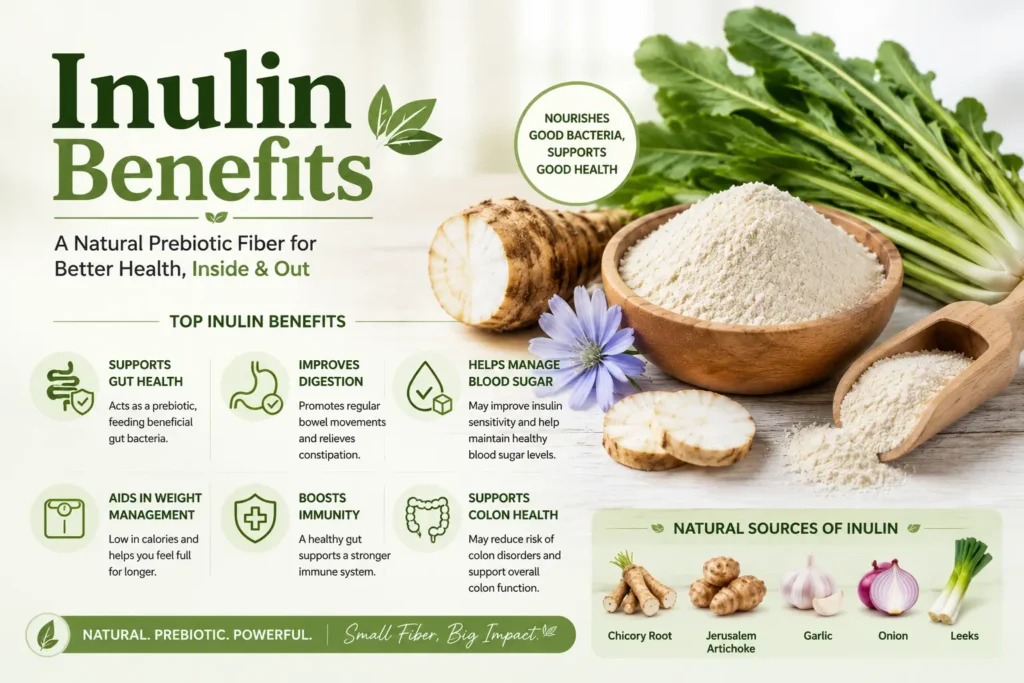
Inulin Benefits: Inulin is a soluble, fermentable fiber found in foods like chicory root, garlic, and onions, and is widely used as a supplement. Its best-supported benefit is feeding beneficial gut bacteria (especially Bifidobacteria), which supports regularity and a healthier gut environment. Evidence also points to modest support for blood sugar control, mineral absorption, and appetite regulation. While these inulin benefits are backed by research, it is not a proven weight-loss treatment on its own, and it can cause gas or bloating, especially at higher doses.
Table of Contents
What Is Inulin?
Inulin is a type of soluble fiber that belongs to a group of carbohydrates called fructans. It’s naturally present in more than 30,000 plants, including chicory root, Jerusalem artichoke, garlic, onions, leeks, asparagus, and bananas. Commercially, most inulin used in supplements and food products comes from chicory root, since it has one of the highest natural concentrations.
What makes inulin different from many other fibers is how your body handles it. Your small intestine has no enzymes that can break inulin down, so it passes through largely intact. Once it reaches the colon, resident bacteria ferment it — and that fermentation process is where most of inulin’s health effects actually come from.
This is also why inulin is classified as a prebiotic rather than just a fiber. A prebiotic is a substance that selectively feeds beneficial bacteria already living in your gut. Inulin is one of the most studied prebiotics in this category, alongside fructooligosaccharides (FOS), which are chemically related and behave similarly in the body.
If you’re new to fiber terminology in general, it helps to understand the broader picture of soluble vs insoluble fiber before narrowing in on inulin specifically, since inulin is one soluble fiber among many with different effects.
How Inulin Works in the Body
Understanding the mechanism makes the benefits (and the side effects) much easier to reason about.
- It resists digestion in the stomach and small intestine. Inulin passes through mostly unchanged, unlike starches or sugars that are broken down quickly.
- It reaches the colon intact, where trillions of bacteria are waiting.
- Gut bacteria ferment it, particularly strains of Bifidobacterium and Lactobacillus, which use inulin as fuel to grow and multiply.
- Fermentation produces short-chain fatty acids (SCFAs) — compounds like acetate, propionate, and butyrate. These SCFAs nourish the cells lining your colon, help maintain the gut barrier, and are linked to lower-grade inflammation in the gut.
- Fermentation also produces gas as a byproduct. This is the direct reason inulin can cause bloating or flatulence, especially when started at a high dose.
This fermentation-first mechanism is what separates inulin from a bulking fiber like psyllium husk, which works mainly by absorbing water and adding physical bulk to stool rather than being fermented. If you’re comparing the two for a specific goal, our guide on psyllium husk benefits covers how that mechanism differs in practice.
Inulin Benefits Backed by Research
1. Feeds Beneficial Gut Bacteria
This is inulin’s best-documented effect. Multiple controlled human trials show that daily inulin intake, generally starting around 8 grams per day, increases populations of Bifidobacteria in the gut. A broader 2025 review of over 130 studies on inulin’s effects on the gastrointestinal system, metabolism, and inflammation confirmed that inulin promotes growth of commensal bacteria like Lactobacillus and Bifidobacterium through fermentation-driven production of beneficial metabolites.
A healthier balance of gut bacteria has been associated with better digestion, a stronger gut barrier, and — in some studies — a calmer immune response in the gut lining.
2. Supports Digestive Regularity and May Ease Constipation
Because inulin increases fecal bulk and the water content of stool through fermentation, it’s associated with improved bowel regularity. Research summarizing human inulin trials describes this fermentation process as leading to increased fecal biomass and better stool water content, which in turn supports more regular bowel movements.
That said, inulin’s effect on constipation specifically is more modest than bulk-forming fibers. Because it’s almost entirely fermented rather than adding physical bulk, some people with chronic constipation find inulin alone isn’t enough, and get better results pairing it with a bulking fiber or adjusting dose and hydration. If constipation is your main concern, it’s worth comparing approaches on our dedicated page for fiber supplements for constipation.
3. May Support Healthy Blood Sugar Levels
Inulin slows the rate at which carbohydrates are digested and absorbed, which can blunt post-meal blood sugar spikes. Several trials in people with type 2 diabetes have tested inulin supplementation specifically for this reason. In one randomized, placebo-controlled crossover trial, 16 grams per day of inulin-type fructans over six weeks was used specifically to evaluate effects on appetite-related hormones and glycemic regulation in adults with type 2 diabetes.
This doesn’t mean inulin is a treatment for diabetes or blood sugar disorders. It means the existing research supports it as a supportive dietary addition, not a substitute for medical management.
4. May Improve Calcium and Mineral Absorption
Some human studies suggest inulin fermentation in the colon can enhance the absorption of minerals, particularly calcium and, to a lesser extent, magnesium. The proposed mechanism is that SCFA production lowers colonic pH, which makes minerals more soluble and easier to absorb through the gut wall. This effect is considered probable based on existing trials, though the size of the benefit varies between studies.
5. May Support Appetite Regulation (With Important Caveats)
This is one of the more nuanced benefits, and one competitors tend to oversimplify. Inulin fermentation produces SCFAs that stimulate the release of gut hormones like GLP-1 and peptide YY (PYY), both of which are linked to feelings of fullness. A 2006 clinical study found that 8 grams of oligofructose (a related short-chain fructan) increased satiety after breakfast and dinner and reduced subsequent food intake.
More recent research has been mixed. A randomized controlled trial in children with obesity found that inulin supplementation over six months was associated with reduced emotional undereating and correlated with changes in GLP-1 levels, but other appetite measures didn’t differ significantly from the placebo group. Trials specifically testing coffee-and-inulin beverages for appetite in adults with obesity note that evidence in this area remains contradictory, with many studies showing no significant change.
The honest takeaway: inulin can modestly influence appetite-related hormones in some people, but it is not a reliable standalone appetite suppressant, and results vary significantly by study design, dose, and population.
6. Weight Management — Supportive, Not a Solution
Inulin is frequently marketed for weight loss, so it’s worth being precise here. The research shows two plausible pathways: appetite regulation (discussed above) and modest metabolic effects through SCFA production, including some evidence that propionate specifically may support energy expenditure and reduced fat accumulation in early research.
A 2025 open-label randomized controlled trial examining the timing of inulin administration for weight loss referenced prior findings that 15–30 grams per day of inulin over 8–16 weeks was associated with weight loss outcomes tied to diabetes risk reduction, and noted that soluble fibers like inulin increase fullness by delaying gastric emptying, with pre-meal timing appearing more effective for appetite control.
In practical terms: inulin is a reasonable supporting tool inside a broader weight management plan built on diet quality and activity, not a fiber that will drive meaningful weight loss by itself. If weight management is your primary goal, our comparison of fiber supplements for weight loss walks through which types of fiber have the strongest independent evidence.
7. Emerging Research: Inflammation and Gut Barrier Support
Newer research, mostly from animal models with some early human data, suggests inulin fermentation and the resulting SCFAs may help reduce intestinal inflammation and support the gut lining. One study on stress-related inflammatory bowel symptoms found that inulin reduced pro-inflammatory markers and supported mucus layer proteins in the gut lining in an animal model, alongside increased SCFA production. This is a promising research direction, but it is early-stage, and inulin should not be treated as a treatment for inflammatory bowel conditions without medical guidance — in fact, some people with active IBS or IBD symptoms find fermentable fibers like inulin worsen bloating and discomfort, so it’s worth introducing cautiously if you have a diagnosed digestive condition.
Inulin Benefits at a Glance
| Benefit | Strength of Evidence | What It Means for You |
| Feeds beneficial gut bacteria (Bifidobacteria) | Strong — consistent across human trials | Most reliable, best-documented effect |
| Supports bowel regularity | Moderate | Helps some people; often needs pairing with bulking fiber for constipation |
| Blood sugar support | Moderate | Best studied in people with type 2 diabetes; not a treatment on its own |
| Calcium/mineral absorption | Moderate | Probable benefit, effect size varies |
| Appetite regulation | Mixed | Some hormonal effects shown, but inconsistent across studies |
| Weight loss | Weak-to-moderate, supportive only | Works best as part of a broader plan, not standalone |
| Gut inflammation / barrier support | Early-stage | Promising, mostly animal and preliminary human data |
Pros and Cons of Inulin
| Pros | Cons |
| Well-studied prebiotic with consistent effects on gut bacteria | Can cause gas, bloating, or cramping, especially at higher doses |
| Neutral taste, dissolves easily into drinks and foods | Not ideal for people with IBS or fructan sensitivity (FODMAP) |
| Naturally occurring in many common foods | Effects on constipation are milder than bulk-forming fibers |
| May support blood sugar and mineral absorption | Needs gradual introduction to avoid digestive discomfort |
| Widely available and inexpensive as a supplement | Long-term safety data at high doses is still developing |
Common Mistakes People Make With Inulin
- Starting at too high a dose. Jumping straight to 10–15 grams a day is the single biggest reason people experience bloating and give up on inulin. Most research supports starting closer to 2–5 grams daily and increasing gradually.
- Not drinking enough water. Inulin is soluble fiber, and adequate fluid intake matters for how it moves through your system.
- Expecting it to replace a balanced diet. Inulin supports gut bacteria; it doesn’t replace fruits, vegetables, and other whole-food fiber sources.
- Using it during an active flare-up of IBS or IBD without guidance. Fermentable fibers like inulin are part of the FODMAP category that can worsen symptoms in sensitive individuals.
- Assuming all fiber supplements work the same way. Inulin’s fermentation-driven mechanism is different from bulk-forming fibers. If you’re deciding between fiber types, our guide on how to choose a fiber supplement breaks down which mechanism fits which goal.
Food Sources vs. Supplements
Inulin naturally occurs in chicory root, Jerusalem artichoke, garlic, onions, leeks, asparagus, wheat, and bananas, though concentrations vary widely between foods. Getting inulin from whole foods also comes with other nutrients and fiber types working together, which is worth considering if you’re deciding between diet changes and supplementation. For a broader look at how food-based and supplement-based approaches compare, see our page on fiber supplements vs. fiber foods.
If you decide a supplement is the more practical route — for consistency of dose, or because your diet doesn’t include much inulin-rich food — you’ll find it most commonly sold as fiber powder or blended into prebiotic-specific formulas such as a prebiotic fiber supplement.
How Much Inulin Should You Take?
There’s no single official recommended dose, but research trials commonly use amounts in these ranges:
- Gut bacteria support: studies generally use 8 grams per day or more
- Blood sugar-focused trials: often in the 10–16 gram per day range
- Weight-focused trials: some studies have used 15–30 grams per day over 8–16 weeks
For most beginners, a gradual approach works best:
- Start with 2–3 grams per day for the first week
- Increase by 2–3 grams every few days if well tolerated
- Spread the dose across meals rather than taking it all at once
- Pair with adequate water intake throughout the day
If you notice persistent bloating, cramping, or changes in bowel habits that don’t settle after a couple of weeks, it’s worth scaling back the dose or speaking with a healthcare provider, particularly if you have a diagnosed digestive condition.
Who Should Be Cautious With Inulin
- People with IBS, since inulin is a fermentable fructan and part of the FODMAP group that can trigger symptoms in sensitive individuals
- People with inflammatory bowel disease during active flares, without medical guidance
- Anyone new to fiber supplementation who is prone to bloating — starting low and increasing gradually matters more with inulin than with many other fibers
- People taking medication for diabetes, since inulin’s effect on blood sugar means it’s worth discussing timing and dosage with a healthcare provider
This is general educational information, not medical advice. Anyone with a diagnosed digestive condition, diabetes, or who is pregnant or breastfeeding should talk to a healthcare provider before adding inulin supplementation to their routine.
Frequently Asked Questions
Is inulin the same as fiber? Inulin is one specific type of soluble fiber, not fiber in general. It behaves differently from bulk-forming fibers like psyllium husk because it’s almost entirely fermented by gut bacteria rather than adding physical bulk to stool.
Does inulin help with constipation? It can support regularity by increasing fecal water content and bulk through fermentation, but its effect tends to be milder than bulk-forming fibers. Many people get better constipation relief pairing inulin with a bulking fiber.
Can inulin cause bloating? Yes. Because inulin is fermented by gut bacteria, gas is a natural byproduct of that process. Starting with a low dose and increasing gradually is the most effective way to minimize this.
Is inulin good for weight loss? Research shows modest, supportive effects through appetite hormones and metabolic pathways, but results are inconsistent across studies. Inulin works best as one part of a broader weight management approach, not as a standalone solution.
How long does it take for inulin to work? Changes in gut bacteria composition have been observed in as little as a few weeks of consistent daily intake in research settings, though individual response varies.
Can I take inulin every day? Yes, inulin is generally considered safe for daily use within studied dose ranges, though individual tolerance varies and some people need to keep their dose lower to avoid digestive discomfort.
Final Verdict
Inulin’s reputation as a beneficial prebiotic fiber holds up well against the research, but the details matter more than the marketing suggests. Its strongest, most consistent benefit is feeding beneficial gut bacteria like Bifidobacteria. Its effects on constipation, blood sugar, and weight management are real but more modest and more dependent on dose, consistency, and individual gut chemistry than most articles let on.
If you’re considering inulin, start low, increase gradually, and think of it as one tool among several — not a fix-all. For a broader view of how inulin compares to other fiber types for your specific goal, explore our guides on best fiber supplement for gut health or soluble fiber.