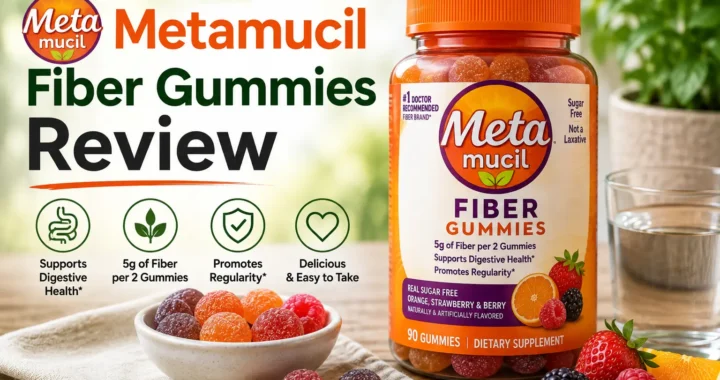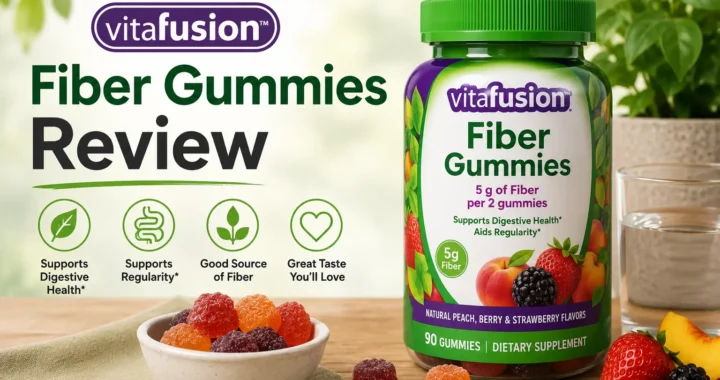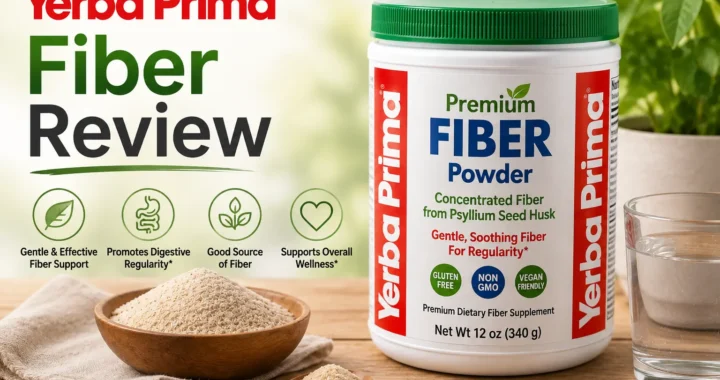

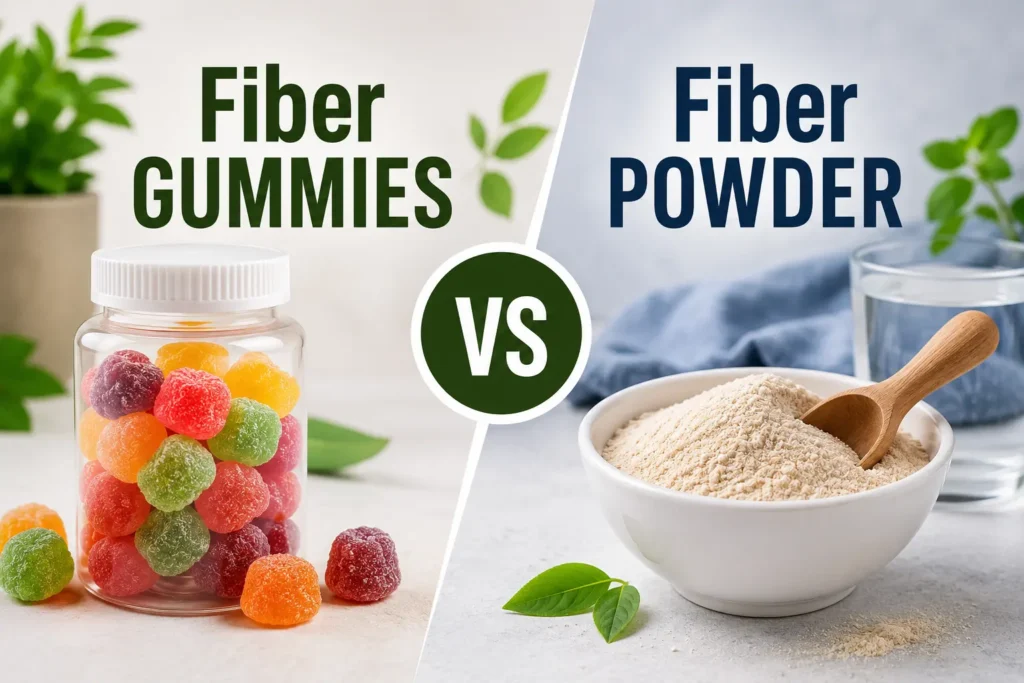
Fiber gummies and fiber powder usually aren’t just two formats of the same fiber — they’re typically two different fiber ingredients entirely. Most fiber gummies are made with inulin from chicory root, a fermentable prebiotic fiber, while fiber powders often use psyllium husk, a gel-forming bulk fiber with decades of research behind it for constipation and cholesterol support. That ingredient difference matters more than the format itself.
If you’re trying to fix constipation or want cholesterol support, powder — specifically a psyllium-based one — is the stronger, better-studied choice. If you want an easy, tasty way to add some prebiotic fiber to your day and don’t need targeted digestive relief, gummies can work, as long as you don’t expect them to replace a bulk-forming laxative.
Table of Contents
Fiber Gummies vs Fiber Powder: The Fast Comparison
| Feature | Fiber Gummies | Fiber Powder |
| Typical active fiber | Inulin / chicory root fiber | Psyllium husk, wheat dextrin, methylcellulose, or others |
| Fiber per serving | ~3–5 g (often needs 2–3 gummies) | ~3–5 g per teaspoon/scoop, easily adjustable |
| Mechanism | Fermentable — feeds gut bacteria | Depends on ingredient; psyllium gels and bulks stool |
| Constipation relief evidence | Limited; not designed as a bulk-forming laxative | Strong, especially for psyllium |
| Cholesterol support | No recognized claim | Yes, for psyllium specifically |
| Sugar content | Often low or sugar-free, but some contain added sugar | Typically sugar-free unless flavored |
| Taste/texture | Candy-like, easy to enjoy | Some grittiness or gel texture (varies by ingredient) |
| Portability | Very easy — no mixing, no water needed | Requires mixing with liquid |
| Best for | Light daily fiber boost, kids, picky adults | Targeted constipation relief, cholesterol goals, higher doses |
This table gets to the real issue: most people comparing “gummies vs powder” are actually comparing inulin vs psyllium without realizing it.
What Are Fiber Gummies?
Fiber gummies are chewable fiber supplements almost always built around inulin or chicory root fiber, a soluble, fermentable prebiotic. A typical serving — often 2 to 3 gummies — delivers somewhere around 3 to 5 grams of fiber, similar in quantity to a scoop of powder, but from a very different type of fiber.
Because inulin ferments in the colon, gummies are marketed primarily around gut bacteria support and general digestive wellness rather than fast or targeted constipation relief. Many brands keep sugar content low or at zero by using sugar alcohols, monk fruit, or the inulin itself as a partial sweetener.
What Is Fiber Powder?
Fiber powder is a catch-all format that can contain almost any fiber ingredient — psyllium husk, wheat dextrin, methylcellulose, inulin, or acacia, among others. Unlike gummies, which are almost universally inulin-based, powders give you a choice of the underlying fiber type, which matters because different fibers do different jobs.
Psyllium husk, the most researched fiber sold in powder form, absorbs water and forms a gel that adds bulk to stool — the mechanism behind its use as an FDA-recognized bulk-forming laxative and its cholesterol-lowering claim. Powder built around wheat dextrin or methylcellulose behaves differently again, but all of these options give you more control over exactly which fiber you’re taking.
For more on choosing the right powder-based fiber, see best fiber powder and psyllium husk powder.
The Core Difference: This Isn’t Really a Format Comparison
Most articles about “fiber gummies vs fiber powder” treat this like a simple packaging question — chewy versus mixed-in-water. That misses the more important point: the two formats are almost never delivering the same fiber ingredient.
- Gummies are built around inulin because it’s soluble, sweet-tasting-compatible, and easy to bind into a chewy format. You’re very rarely getting psyllium or methylcellulose in gummy form.
- Powder gives you access to gel-forming, bulk-producing fibers like psyllium, which can’t easily be turned into a gummy because of how they behave when they absorb water.
So the real question underneath “gummies vs powder” is usually “inulin vs psyllium” — and that comparison has a much bigger impact on results than the format alone. If you want to explore that distinction directly, see our guide to psyllium husk vs inulin.
Effectiveness for Constipation
Fiber powder, particularly psyllium-based powder, has strong, decades-deep clinical evidence for relieving constipation. Its gel-forming action adds substantial bulk and moisture to stool, which is why it’s classified as a bulk-forming laxative.
Fiber gummies, built on inulin, aren’t designed the same way. Inulin can support overall digestive health and gut bacteria, but it doesn’t have the same track record for treating constipation directly, and it isn’t classified as a laxative in the way psyllium is.
Practical takeaway: if constipation relief is your actual goal, a psyllium-based powder is the more appropriate and better-evidenced tool. Gummies are a weaker substitute for this specific purpose, even if the total grams of fiber look similar on the label.
For dedicated options, see best fiber supplement for constipation.
Gut Bacteria and Prebiotic Support
This is where gummies can genuinely hold their own. Inulin is one of the most studied prebiotic fibers available, with solid evidence for increasing beneficial bacteria like Bifidobacterium. A gummy serving delivering 3 to 5 grams of inulin is a legitimate way to support your gut microbiome.
Powder can deliver this too, if it’s inulin-based, but psyllium — the most common powder fiber — has a much weaker prebiotic effect by comparison, since it resists fermentation.
Practical takeaway: if your main goal is feeding gut bacteria rather than treating constipation, an inulin-based gummy and an inulin-based powder are functionally similar; the gummy format just makes it easier to enjoy.
Sugar, Additives, and Taste
Gummies vary widely. Many modern fiber gummies advertise “sugar-free” or “low sugar” formulas using alternative sweeteners, but some still contain a few grams of added sugar per serving. Because gummies are candy-like by design, checking the label for total sugar and calories is worth doing if that matters to you.
Powder is typically sugar-free in its plain form, though flavored versions can contain added sugars or artificial sweeteners. Unflavored psyllium powder has essentially no sugar, but it does have a noticeable gel texture that some people find harder to get used to than a chewable gummy.
Practical takeaway: if taste and ease of use are your top priorities and you’re comfortable checking labels for sugar content, gummies are the more pleasant daily experience. If you want to avoid any added sugar entirely and don’t mind mixing a drink, unflavored powder is the cleaner option.
A Better Decision Framework Than “Just Pick One”
Run through these four questions instead of comparing formats alone:
1. What’s your main goal — constipation relief or gut bacteria support?
- Constipation relief → Fiber powder, specifically psyllium-based, is the stronger choice.
- General gut bacteria support → Either an inulin gummy or an inulin powder works similarly.
2. Do you struggle with the taste or texture of mixed fiber drinks?
- Yes → Gummies solve that problem entirely.
- No → Powder gives you more control over the specific fiber type and dose.
3. Do you need a high, clinically relevant fiber dose (e.g., for cholesterol)?
- Yes → Powder makes it easier to reach and adjust a specific gram target.
- No, just a general boost → Gummies can supply a reasonable amount without extra effort.
4. Is sugar content or ingredient simplicity a priority?
- Yes → Check labels carefully; unflavored powder tends to have the fewest additives.
- Not a major concern → Gummies are a convenient, often enjoyable option.
Common Mistakes People Make With Either Form
- Assuming all fiber supplements work the same way. Inulin (common in gummies) and psyllium (common in powder) solve different problems; picking based on format alone can leave your actual goal unaddressed.
- Expecting gummies to relieve constipation like a laxative. Gummies can support general digestive health, but they aren’t built or evidenced the same way as bulk-forming fiber powders.
- Overlooking gummy sugar content. Some fiber gummies are genuinely low-sugar, but not all — checking the nutrition label prevents an unwanted sugar surprise.
- Not drinking enough water with powder. Gel-forming fibers like psyllium need adequate fluid to work properly and to avoid discomfort.
- Eating extra gummies to “boost the dose.” Because gummies are candy-like, it’s easy to eat more than the recommended serving; stick to the labeled amount and increase gradually if needed.
Frequently Asked Questions
Do fiber gummies work as well as fiber powder? It depends on your goal. For general gut bacteria support, an inulin-based gummy can work about as well as an inulin-based powder. For constipation relief specifically, powder — especially psyllium-based powder — is the stronger, better-evidenced option, since most gummies aren’t built with that fiber type.
What kind of fiber is usually in fiber gummies? The vast majority of fiber gummies use inulin or chicory root fiber, a fermentable prebiotic fiber. This is different from psyllium husk, the fiber most commonly found in powders and marketed for constipation relief.
Are fiber gummies bad for you because of sugar? Not necessarily. Many fiber gummies today are formulated to be low-sugar or sugar-free using alternative sweeteners. It’s still worth checking the label, since formulas vary by brand.
Can fiber gummies replace psyllium powder for constipation? Generally, no. Gummies are typically inulin-based, which doesn’t have the same bulk-forming, laxative-like evidence that psyllium powder does. If constipation relief is your goal, a psyllium-based powder is the more appropriate choice.
How many fiber gummies equal one scoop of powder? This depends on the specific fiber content per gummy and per powder serving, but many gummy products require 2 to 3 gummies to reach roughly 3 to 5 grams of fiber, similar to a typical powder scoop — though again, usually from a different fiber ingredient.
Are fiber gummies good for kids? Fiber gummies are often marketed for children specifically because they’re easier to take than powder or capsules. As with any supplement given to a child, check the labeled age recommendation and talk to a pediatrician if you have questions about dosing.
Final Verdict
Fiber gummies and fiber powder aren’t really competing formats of the same product — they’re usually two different fiber ingredients wearing different packaging. Gummies are almost always inulin-based, making them a pleasant, low-effort way to support gut bacteria, but a weak substitute for targeted constipation relief. Powder gives you access to psyllium husk and other bulk-forming fibers with decades of research behind them, making it the stronger choice when regularity or cholesterol support is the actual goal.
If you’re chasing a specific health outcome like constipation relief, reach for a psyllium-based powder. If you just want an easy, enjoyable way to add some prebiotic fiber to your day, gummies are a reasonable option, as long as you understand they’re not a laxative substitute. For more on matching fiber type to your goal, see what does a fiber supplement do or how to choose a fiber supplement.
This article is for educational purposes only and does not replace personalized medical advice. Talk to a healthcare provider before starting any new supplement, especially for children or if you have a diagnosed digestive condition.