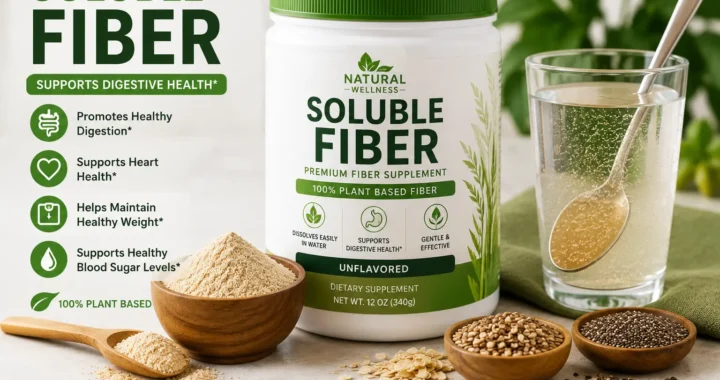

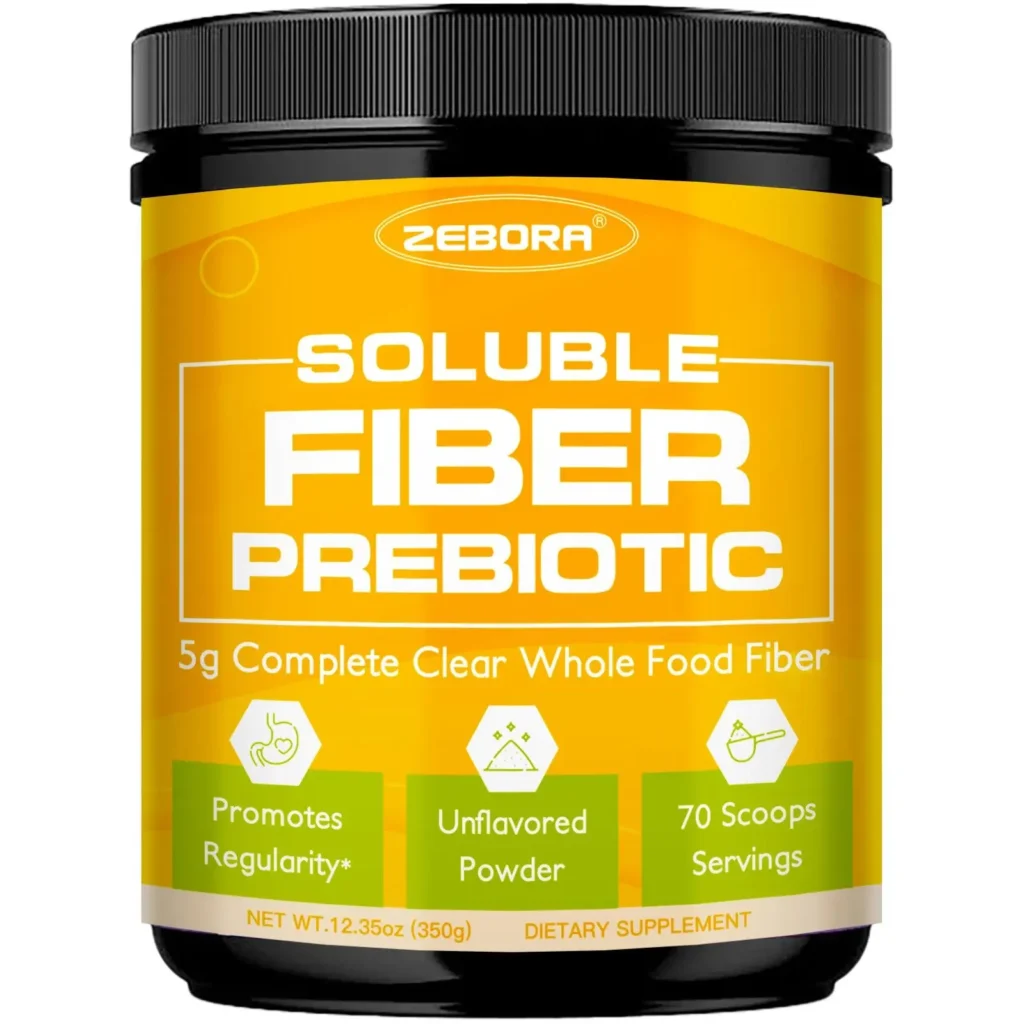
The best soluble fiber supplement depends on your goal, but psyllium husk is the most well-researched and versatile option for most people, thanks to its strong evidence for cholesterol support, blood sugar balance, and regularity. If you want a gentler, taste-free option, partially hydrolyzed guar gum (PHGG) is easier on sensitive stomachs. For appetite control, glucomannan stands out because it expands significantly in the stomach. There isn’t one single “best” product for everyone — the right choice depends on your digestive tolerance, your goal, and whether you prefer capsules or powder.
This guide breaks down the main types of soluble fiber supplements, how they compare, who each one suits best, and how to pick one without wasting money on the wrong product.
Table of Contents
What Is Soluble Fiber, and Why Does It Matter?
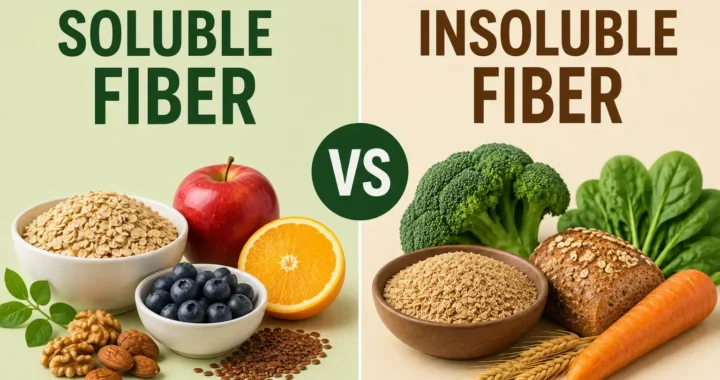
Soluble fiber is a type of dietary fiber that dissolves in water and forms a thick, gel-like substance in your digestive tract. Unlike insoluble fiber, which mostly adds bulk and speeds up transit, soluble fiber slows digestion down. That slower process is what gives soluble fiber its main benefits:
- It can help soften stool and ease both constipation and mild diarrhea, because the gel it forms adds moisture and structure.
- It slows the absorption of sugar into the bloodstream, which can help blunt post-meal blood sugar spikes.
- It binds to cholesterol-containing compounds in the gut, which may support healthier LDL cholesterol levels over time.
- It feeds beneficial gut bacteria, since many soluble fibers act as prebiotics.
Most people don’t get enough fiber from food alone. Daily recommended fiber intake is generally 25–38 grams, and most diets fall well short of that. A soluble fiber supplement is a practical way to close that gap — but it’s a supplement, not a replacement for eating fiber-rich foods like oats, beans, fruit, and vegetables.
Soluble vs. Insoluble Fiber: Why This Distinction Matters for Supplement Shopping
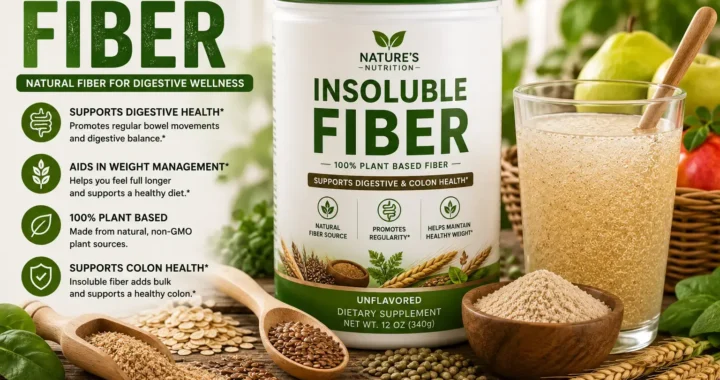
This is where a lot of people get confused when shopping for a “fiber supplement,” because many products on the shelf are actually a mix of both types, or are mostly insoluble.
| Feature | Soluble Fiber | Insoluble Fiber |
| Behavior in water | Dissolves, forms a gel | Does not dissolve, adds bulk |
| Main benefit | Blood sugar & cholesterol support, softens stool | Speeds up transit, relieves constipation |
| Best for | General digestion, cholesterol, blood sugar, mild diarrhea | Sluggish bowel movements, bulk-forming laxative effect |
| Common sources | Psyllium, oat beta-glucan, inulin, guar gum, glucomannan | Wheat bran, cellulose, some vegetable skins |
| Fermentability by gut bacteria | Often fermentable (prebiotic effect) | Minimally fermentable |
If you specifically searched for a soluble fiber supplement rather than a general fiber supplement, you likely want the gel-forming, gut-friendly, blood-sugar-supportive type — not a wheat bran or cellulose product that’s mostly insoluble.
Types of Soluble Fiber Supplements Compared
Below is a side-by-side comparison of the most common soluble fiber powders and capsules on the market.
| Type | Source | Best For | Gas/Bloating Risk | Taste/Texture | Typical Daily Dose |
| Psyllium husk | Plantago ovata seed husk | Regularity, cholesterol, blood sugar | Moderate (start low) | Gritty in water, better in smoothies | 5–10 g, 1–3x/day |
| Partially hydrolyzed guar gum (PHGG) | Guar bean | Sensitive stomachs, IBS | Low | Dissolves clear, nearly tasteless | 5–15 g/day |
| Inulin / chicory root fiber | Chicory root, agave | Prebiotic gut support | High in sensitive individuals | Slightly sweet, mixes easily | 2.5–10 g/day (start low) |
| Glucomannan | Konjac root | Appetite/fullness, blood sugar | Moderate | Thickens quickly, needs lots of water | 1–4 g before meals |
| Oat beta-glucan | Oats | Cholesterol support | Low | Mild, oat-like | 3 g/day |
| Acacia fiber | Acacia tree sap | Sensitive stomachs, IBS-friendly | Very low | Nearly flavorless | 5–10 g/day |
Psyllium Husk
Psyllium is the most studied soluble fiber supplement, with a long track record for supporting regularity, healthy cholesterol levels, and steadier blood sugar. It works well as a powder mixed into water or as capsules. The main drawback is texture — it thickens fast, so it needs to be drunk quickly with plenty of water.
Partially Hydrolyzed Guar Gum (PHGG)
PHGG is a good starting point for people who find psyllium too harsh or gas-inducing. It’s broken down into smaller, gentler molecules, dissolves completely clear, and is often recommended for people managing IBS symptoms.
Inulin and Chicory Root Fiber
Inulin is popular because it’s cheap, dissolves easily, and has a mild sweetness that works in coffee or baking. However, it ferments quickly in the gut, which makes it one of the more common causes of bloating and gas among soluble fiber types — especially at higher doses.
Glucomannan
Glucomannan absorbs an unusually large amount of water and expands significantly, which is why it’s often associated with appetite control. It needs to be taken with a full glass of water, since it can expand before swallowing if not diluted properly (a genuine choking risk if taken dry or with too little liquid).
Oat Beta-Glucan
This is the soluble fiber found naturally in oats, also sold in concentrated supplement form. It has solid evidence specifically for cholesterol support and tends to be gentle on digestion.
Acacia Fiber
Acacia fiber is one of the best-tolerated options for people with a sensitive gut or IBS, since it ferments more slowly and gradually than inulin, causing less gas.
How to Choose the Best Soluble Fiber Supplement for You
Instead of chasing a single “best” brand, match the fiber type to your actual goal:
- Goal: general regularity → Psyllium husk or PHGG
- Goal: cholesterol support → Psyllium husk or oat beta-glucan
- Goal: blood sugar balance → Psyllium husk or glucomannan
- Goal: appetite/fullness support → Glucomannan
- Goal: sensitive stomach or IBS → Acacia fiber or PHGG
- Goal: prebiotic/gut microbiome support → Inulin (start with a small dose) or PHGG
What to Check on the Label
- Single-ingredient vs. blend: Single-ingredient soluble fiber (like pure psyllium husk) lets you control dosage precisely. Blends can be convenient but may bury the actual soluble fiber content.
- Added sugars or sweeteners: Some flavored powders include sugar alcohols or sweeteners that can themselves cause gas or bloating, muddying whether it’s the fiber or the additive causing symptoms.
- Grams of soluble fiber per serving, not just “fiber”: Some labels list total fiber without breaking down the soluble portion.
- Third-party testing: Since supplements aren’t reviewed by regulators before going to market, a certification from an independent lab (like NSF or USP) adds a layer of quality assurance.
How to Start Taking a Soluble Fiber Supplement Without Digestive Distress
This is a step competitors often skip, and it’s the difference between people who stick with fiber supplements and people who quit after a bad first week.
- Start at roughly a quarter of the recommended dose for the first 3–4 days.
- Increase gradually every few days, not every few doses, giving your gut bacteria time to adjust.
- Always pair fiber with extra water. Soluble fiber needs fluid to work properly; without it, constipation can actually worsen.
- Take it away from medications when advised, since soluble fiber can slow the absorption of some oral medications. A pharmacist or doctor can confirm timing for any specific prescription.
- Track your symptoms for two weeks before switching products. Some bloating in the first few days is common and often settles down.
Common Mistakes People Make With Soluble Fiber Supplements
- Jumping straight to a full dose. This is the single biggest cause of bloating and gas complaints.
- Not drinking enough water. Soluble fiber depends on fluid to form its gel; too little water can worsen constipation instead of relieving it.
- Assuming all fiber supplements are the same. A product labeled “fiber supplement” may lean heavily insoluble, which won’t deliver the cholesterol or blood sugar benefits people are actually looking for.
- Taking it at the wrong time relative to medication. Because soluble fiber can slow nutrient and drug absorption, timing matters.
- Expecting overnight results. Cholesterol and blood sugar benefits typically build over weeks of consistent use, not days.
Pros and Cons of Soluble Fiber Supplements
| Pros | Cons |
| Convenient way to close the fiber gap in your diet | Can cause gas or bloating, especially early on |
| Strong evidence for cholesterol and blood sugar support | Needs to be introduced gradually |
| Many options for different sensitivities (PHGG, acacia) | Some products contain added sugars or sweeteners |
| Works alongside a normal diet, not a replacement for it | Doesn’t replace the variety of nutrients in whole foods |
| Available in powder, capsule, or gummy forms | Requires adequate water intake to work properly |
Frequently Asked Questions
Is psyllium husk the best soluble fiber supplement overall? For most people without a sensitive gut, psyllium husk offers the strongest combination of evidence and versatility, covering regularity, cholesterol, and blood sugar support. People with IBS or a history of bloating may do better starting with PHGG or acacia fiber instead.
Can I take soluble fiber supplements every day? Yes, most soluble fiber supplements are intended for daily use, and consistency is what drives benefits like improved cholesterol and blood sugar levels over time. Starting low and increasing gradually is still the safest approach.
Does soluble fiber help with weight loss? Soluble fiber can support a feeling of fullness, which may help with portion control, particularly with viscous fibers like glucomannan. It works best as one part of an overall eating pattern rather than a standalone solution. For a deeper look at fiber and weight management, see our guide on the best fiber supplement for weight loss.
What’s the difference between soluble fiber powder and capsules? Powders let you adjust your dose precisely and are usually more cost-effective per gram of fiber, but they require mixing and can have a gritty texture. Capsules are more convenient and taste-free but often mean swallowing several pills to match the fiber dose in one scoop of powder.
Can soluble fiber supplements cause bloating? Yes, especially fibers that ferment quickly, like inulin. Bloating is usually a sign the dose increased too fast, not that fiber itself is a problem. Slowing the ramp-up and drinking more water typically resolves it within a week or two.
Is soluble fiber good for constipation? Soluble fiber can help by softening stool and adding structure, but insoluble fiber is often more directly associated with speeding up transit. Many people benefit from products that combine both, or from pairing soluble fiber with adequate hydration and movement. Our guide to the best fiber supplement for constipation covers this in more depth.
Are soluble fiber supplements safe for women specifically? Soluble fiber is generally suitable for most adults, though needs can shift with life stage, such as during pregnancy or menopause. For guidance tailored to those situations, see our dedicated guide on the best fiber supplement for women.
Final Verdict
There’s no single soluble fiber supplement that’s automatically “best” for every person — the right pick depends on your digestive sensitivity and your primary goal. As a starting point:
- Most people: Psyllium husk, for its broad evidence base and versatility.
- Sensitive stomachs or IBS: PHGG or acacia fiber.
- Appetite control: Glucomannan.
- Cholesterol-specific focus: Psyllium husk or oat beta-glucan.
Whichever type you choose, start with a low dose, increase gradually, and drink plenty of water. If you’re comparing soluble fiber against fiber supplements more broadly, our full best fiber supplement guide is a useful next stop.
This article is for educational purposes and isn’t a substitute for personalized medical advice. If you have a digestive condition, take prescription medication, or are pregnant, talk to a doctor or pharmacist before starting a new fiber supplement.