
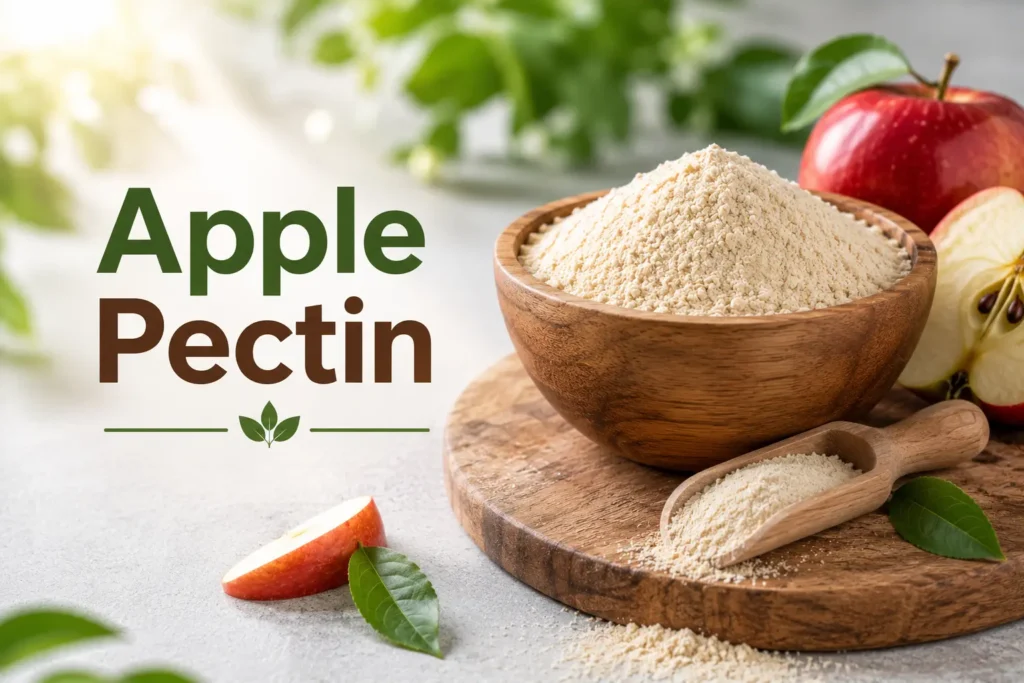
Apple pectin is a soluble fiber extracted from the peel and pulp of apples. In the gut, it dissolves in water and forms a gel that can bind cholesterol and slow digestion — effects studied for supporting heart health, blood sugar control, and digestive comfort. Research on cholesterol has generally used doses between 5 and 15 grams per day, well above what a typical apple or supplement capsule provides on its own. It’s a gentle, well-tolerated fiber for most people, but it works best as part of a broader fiber-rich diet rather than a stand-alone fix.
If you’re new to fiber types in general, our guide on soluble vs. insoluble fiber is a good place to start before diving into pectin specifically.
Table of Contents
What Is Apple Pectin?
Pectin is a natural carbohydrate found in the cell walls of fruits and vegetables. It’s what gives apples (and jam) their gel-like texture when cooked down. Apples are one of the richest natural sources, which is why “apple pectin” has become the most recognized name for this fiber, even though pectin also occurs in citrus peels, pears, and berries.
As a food ingredient, pectin is best known as the setting agent in jams and jellies. As a dietary supplement, it’s sold in capsule or powder form, usually derived from apple pomace — the pulp left over after apples are pressed for juice or cider.
Chemically, apple pectin is classified as a soluble, fermentable fiber. That combination is what drives most of its studied benefits.
How Apple Pectin Works in the Body
Apple pectin isn’t digested the way sugar or starch is. Instead, it moves through your digestive tract largely intact, where it:
- Dissolves and gels. Pectin absorbs water and thickens into a gel in the stomach and small intestine, slowing how quickly food and glucose move through.
- Binds bile acids and cholesterol. The gel traps bile acids (which are made from cholesterol) in the gut, prompting the liver to pull more cholesterol from the blood to replace them.
- Feeds gut bacteria. In the colon, bacteria ferment pectin into short-chain fatty acids, which support the gut lining and are linked to its prebiotic effects.
- Binds trace minerals and metals. Pectin has a mild chelating effect, meaning it can bind certain metals and minerals in the digestive tract — a property relevant to timing it away from medications and mineral supplements (more on that below).
Apple Pectin Benefits: What the Evidence Shows
Cholesterol Support
This is the most researched benefit. A large analysis pooling 67 studies and nearly 3,000 adults found that pectin lowered LDL (“bad”) cholesterol without reducing HDL (“good”) cholesterol, with total cholesterol reductions generally in the 5–16% range. The effect appears dose-dependent — studies using around 15 grams per day for cholesterol management have shown stronger results than lower doses, while everyday apple consumption (which provides only a few grams of pectin) shows a smaller, more modest effect.
It’s worth being precise here, since many articles blur this distinction: whole apples contain pectin plus polyphenols, and researchers can’t fully separate how much of an apple’s cholesterol benefit comes from the fiber versus the plant compounds. Isolated apple pectin supplements are the more direct way to study pectin’s effect on its own.
Blood Sugar Support
Because pectin slows gastric emptying, it can blunt how quickly glucose enters the bloodstream after a meal. Small human studies using higher doses (around 20 grams per day) have shown improved post-meal blood sugar responses in people with type 2 diabetes. That said, evidence is mixed at lower, more typical supplement doses, and larger trials are still needed before this can be considered a well-established effect.
Digestive and Gut Health
As a fermentable prebiotic fiber, apple pectin supports the growth of beneficial gut bacteria. It’s also traditionally used for both mild constipation and diarrhea — its gel-forming property can add bulk and soften stool in one direction, while also helping firm up loose stool by absorbing excess water, depending on the person and the dose. This dual behavior is a distinguishing feature compared to fibers that only work in one direction.
Satiety and Weight Management
By slowing stomach emptying, apple pectin can increase feelings of fullness after a meal. This may support portion control as part of a broader weight-management approach, though pectin alone isn’t a weight-loss treatment.
Apple Pectin Dosage: How Much Do You Actually Need?
| Goal | Typical study dose | Practical notes |
| General fiber intake | 2–5 g/day | Achievable through diet (apples, citrus, berries) |
| Cholesterol support | 10–15 g/day | Most studies showing meaningful LDL reduction used doses in this range |
| Blood sugar support | ~20 g/day | Evidence is preliminary; effects less consistent than cholesterol data |
| Digestive comfort | 1–5 g/day, increased gradually | Lower doses are usually enough for regularity support |
Most apple pectin supplement capsules provide around 500–700 mg of pectin each, which means reaching a 10–15 gram cholesterol-support dose from capsules alone would require an impractical number of pills. Powdered apple pectin, mixed into water or food, is a more realistic way to reach higher therapeutic doses if that’s your goal — always increasing gradually to assess tolerance.
Apple Pectin vs. Other Soluble Fibers
A gap in most competing articles is that they cover apple pectin in isolation, without showing how it actually compares to the soluble fibers people are more likely to already be considering.
| Fiber | Gel-forming strength | Best studied for | Typical effective dose | Digestive tolerance |
| Apple pectin | Moderate–strong | Cholesterol, gut health | 10–15 g/day (cholesterol) | Generally gentle |
| Psyllium husk | Very strong | Cholesterol, regularity | 5–10 g/day | Can cause gas if increased too fast |
| Oat beta glucan | Strong | Cholesterol (FDA/EFSA-recognized) | 3 g/day | Generally gentle |
| Inulin | Weak gel, highly fermentable | Gut bacteria, prebiotic effect | 5–10 g/day | Prone to gas/bloating |
| Acacia fiber | Very mild | Gentle regularity, low gas | 5–10 g/day | Very well tolerated |
If cholesterol is your main goal, it’s worth comparing pectin against the two fibers with the strongest regulatory backing — see our beta glucan fiber guide and our dedicated best fiber supplement for cholesterol page. If gas and bloating are more of a concern than cholesterol, our fiber supplement that doesn’t cause gas guide covers gentler options like acacia.
Apple Pectin Pros and Cons
| Pros | Cons |
| Well-tolerated by most people, even sensitive digestive systems | Cholesterol-lowering doses (10–15g) are hard to reach through capsules alone |
| Works in both directions for mild constipation and diarrhea | Blood sugar evidence is still preliminary |
| Naturally derived from a food most people already eat | Can bind minerals and reduce absorption of some medications if taken together |
| Doubles as a prebiotic for gut bacteria | Whole-apple cholesterol studies can’t fully isolate pectin’s individual effect |
| No major reported toxicity at normal supplement doses | Powder form is less convenient than capsules for high doses |
Common Mistakes People Make With Apple Pectin
- Expecting capsule doses to match study doses. A bottle of 700mg capsules won’t get most people anywhere near the 10–15 gram range used in cholesterol research unless taken in very large numbers.
- Taking it at the same time as medication or mineral supplements. Because pectin can bind minerals and slow absorption, it’s generally best to separate it from medications by a couple of hours — check with a pharmacist or doctor if you take prescription medication regularly.
- Increasing the dose too quickly. Like any soluble fiber, jumping straight to a high dose without enough water can cause bloating or cramping.
- Assuming “apple pectin” and “apple fiber” are the same thing. Whole apple fiber (from the flesh and skin) contains pectin plus insoluble fiber and polyphenols — it’s not identical to an isolated pectin supplement.
- Not drinking enough water. Pectin’s gel-forming action depends on adequate fluid intake to work as intended and to avoid digestive discomfort.
Is Apple Pectin Safe? Side Effects to Know
Apple pectin has a strong safety record and no major reported toxicities at typical supplement doses. The most common side effects are digestive — mild gas, bloating, or loose stools, particularly when starting at a high dose. These usually settle once the digestive system adjusts, or resolve by reducing the dose.
Because pectin can bind to certain minerals and slow absorption of some medications, people taking prescription drugs, mineral supplements, or managing diabetes should speak with a healthcare provider before starting a high-dose pectin regimen. This article is for educational purposes only and doesn’t replace personalized medical advice.
Apple Pectin Supplements vs. Getting It From Food
Whole apples (with the skin on) are a genuine source of pectin, but a medium apple provides only around 1 gram — far short of the doses used in cholesterol research. That doesn’t make whole apples a poor choice; they also bring polyphenols, vitamin C, and water content that isolated supplements don’t. But if your specific goal is a measurable cholesterol effect, a standardized supplement makes it realistic to hit an actual therapeutic dose.
For a broader look at when food sources are enough and when a supplement makes more sense, see our fiber supplements vs. fiber foods guide.
Frequently Asked Questions
Is apple pectin the same as apple fiber? No. Apple fiber typically refers to the whole dried fruit fiber (skin and pulp), which contains both soluble pectin and insoluble fiber. Apple pectin supplements are an isolated, purified form of the soluble fiber alone.
How long does apple pectin take to affect cholesterol? Most clinical studies measuring LDL changes ran for at least 4 weeks of consistent daily intake. It’s a gradual dietary effect, not a fast-acting one.
Can apple pectin help with diarrhea? Yes — its gel-forming, water-absorbing property is one reason pectin has traditionally been used to help firm up loose stools, in addition to its role in supporting regularity for constipation.
Does cooking or juicing destroy pectin? Cooking apples (as in applesauce) doesn’t destroy pectin — in fact, it’s released more readily. Juicing without the pulp removes most of the pectin, since it’s concentrated in the peel and cell walls rather than the liquid.
Is apple pectin safe to take every day? For most healthy adults, yes, at typical supplement doses. As with any fiber, it’s best introduced gradually and taken with enough water.
Can I take apple pectin with other fiber supplements? Generally yes, and some products combine pectin with fibers like guar gum for a stronger combined cholesterol effect. If combining supplements, increase doses gradually and monitor tolerance.
Final Verdict
Apple pectin is a well-tolerated, evidence-backed soluble fiber with its strongest support in cholesterol management, alongside promising but less established effects on blood sugar and gut health. The key to getting a meaningful result is dose: the modest amount of pectin in a daily apple or a single supplement capsule isn’t the same as the 10–15 gram doses used in the research showing real LDL reductions.
If your goal is general fiber intake and gut support, food sources and standard supplement doses are enough. If you’re specifically targeting cholesterol, look for a standardized powder that lets you reach an actual therapeutic dose, and consider how it compares to better-regulated cholesterol fibers like oat beta glucan or psyllium.
To explore how apple pectin fits alongside other fiber types, visit our soluble fiber guide or browse our full fiber supplement resource hub.