
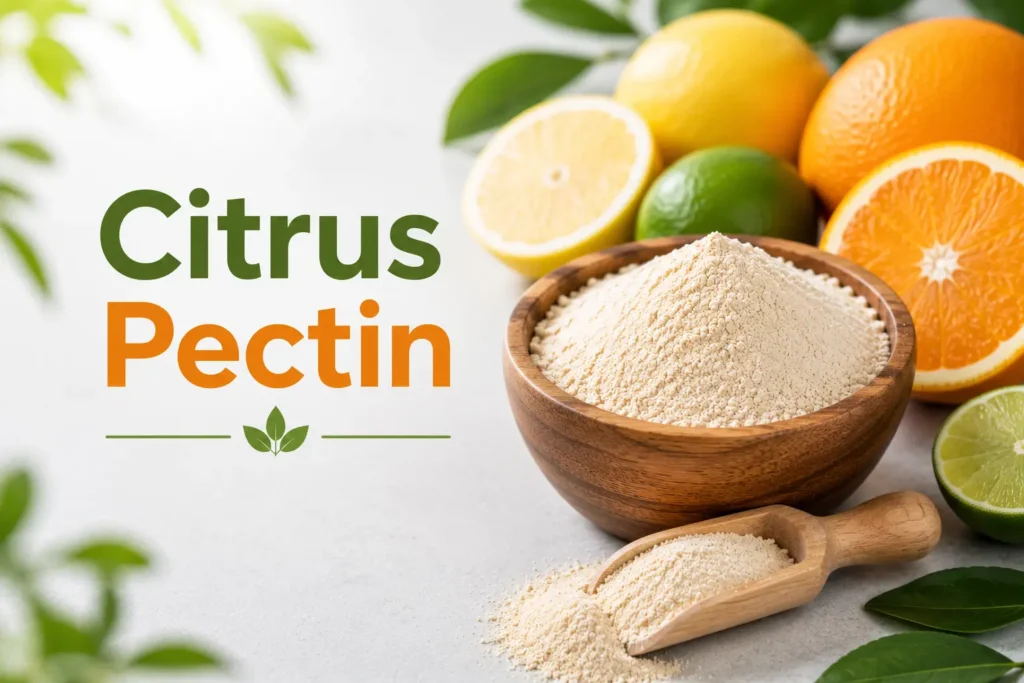
Citrus pectin is a soluble fiber found in the peel and pulp of citrus fruits like oranges, lemons, and grapefruit. It behaves much like apple pectin — dissolving into a gel that can support cholesterol levels and feed beneficial gut bacteria. A specialized version, modified citrus pectin (MCP), is broken down into smaller molecules so it can be absorbed differently by the body, and it’s marketed heavily for immune support, heavy metal detox, and even cancer support. It’s important to be clear about this upfront: while MCP has interesting early-stage research behind it, major health bodies like Cancer Research UK state plainly that there isn’t enough evidence to say it treats cancer, and it should never replace medical care.
If you’re researching pectin fibers in general, our guide to apple pectin covers the more common, less processed form side by side with this one.
Table of Contents
What Is Citrus Pectin?
Pectin is a structural carbohydrate found in the cell walls of most fruits and vegetables — it’s what makes jam gel when you cook fruit down with sugar. Citrus fruits (oranges, lemons, limes, grapefruit) are one of the richest natural sources, concentrated mostly in the white pith and peel rather than the juicy flesh.
As a dietary fiber, regular citrus pectin works the same way apple pectin does: it’s soluble, it forms a gel in water, and it’s fermented by gut bacteria. The two are nutritionally similar, and most general “pectin” research doesn’t distinguish strongly between citrus and apple sources.
What Is Modified Citrus Pectin (MCP)?
This is where things get more specific — and where a lot of marketing outpaces the science.
Modified citrus pectin is regular citrus pectin that has been chemically or enzymatically treated to break its long carbohydrate chains into smaller, shorter fragments. This modification is done specifically to change how the molecule behaves in the body: standard pectin is too large to be absorbed intact, while modified citrus pectin’s smaller fragments can pass into the bloodstream in ways regular dietary pectin cannot.
That structural difference is the entire reason MCP is sold as a separate, premium supplement rather than just “citrus fiber.” It isn’t a stronger version of the same thing — it’s a modified molecule being studied for different, more targeted biological effects, mainly through a protein called galectin-3, which is involved in cell adhesion and is elevated in some cancers, fibrosis, and heart conditions.
Citrus Pectin vs. Modified Citrus Pectin: Not the Same Product
This distinction is the single biggest thing competing articles blur together, and it matters for anyone deciding what to actually buy.
| Regular citrus pectin | Modified citrus pectin (MCP) | |
| Molecule size | Large, intact | Broken into smaller fragments |
| Absorbed into bloodstream | No — stays in the digestive tract | Yes, at least partially |
| Main studied use | Cholesterol, gut health, fullness | Galectin-3 inhibition (immune, fibrosis, early cancer research) |
| Evidence base | Moderate, similar to apple pectin | Mostly preclinical and small pilot human trials |
| Typical form | Fiber supplement, whole fruit | Specialty powder or capsule, often pricier |
| Regulatory recognition | General soluble fiber | Not an approved medical treatment for any condition |
If your goal is ordinary fiber, cholesterol, or gut support, regular citrus pectin (or apple pectin) is the more established, better-value choice. MCP is a different product aimed at a different, much less settled area of research.
Citrus Pectin Benefits (The Well-Supported Ones)
Cholesterol Support
Like apple pectin, citrus pectin forms a gel that binds bile acids in the gut, prompting the liver to draw more cholesterol from the blood to make replacement bile acids. Research on pectin generally (citrus and apple combined) has shown LDL cholesterol reductions in the range of 5–16% at daily doses in the 5–15 gram range, with effects being modest at lower intakes and more meaningful at higher, sustained doses.
Gut and Digestive Health
As a fermentable fiber, citrus pectin feeds beneficial gut bacteria and supports short-chain fatty acid production, similar to other soluble fibers. It can also add gentle bulk to stool, which is why pectin-containing fibers show up in both constipation and mild diarrhea remedies.
Fullness and Blood Sugar
By slowing stomach emptying, citrus pectin can support a feeling of fullness after meals and blunt how quickly sugar enters the bloodstream — though, as with apple pectin, blood sugar evidence is less consistent than the cholesterol data and needs larger trials to confirm.
What About Modified Citrus Pectin and Cancer? Here’s What’s Actually Known
This is the topic most people searching “citrus pectin” or “modified citrus pectin” are really curious about, and it deserves a direct, careful answer rather than vague marketing language.
What the early research has looked at:
- Laboratory (cell culture) and animal studies have found that MCP can interfere with galectin-3, a protein some cancer cells use to help them adhere to other tissue and spread.
- A small number of early-phase human pilot studies — including a 2003 pilot study in men with recurrent prostate cancer and a 2007 pilot study in patients with several advanced cancer types — have looked at outcomes like PSA doubling time and quality-of-life measures.
What this does NOT mean:
- These are small, early pilot studies, not the large randomized controlled trials needed to establish that a substance treats or prevents cancer.
- Cancer Research UK, reviewing this same evidence, states directly that there is not enough scientific evidence to say pectin can treat cancer, and that larger studies are needed before any conclusion can be drawn.
- No major health authority currently recognizes MCP as a cancer treatment or preventive therapy.
If you or someone you know is considering MCP for cancer support, the responsible step is to discuss it with an oncologist first — not to use it in place of, or delay, conventional treatment. Supplements can also interact with cancer medications, so medical supervision matters here more than with an ordinary fiber supplement.
Other Claimed Benefits of MCP (Preliminary Evidence)
- Heavy metal binding: Some small studies suggest MCP may increase urinary excretion of certain heavy metals like lead, based on its ability to bind minerals in the gut. This research is limited and shouldn’t be treated as a validated detox protocol.
- Immune modulation: Because galectin-3 is involved in immune signaling, MCP is studied for potential immune-supportive effects, though — again — this is early-stage research, not an established clinical benefit.
- Fibrosis and cardiovascular markers: Galectin-3 is also studied as a marker in heart failure and organ fibrosis, and MCP’s effect on galectin-3 has prompted interest here, but human outcome data is very limited.
Typical Dosage in Research
| Product | Typical studied dose | Common use |
| Regular citrus pectin (fiber) | 5–15 g/day | Cholesterol, gut health |
| Modified citrus pectin (MCP) | ~5 g, three times daily (around 15 g/day total) | Galectin-3 research, early oncology pilot studies |
MCP is typically taken as a powder dissolved in water on an empty stomach, split into multiple smaller doses through the day rather than one large dose — a pattern carried over from how it’s been used in the pilot studies.
Safety and Side Effects
Both regular citrus pectin and MCP are generally well tolerated. The most common side effects, especially at higher doses, are digestive: gas, bloating, loose stools, or stomach discomfort. These are consistent with what you’d expect from any soluble fiber taken in large amounts.
Because MCP is absorbed into the bloodstream (unlike regular dietary pectin) and is often used at high doses by people managing serious health conditions, it’s especially important to talk to a doctor before starting it — particularly if you’re on other medications, pregnant, or undergoing cancer treatment.
Common Mistakes People Make With Citrus Pectin
- Assuming MCP and regular citrus pectin are interchangeable. They’re processed differently and studied for different purposes — one is a general fiber, the other is a specialty supplement with a narrower, less proven evidence base.
- Treating early pilot studies as proof. A study with a few dozen participants is a starting point for larger research, not a confirmed treatment outcome.
- Using MCP instead of medical treatment. No responsible source, including this one, supports replacing prescribed cancer care with a supplement.
- Overpaying for “cancer-fighting” branding. Marketing language on MCP products often outpaces what the actual studies show — read the dosage and study design behind any specific claim before trusting it.
- Ignoring drug interaction risk. Because MCP is absorbed systemically, it has more potential to interact with medications than ordinary fiber — this is not something to combine with treatment without medical guidance.
Citrus Pectin Pros and Cons
| Pros | Cons |
| Naturally occurring, well-tolerated soluble fiber | MCP research on cancer is preliminary, not conclusive |
| Supports cholesterol and gut health similarly to apple pectin | MCP products are often priced based on unproven claims |
| MCP has a genuinely interesting, active area of ongoing research | Absorbed MCP has more interaction risk than dietary fiber |
| Regular citrus pectin is inexpensive and food-based | Marketing language often overstates what small pilot studies show |
| No major safety concerns at typical fiber doses | Large, high-quality human trials on MCP are still lacking |
Frequently Asked Questions
Is modified citrus pectin the same as regular pectin? No. Regular citrus pectin is a large-molecule dietary fiber that stays in the gut. Modified citrus pectin has been broken into smaller fragments specifically so part of it can be absorbed into the bloodstream — they’re studied for different purposes.
Can modified citrus pectin cure or prevent cancer? No responsible source can say this. Early laboratory and small pilot human studies have explored MCP’s effect on cancer-related markers, but Cancer Research UK and other authorities are clear that current evidence isn’t sufficient to call it a cancer treatment. It should never replace medical care.
Does citrus pectin lower cholesterol the same way apple pectin does? Yes — both are soluble fibers that work through the same bile-acid-binding mechanism, and research generally treats them similarly for cholesterol purposes.
Is citrus pectin safe to take daily? Regular citrus pectin, at typical fiber doses, is well tolerated by most people. Modified citrus pectin, especially at the higher doses used in research, should be discussed with a doctor first, particularly if you’re managing a serious health condition.
Where does citrus pectin come from? It’s extracted mainly from the peel and pith of citrus fruits like oranges, lemons, and grapefruit — parts of the fruit that are usually discarded, which is why pectin extraction is also a way to use citrus processing byproducts.
Is citrus pectin better than apple pectin? Neither is clearly superior for general fiber purposes — they’re nutritionally similar. Apple pectin is more commonly used in standard supplements, while citrus pectin is the source used to make modified citrus pectin specifically.
Final Verdict
Regular citrus pectin is a solid, well-tolerated soluble fiber with evidence-backed benefits for cholesterol and gut health, much like its apple-derived counterpart. Modified citrus pectin is a genuinely different product with an active but still early research base — promising enough to keep studying, but not proven enough to be called a treatment for cancer or any other serious condition. If you’re drawn to MCP for its more ambitious health claims, treat it as a topic to discuss with a healthcare provider, not a substitute for medical treatment.
For a simpler, food-based approach to soluble fiber, our apple pectin and soluble fiber guides are a good next step, and if cholesterol is your primary goal, see our best fiber supplement for cholesterol comparison.