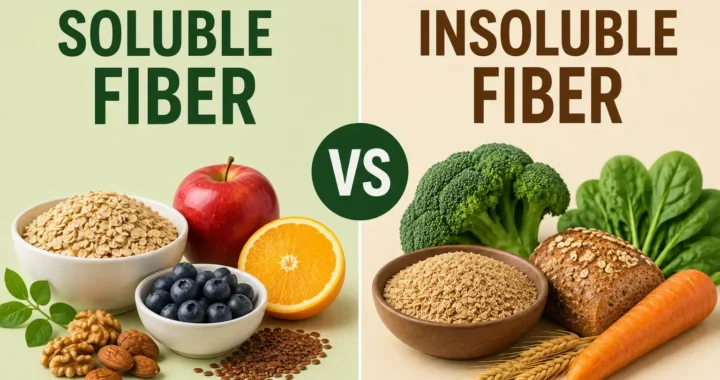

Insoluble fiber is a type of dietary fiber that doesn’t dissolve in water. Instead, it passes through your digestive system largely intact, adding bulk to stool and helping food move more quickly through your gut. It’s the fiber most associated with relieving constipation and supporting regular bowel movements. You’ll find it in wheat bran, whole grains, nuts, seeds, and the skins of fruits and vegetables. Most people don’t need an insoluble fiber supplement if they eat a varied, plant-based diet — but for some, a targeted supplement can help close the gap.
Below, we break down exactly what insoluble fiber does, how it’s different from soluble fiber, which foods contain the most of it, and how to add more of it to your diet without digestive discomfort.
Table of Contents
What Is Insoluble Fiber?
Insoluble fiber is one of the two main categories of dietary fiber — a type of carbohydrate found only in plant foods that your body cannot fully break down or absorb.
The name describes exactly what it does: “insoluble” means it does not dissolve in water. Instead of forming a gel like soluble fiber does, insoluble fiber keeps its structure as it travels through your stomach and intestines. This is why it’s often called “roughage” — it adds physical bulk to your digestive waste.
Insoluble fiber is made up mainly of three plant compounds:
- Cellulose – the main structural component of plant cell walls
- Hemicellulose – found alongside cellulose in plant fiber, and partly fermentable
- Lignin – a rigid compound found in the woody parts of plants, seeds, and skins
Because it resists digestion, insoluble fiber contributes little to no calories on its own, even though the foods it comes from — whole grains, vegetables, nuts — certainly do.
Insoluble Fiber vs. Soluble Fiber: What’s the Difference?
This is the question most people are really trying to answer, so let’s settle it clearly.
| Feature | Insoluble Fiber | Soluble Fiber |
| Dissolves in water? | No | Yes |
| Texture in the gut | Stays firm, adds bulk | Forms a thick gel |
| Main benefit | Speeds transit, relieves constipation | Slows digestion, supports blood sugar and cholesterol |
| Fermented by gut bacteria? | Minimally (some hemicellulose is) | Yes, largely fermentable |
| Common food sources | Wheat bran, whole grains, nuts, seeds, vegetable skins | Oats, beans, apples, citrus fruits, psyllium |
| Best known for | Regularity, stool bulk | Cholesterol and blood sugar management |
Here’s the part most articles skip: you don’t have to choose between them. Almost every whole plant food contains a mix of both soluble and insoluble fiber — just in different ratios. An apple with the skin on, for example, contains insoluble fiber in the skin and soluble fiber (pectin) in the flesh. The goal isn’t to pick a “winner.” It’s to get enough total fiber, with a healthy mix of both types.
If you want a deeper breakdown of the soluble side specifically, see our guide to soluble fiber and the best soluble fiber supplement options.
How Insoluble Fiber Works in the Body
Understanding the mechanism makes the benefits much easier to remember.
- It resists digestion. Your digestive enzymes can’t break down cellulose, hemicellulose, or lignin, so insoluble fiber passes through your stomach and small intestine mostly unchanged.
- It absorbs and holds water within its structure (without fully dissolving), which increases the size and softness of stool.
- The added bulk stretches the walls of the intestine slightly, which stimulates the natural muscle contractions (peristalsis) that move waste along.
- Faster transit time means less water is reabsorbed from stool in the colon, which is why stool stays softer and easier to pass.
This is different from soluble fiber, which slows things down by forming a viscous gel that delays stomach emptying and slows sugar absorption. Insoluble fiber’s job is largely mechanical — it’s about movement and bulk, not gelling.
Benefits of Insoluble Fiber
1. Relieves and Prevents Constipation
This is insoluble fiber’s best-documented role. By adding bulk and softening stool, it makes bowel movements easier and more regular, and it’s a first-line dietary recommendation for people dealing with occasional constipation.
2. Supports Digestive Regularity
Beyond treating constipation, regular intake of insoluble fiber helps maintain consistent, predictable bowel habits by keeping food moving through the gut at a healthy pace.
3. May Support a Healthy Gut Environment
While insoluble fiber isn’t as fermentable as soluble fiber, certain components — like some hemicelluloses and resistant starch — are still fermented by gut bacteria in the colon, contributing to a diverse gut microbiome.
4. Contributes to Satiety
Insoluble fiber takes up physical space in the stomach and digestive tract, which can help you feel fuller for longer after meals — a useful factor if you’re managing appetite or weight.
5. Part of a Heart- and Metabolism-Supportive Diet
Diets high in total fiber — both soluble and insoluble — are consistently linked with lower risk of cardiovascular disease, type 2 diabetes, and certain cancers. Newer research suggests insoluble fiber’s benefits go beyond simple bulking, though soluble fiber still carries the strongest individual evidence for cholesterol and blood sugar effects specifically.
Important honesty note: insoluble fiber is not a treatment for any diagnosed digestive condition, and evidence linking it directly to disease prevention comes primarily from studies on total dietary fiber intake, not insoluble fiber in isolation. Anyone with a chronic digestive condition should talk to a doctor before making major changes to fiber intake.
Best Insoluble Fiber Foods
Most whole, unprocessed plant foods contain insoluble fiber — especially the parts you might be tempted to remove, like skins, bran, and seeds.
| Food | Approx. Insoluble Fiber Contribution |
| Wheat bran | Very high — one of the most concentrated sources |
| Whole wheat flour & whole grain bread | High |
| Brown rice | Moderate-high |
| Nuts (almonds, walnuts) | High |
| Seeds (flaxseed, chia, sunflower) | High |
| Vegetables (cauliflower, green beans, potatoes with skin) | Moderate-high |
| Fruit skins (apples, pears, berries) | Moderate-high |
| Legumes (beans, lentils) | Moderate (mixed with soluble fiber) |
| Popcorn | Moderate |
Practical Ways to Eat More Insoluble Fiber
- Leave the skin on apples, pears, potatoes, and cucumbers instead of peeling them.
- Swap white bread, white rice, and refined pasta for whole grain versions.
- Add a tablespoon of ground flaxseed or wheat bran to oatmeal, yogurt, or smoothies.
- Snack on raw or lightly roasted nuts instead of processed snacks.
- Keep the seeds in fruits like berries and kiwi rather than straining them out.
- Choose air-popped popcorn as a whole-grain snack.
Do You Need an Insoluble Fiber Supplement?
For most people eating a varied diet with regular servings of whole grains, vegetables, fruit, nuts, and seeds, food alone provides enough insoluble fiber. Supplements become more relevant when:
- You have limited access to fresh produce or whole grains
- You’re managing a specific digestive concern under medical guidance, such as chronic constipation
- Your diet is heavily processed or low in fiber overall
- You need a controlled, consistent dose (for example, when tracking fiber intake for a health goal)
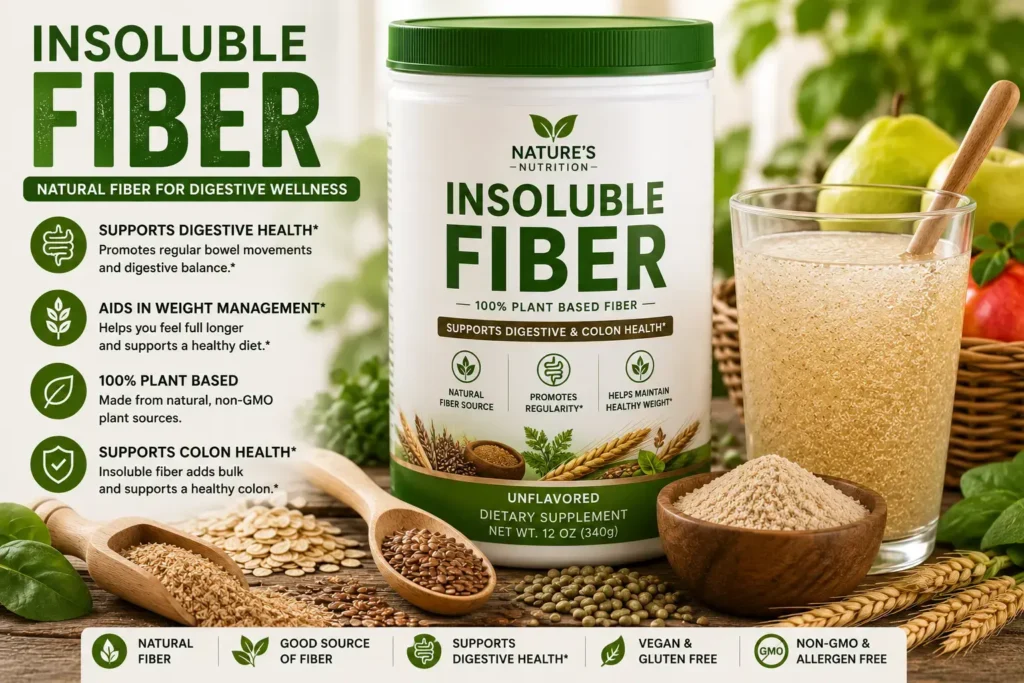
Most fiber supplements on the market are soluble (like psyllium husk) rather than purely insoluble, because soluble fibers dissolve more easily into drinks and are gentler for sensitive digestive systems. Insoluble fiber supplements — often based on wheat bran, cellulose, or methylcellulose — do exist, but they tend to be less common and, for some people, harsher on the gut when introduced too quickly.
If you’re comparing supplement types, it’s worth reading our guides on the best fiber supplement options overall, the best fiber powder formats, best fiber pills, and best fiber gummies if you prefer a specific format. For a natural, whole-food-based option, see our best natural fiber supplement picks, and if psyllium fits your needs better than pure insoluble fiber, our psyllium husk guide and best psyllium husk roundup can help you compare products.
How to Choose an Insoluble Fiber Supplement
- Check the fiber source. Wheat bran, cellulose, and methylcellulose are common insoluble options.
- Start low, go slow. Begin with a small dose and increase gradually over 1–2 weeks.
- Pair it with water. Insoluble fiber needs adequate fluid intake to work as intended; without enough water, it can worsen constipation rather than relieve it.
- Watch for added sugars or fillers, especially in gummy or flavored powder formats.
Common Mistakes People Make With Insoluble Fiber
- Increasing fiber intake too quickly. A sudden jump in fiber — from food or supplements — commonly causes bloating, gas, and cramping. Increase gradually over one to two weeks.
- Not drinking enough water. Insoluble fiber relies on adequate hydration to move smoothly through the gut. Without it, symptoms can worsen instead of improve.
- Relying only on insoluble fiber. A gut-healthy diet needs both soluble and insoluble fiber. Overloading on one type while ignoring the other can lead to imbalanced digestive effects.
- Assuming all fiber supplements are the same. Soluble and insoluble fiber supplements behave differently in the gut. Choosing the wrong type for your goal (say, using a purely soluble product when you specifically need more bulk) may not solve the problem you’re trying to fix.
- Ignoring underlying conditions. People with IBS, Crohn’s disease, diverticulitis flare-ups, or other sensitive digestive conditions may need to limit insoluble fiber, particularly from raw vegetables, and should get personalized guidance from a healthcare provider.
Who Should Be Cautious With Insoluble Fiber?
While insoluble fiber is generally safe and beneficial for most healthy adults, some people may need to moderate their intake:
- People with active IBS flare-ups or IBD (Crohn’s disease, ulcerative colitis)
- People recovering from certain digestive surgeries
- Anyone experiencing new or worsening digestive symptoms after increasing fiber intake
This isn’t a reason to avoid insoluble fiber altogether — it’s a reason to introduce it gradually and speak with a doctor or dietitian if you have an existing digestive condition.
Insoluble Fiber for Specific Goals
If you’re looking at fiber through the lens of a specific health goal, insoluble fiber plays a supporting role in each of these:
- Constipation relief: Insoluble fiber is often the most directly useful type — see our best fiber supplement for constipation guide for targeted options.
- Weight management: Its bulking, fullness-promoting effect can support portion control — explore our best fiber supplement for weight loss picks.
- Women’s digestive and hormonal health: Fiber needs and gut sensitivity can shift with hormonal changes — see our best fiber supplement for women guide.
- Daily maintenance: If you’re simply trying to build a consistent fiber habit, our best daily fiber supplement roundup compares convenient everyday options.
Frequently Asked Questions
What is insoluble fiber good for? It’s primarily good for digestive regularity — adding bulk to stool, speeding up transit time, and helping prevent or relieve constipation. It also supports satiety and overall gut health as part of a fiber-rich diet.
What foods are highest in insoluble fiber? Wheat bran, whole grains, nuts, seeds, and the edible skins of fruits and vegetables (like apples, pears, and potatoes) are among the richest sources.
Is insoluble fiber better than soluble fiber? Neither is “better” — they do different jobs. Insoluble fiber supports bulk and regularity; soluble fiber supports blood sugar and cholesterol management through its gel-forming effect. A healthy diet includes both.
Can too much insoluble fiber be bad for you? Yes, in excess or when increased too quickly, insoluble fiber can cause bloating, gas, and abdominal discomfort, and it may worsen symptoms for people with certain digestive conditions. Gradual increases with adequate water intake help minimize this.
Does insoluble fiber help you lose weight? It can support weight management indirectly by promoting fullness and slowing overeating, but it isn’t a weight-loss treatment on its own. It works best as part of an overall balanced diet.
How much insoluble fiber do I need per day? There’s no separate official recommendation for insoluble fiber alone. General fiber guidelines suggest around 25 grams per day for adult women and 38 grams per day for adult men, from a mix of soluble and insoluble sources.
Can I get insoluble fiber from a supplement instead of food? Yes, though whole foods are generally the preferred source because they also provide vitamins, minerals, and other beneficial plant compounds. Supplements can help fill gaps but shouldn’t fully replace fiber-rich foods.
Final Verdict
Insoluble fiber isn’t the flashier of the two fiber types, but it’s foundational to digestive health. Its job is simple and mechanical: add bulk, speed up transit, and keep things moving. For most people, the best way to get enough is through a varied diet built around whole grains, vegetables, fruit skins, nuts, and seeds — introduced gradually and paired with plenty of water.
If your diet consistently falls short, a targeted supplement can help, but it should complement — not replace — real food sources. Pay attention to how your body responds, increase intake slowly, and talk to a healthcare provider if you have an existing digestive condition or persistent symptoms.
This article is for educational purposes only and is not a substitute for professional medical advice. Speak with a doctor or registered dietitian before making significant changes to your fiber intake, especially if you have a digestive condition.