
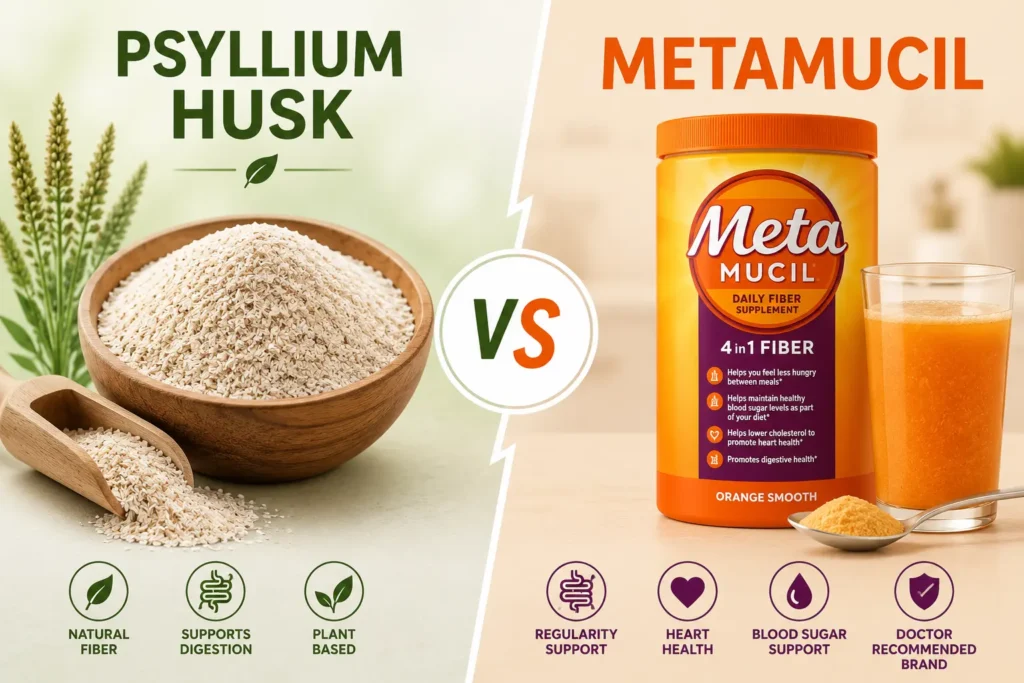
Metamucil is a brand-name fiber supplement, and psyllium husk is the plant-based ingredient inside most Metamucil products. In other words, you’re not really comparing two different substances — you’re comparing a raw ingredient to a packaged, flavored, and processed version of that same ingredient.
The real decision isn’t “psyllium husk vs Metamucil” as competitors — it’s whether you want plain, unflavored psyllium husk or a branded product built around it, complete with added flavoring, sweeteners, and a fixed dosing format.
Table of Contents
Why This Comparison Confuses People
Metamucil’s main active ingredient is psyllium husk fiber, so on a chemical level, plain psyllium husk powder and original Metamucil are doing the same core job in your gut. The confusion comes from Metamucil’s marketing, which often positions the brand as its own category rather than clarifying that it’s a psyllium-based product.
This matters because your actual choice usually comes down to formulation, not fiber type. Once you understand that, the rest of this comparison becomes much easier to navigate.
What Is Psyllium Husk?
Psyllium husk comes from the seeds of the Plantago ovata plant. It’s a soluble fiber that absorbs water and forms a thick gel in the digestive tract. This gel-forming action:
- Adds bulk to stool, which can ease both constipation and mild diarrhea
- Slows digestion, which may support steadier blood sugar after meals
- Helps bind cholesterol-related compounds in the gut
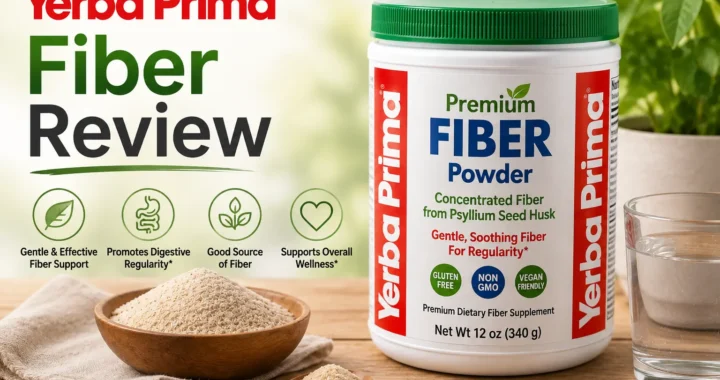
Plain psyllium husk is sold as a raw powder, capsules, or husk flakes, typically with no added flavor, sugar, or filler ingredients. For a full breakdown of how it works, see our complete psyllium husk guide, including benefits, dosage, and side effects.
What Is Metamucil?
Metamucil is a branded fiber supplement line manufactured by Procter & Gamble. Its original and most common formulations use psyllium husk as the primary fiber source, though the brand also sells some products built around other fibers.
Metamucil products typically add:
- Flavoring (orange, berry, or unflavored options)
- Sweeteners (sugar-based or sugar-free versions using aspartame or sucralose)
- Standardized dosing per scoop, capsule, or wafer
- Consistent manufacturing and quality control across batches
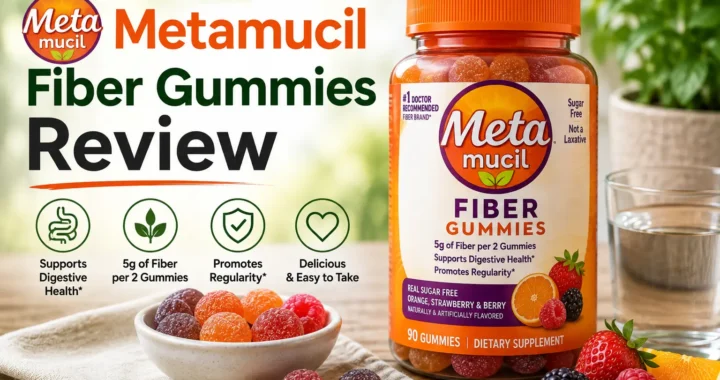
Metamucil comes in multiple formats: powder, capsules, and gummies, which gives it more flexibility for people who dislike the texture of raw psyllium.
Psyllium Husk vs Metamucil: Side-by-Side Comparison
| Feature | Plain Psyllium Husk | Metamucil |
| Core fiber source | Psyllium husk (unprocessed) | Psyllium husk (in most formulas) |
| Added flavoring | No | Yes (in flavored versions) |
| Added sweeteners | No | Often yes |
| Format options | Powder, capsules, whole husk | Powder, capsules, gummies |
| Cost per serving | Generally lower | Generally higher |
| Taste | Neutral to grassy | Flavored and more palatable |
| Ingredient transparency | Single ingredient | Multi-ingredient formula |
| Dosing consistency | Requires manual measuring | Pre-measured, standardized |
| Best suited for | Cost-conscious users, those avoiding additives | Users who want convenience and taste |
Pros and Cons of Plain Psyllium Husk
Pros:
- Lower cost per serving in most cases
- No added sugars, artificial sweeteners, or flavoring agents
- Full control over dosage and preparation
- Available in multiple forms, including psyllium husk powder and capsules
Cons:
- Requires manual mixing and measuring
- Texture and taste can be unappealing to some users
- Quality and purity vary more between brands
Pros and Cons of Metamucil
Pros:
- Easier to take consistently due to flavored, pre-measured formats
- Wide availability in stores and online
- Established brand with decades of manufacturing history
Cons:
- Higher cost per serving than generic psyllium husk
- Sugar-containing versions add unnecessary calories for some users
- Some formulations include additives that plain psyllium avoids
Common Mistakes People Make When Choosing Between Them
Assuming Metamucil is a completely different fiber. Many people compare it to psyllium husk as if they’re unrelated, then feel confused when both cause similar effects. Reading the ingredient label clears this up immediately — most Metamucil products list psyllium husk as the primary active ingredient.
Not checking for added sugar. Some Metamucil varieties use sugar as a sweetener, which matters for anyone managing blood sugar or reducing added sugar intake. Sugar-free versions exist, but they’re not the default on every product line.
Increasing the dose too quickly. This applies to both plain psyllium and Metamucil. Any psyllium-based fiber source can cause bloating or gas if you jump straight to a full dose. Starting with a half serving and increasing gradually over a week or two reduces this risk considerably.
Not drinking enough water. Psyllium’s gel-forming action depends on adequate fluid intake. Taking either product without enough water can worsen constipation instead of relieving it, and in rare cases contribute to choking risk if taken too dry or too fast.
Which One Should You Choose?
Choose plain psyllium husk if:
- You want the lowest cost per serving
- You prefer no added flavoring, sugar, or artificial sweeteners
- You’re comfortable measuring and mixing your own dose
- You want to explore other unflavored fiber options, like our best psyllium husk picks
Choose Metamucil if:
- You dislike the taste or texture of plain psyllium
- You want a pre-measured, consistent dose
- You prefer the convenience of capsules or gummies over mixing powder
- Brand consistency and wide availability matter to you
Consider looking beyond both if:
- You’re specifically targeting one health goal — our guides on fiber for constipation, fiber for cholesterol, or fiber for IBS compare options across ingredient types, not just brands
- You want to compare psyllium against other soluble fibers like inulin or acacia fiber
Frequently Asked Questions
Is Metamucil just psyllium husk with flavoring added? For most Metamucil formulations, yes — psyllium husk is the primary active fiber ingredient, with flavoring, sweeteners, and sometimes other minor ingredients added. Always check the specific product’s label, since Metamucil does sell some non-psyllium formulas.
Is it cheaper to buy plain psyllium husk instead of Metamucil? Generally, yes. Because you’re not paying for flavoring, packaging, or brand marketing, plain psyllium husk powder or capsules typically cost less per gram of fiber than equivalent Metamucil products.
Can I switch from Metamucil to plain psyllium husk without issues? Most people can switch without a problem, since the core fiber source is the same. Start at a similar dose and adjust based on how your digestion responds, particularly if you’re used to a flavored, sweetened version and are now taking an unflavored one.
Does Metamucil work faster than plain psyllium husk? No meaningful difference in speed exists between the two when the psyllium content and dose are equivalent. Any difference in experienced results usually comes down to consistency of use, not the product itself.
Are there sugar-free Metamucil options? Yes. Metamucil offers sugar-free versions sweetened with alternatives like aspartame or sucralose. If added sugar is a concern, check the label before purchasing, since not every product in the line is sugar-free by default.
Final Verdict
Psyllium husk vs Metamucil isn’t really a battle between two different fibers — it’s a choice between a raw ingredient and a branded, flavored version of that same ingredient. Plain psyllium husk wins on cost and ingredient simplicity. Metamucil wins on convenience, taste, and consistent dosing.
Neither is universally “better.” The right choice depends on whether you value saving money and avoiding additives, or paying more for a more palatable, ready-to-use format. If you’re still unsure where to start, our guide on how to choose a fiber supplement can help you match the format to your specific needs.
This article is for educational purposes and does not replace personalized medical advice. Consult a healthcare provider before starting any new supplement, especially if you have a digestive condition or take other medications.