
Arabinoxylan is a fiber found in the bran and cell walls of cereal grains, most notably wheat, rice, and rye. It belongs to a group of fibers called hemicelluloses and behaves as a partially soluble, highly fermentable fiber — meaning gut bacteria break down a meaningful portion of it in the colon. This fermentation is central to most of arabinoxylan’s studied effects, including its role as a prebiotic and its research interest around blood sugar response and immune activity.
It’s less well known than fibers like psyllium or inulin, largely because it isn’t usually sold as a standalone household-name supplement. But if you eat whole grains regularly, you’re already consuming it — and understanding what it actually does can help you separate genuine research from supplement marketing.
Table of Contents
What Is Arabinoxylan Fiber?
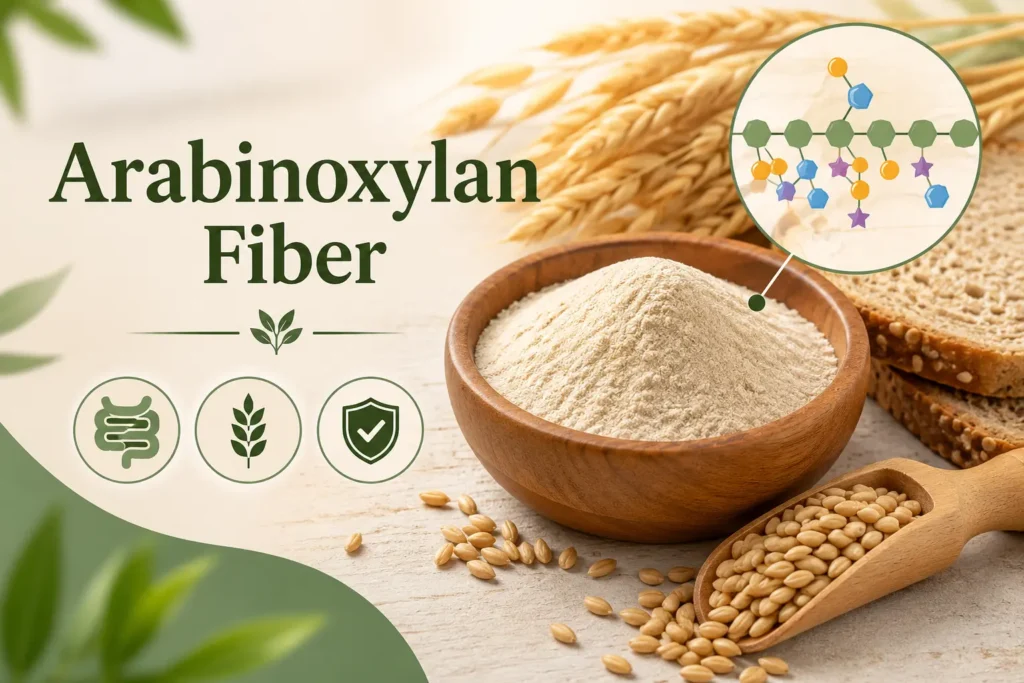
Arabinoxylan is a type of hemicellulose, a structural fiber found in the cell walls of grasses and cereal grains. Its name reflects its chemistry: it’s built from a xylose sugar backbone with arabinose sugar units attached as side branches.
It’s most concentrated in the outer bran layer of grains, which is one reason whole grain products contain meaningfully more of it than refined versions where the bran has been removed.
Where Arabinoxylan Comes From
- Wheat bran — one of the richest natural sources.
- Rice bran — also a significant source, and the basis for some specialty arabinoxylan supplement extracts.
- Rye and barley — contain notable amounts as well.
- Corn fiber (corn bran) — another cereal-based source, sometimes used in fiber-fortified foods.
Because it’s tied so closely to whole grains, arabinoxylan intake tends to track closely with how much whole grain (versus refined grain) someone eats — a detail that’s often missing from articles that discuss it purely as an isolated supplement ingredient.
How Arabinoxylan Works in the Body
- Partial solubility. Arabinoxylan exists in both water-soluble and water-insoluble forms depending on the grain source and processing, giving it a mixed profile rather than sitting cleanly in one fiber category.
- High fermentability. A substantial portion of arabinoxylan reaches the colon largely intact, where gut bacteria ferment it, producing short-chain fatty acids as a byproduct.
- Prebiotic activity. This fermentation process feeds beneficial gut bacteria, which is why arabinoxylan is frequently studied within prebiotic fiber research rather than purely as a bulking agent.
- Slower carbohydrate digestion. Because arabinoxylan is part of the grain’s structural matrix, it can slow the rate at which surrounding starches are digested and absorbed, which is part of why whole grains often produce a gentler blood sugar response than refined grains.
This combination — partial solubility plus strong fermentability — is what distinguishes arabinoxylan from purely bulking fibers like cellulose and purely gel-forming fibers like psyllium husk.
Arabinoxylan vs. Other Cereal and Prebiotic Fibers
Competing pages on this topic tend to define arabinoxylan without placing it next to the fibers people already recognize. Here’s how it compares.
| Fiber | Primary Source | Solubility | Fermentability | Main Research Focus |
| Arabinoxylan | Wheat/rice bran, cereal grains | Partial | High | Gut/prebiotic, glycemic response, immune-related studies |
| Inulin | Chicory root, agave | Soluble | Very high | Prebiotic, gut bacteria |
| Beta-glucan | Oats, barley | Soluble | Moderate | Cholesterol, glycemic response |
| Wheat dextrin | Processed wheat starch | Soluble | Moderate | Regularity, mild prebiotic |
| Cellulose | Plant cell walls | Insoluble | Low | Bulk, regularity |
Arabinoxylan overlaps meaningfully with beta-glucan fiber since both come from cereal grains and both are studied for gut and metabolic effects — but arabinoxylan’s fermentation profile leans closer to prebiotic fibers like inulin, while beta-glucan is more closely tied to cholesterol-specific research.
Potential Benefits of Arabinoxylan Fiber
Based on current nutrition research, arabinoxylan fiber is associated with:
- Supporting gut bacteria diversity, due to its strong fermentability and prebiotic activity in the colon.
- A gentler post-meal blood sugar response, particularly when consumed as part of whole grains rather than refined ones.
- Contribution to stool bulk and regularity, from its partially insoluble fraction.
- Emerging research interest in immune-related markers, an area studied specifically with concentrated rice bran-derived arabinoxylan extracts.
It’s important to be direct about the evidence here: much of the immune-related research uses specific, concentrated extracts rather than general dietary arabinoxylan intake, and results are still considered preliminary rather than conclusive. This is a meaningful distinction — eating more whole grains is well supported for general health, but that’s different from claims tied to isolated, concentrated arabinoxylan extract supplements, which need more research before conclusions can be drawn confidently.
Arabinoxylan as a Supplement vs. Getting It From Food
Arabinoxylan is available in supplement form, typically as a concentrated extract (often rice bran-derived). However, it’s far more commonly consumed simply by eating whole grains rather than through a dedicated supplement.
| Whole Grain Foods | Concentrated Supplement Extract | |
| Typical arabinoxylan amount | Moderate, alongside other nutrients | Higher, isolated dose |
| Additional nutrients included | Fiber, B vitamins, minerals, protein | Minimal — mostly the isolated fiber compound |
| Research base | Strong, tied to whole grain intake studies | Smaller, more specific to certain extracts |
| Best for | General fiber and nutrition goals | Targeted research-driven use under guidance |
For most people, prioritizing whole grains such as whole wheat, brown rice, barley, and rye is a more evidence-supported and food-based way to increase arabinoxylan intake than relying on a specialty extract supplement. Our high-fiber foods guide covers whole grain sources in more depth.
Side Effects and Safety Considerations
Arabinoxylan from whole grains is generally well tolerated as part of a normal diet. A few points are worth knowing:
- Gas and bloating can occur, especially with a sudden increase in fermentable fiber intake, since gut bacteria produce gas as a natural byproduct of fermentation.
- Gradual increases are gentler on digestion than jumping straight to a high intake.
- Concentrated supplement extracts haven’t been studied as extensively or for as long as whole-grain intake, so it’s reasonable to treat specific health claims tied to isolated extracts with more caution than general whole-grain fiber intake.
- Grain-based source means arabinoxylan supplements or foods may not be appropriate for individuals with wheat allergies or gluten-related conditions, depending on the specific source and processing.
This article is educational and does not replace personalized medical advice. If you have a diagnosed digestive condition, a grain-related allergy or intolerance, or take medication affecting blood sugar, speak with a healthcare provider before changing your fiber intake significantly.
Common Mistakes People Make With Arabinoxylan
- Assuming it’s only available as a supplement. Whole grains are the most practical and well-supported source for most people.
- Expecting immune claims to apply broadly. Immune-related research typically involves specific concentrated extracts, not general dietary fiber intake.
- Increasing whole grain intake too quickly. Like other highly fermentable fibers, a fast increase can cause temporary bloating or gas.
- Overlooking grain source for allergies. Wheat-derived arabinoxylan products aren’t suitable for everyone; checking the source matters.
- Treating it identically to beta-glucan. The two overlap in source (cereal grains) but differ in their most-studied effects — arabinoxylan leans toward gut/prebiotic and glycemic research, beta-glucan toward cholesterol research.
Frequently Asked Questions
What foods contain the most arabinoxylan? Wheat bran and rice bran are among the richest sources, along with whole rye and barley. Refined grain products contain much less, since the bran layer — where arabinoxylan concentrates — is typically removed during processing.
Is arabinoxylan a soluble or insoluble fiber? It’s a mixed fiber, containing both soluble and insoluble fractions depending on the grain source and how it’s processed.
Does arabinoxylan help with blood sugar control? Some research associates whole grain arabinoxylan intake with a gentler post-meal blood sugar response, likely due to its effect on digestion speed, though it isn’t a treatment for diabetes or blood sugar disorders and shouldn’t be treated as one.
Is arabinoxylan the same as beta-glucan? No. Both are cereal-derived fibers found in similar grains, but they’re chemically different compounds studied for somewhat different effects — arabinoxylan for gut/prebiotic and glycemic effects, beta-glucan more specifically for cholesterol research.
Can arabinoxylan cause digestive discomfort? Yes, particularly if intake increases quickly, since its high fermentability means more gas production as gut bacteria break it down. Gradual increases tend to be better tolerated.
Do I need an arabinoxylan supplement, or is diet enough? For most people, eating more whole grains provides arabinoxylan alongside other beneficial nutrients, making it a more well-rounded and evidence-supported approach than a concentrated extract supplement for general health goals.
Final Verdict
Arabinoxylan fiber is a genuinely interesting cereal-based fiber with a fermentation profile that supports gut bacteria and may contribute to steadier blood sugar responses when it comes from whole grains. It’s less flashy than trending supplement fibers, largely because most people already get it through diet rather than a dedicated product.
The research on concentrated arabinoxylan extracts — particularly around immune-related effects — is still developing and shouldn’t be treated as settled science. For most people, the most reliable way to benefit from arabinoxylan is simply choosing whole grains over refined ones consistently, rather than seeking out a specialty extract.
If you’re building a broader fiber strategy around whole foods, our guide on fiber supplements vs. fiber foods can help you decide where arabinoxylan-rich whole grains fit alongside any supplements you’re already using.