
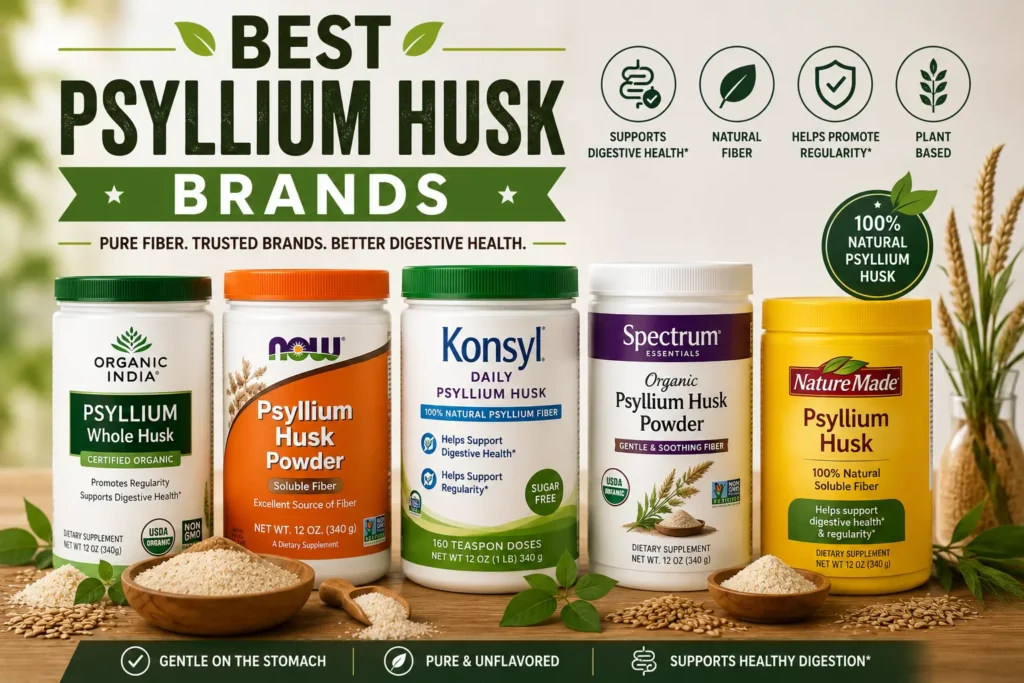
Best Psyllium Husk Brands: The best psyllium husk brand depends on the format you’ll actually stick with. Konsyl offers the purest, single-ingredient psyllium husk powder and has been manufacturing it since 1934, making it a common pick among gastroenterologists for its consistency. NOW Foods gives you the best balance of dose, price, and clean labeling for everyday bulk use. Organic India leads on certified-organic sourcing for buyers who prioritize that over a smoother mouthfeel. Yerba Prima is the most established whole-husk specialist and one of the more affordable per-serving options. Metamucil remains the most clinically referenced and widely available brand overall, especially for cholesterol support. If you dislike mixing powder, capsule-based brands solve the taste and texture problem entirely, at the cost of needing more pills per dose. The right brand comes down to matching format, purity, and fiber-per-serving to how you’ll realistically take it every day — which is exactly what this guide walks through.
Table of Contents
What Actually Makes a Psyllium Husk Brand “Good”
Before comparing brand names, it helps to know what separates a genuinely good psyllium husk product from one that just has good marketing. Four factors matter more than anything else:
- Fiber per serving. Look for at least 3.5-6g of psyllium husk per dose. Some capsule products require five or more capsules to match what one teaspoon of powder delivers.
- Format. Whole husk, finely milled powder, and capsules all deliver the same fiber, but they behave differently in your mouth and in your gut. Whole husk retains more mucilage and gels more strongly; finely milled powder mixes more smoothly; capsules skip taste and texture entirely.
- Additives. Some products are 100% psyllium husk. Others add sweeteners, flavors, or fillers. Neither is automatically “better” — it depends on whether you want convenience or a clean label.
- Organic and purity certification. USDA Organic and non-GMO labeling matter more to some buyers than others, but they’re worth checking if sourcing is a priority for you.
If you haven’t yet read a general introduction to this fiber type, our psyllium husk overview covers what it is and how it works in more depth before you shop.
The Best Psyllium Husk Brands, Compared
| Brand | Format | Fiber Per Serving | Additives | Best For |
| Konsyl | Powder, capsules, stick packs | ~6g per serving | None (pure psyllium) | Purity and consistency |
| NOW Foods | Powder | ~5-7g per serving | None, certified organic | Best overall value |
| Organic India | Powder, capsules | ~5g per serving | None, certified organic | Organic sourcing priority |
| Yerba Prima | Whole husk powder, capsules | ~5g per serving | Minimal | Budget whole-husk fans |
| Metamucil | Powder, capsules, gummies | ~2.4-3.4g per serving (varies) | Varies (some sugar-free) | Widest availability, cholesterol support |
| Nutricost | Capsules | Varies by capsule count | None | No-mixing convenience |
| Viva Naturals | Powder | ~5g per serving | None, certified organic | Fine-texture organic powder |
| Anthony’s Goods | Powder | ~5g per serving | None, tested for heavy metals | Clean-label, allergen-free needs |
Fiber content per serving varies by product line within each brand, so always check the actual label rather than assuming based on brand reputation alone.
Brand-by-Brand Breakdown
Konsyl
Konsyl has manufactured psyllium husk products since 1934, longer than any other brand in this category, and its Original Formula is intentionally stripped down to pharmaceutical-grade psyllium husk with nothing added. That simplicity is exactly why it’s frequently recommended in clinical settings — there’s no sugar, no sweetener, and no flavor system to account for. Konsyl also offers stick packs and capsules for people who want the same purity in a more portable format. For a full rundown of the brand’s product lineup, see our Konsyl review.
NOW Foods
NOW Foods psyllium husk powder is certified organic, non-GMO verified, and free of additives, sweeteners, and artificial colors, which makes it a favorite among buyers who want a clean label without paying a premium brand markup. It also tends to deliver a higher fiber yield per serving than many competitors, making it one of the better value options per gram of fiber. The main tradeoff reviewers mention is solubility — it can clump if not mixed thoroughly, so a shaker bottle helps. Read our NOW Foods fiber review for the full breakdown.
Organic India
Organic India’s whole psyllium husk powder is USDA Certified Organic and consistently praised for ingredient purity and sourcing transparency. It’s a strong choice if certified-organic status is a priority for you, though whole husk powder has a coarser texture than finely milled alternatives, which some buyers need to get used to.
Yerba Prima
Yerba Prima has specialized in dietary fiber supplements since the early 1980s, and its psyllium husk powder uses whole husk rather than ground seed powder, preserving more of the natural mucilage that gives psyllium its gel-forming effect. It’s also one of the more affordable whole-husk options on a per-serving basis, making it a practical pick for daily long-term use. See our Yerba Prima fiber review for more detail.
Metamucil
Metamucil remains the most widely recognized and clinically referenced psyllium husk brand, and it’s the name most often mentioned as the doctor-recommended default for fiber supplementation. It’s available in more formats than any other brand here — powder, capsules, gummies, and sugar-free versions — which makes it easy to find something that fits your routine. The tradeoff is that some Metamucil products contain added sugar, and fiber-per-serving is generally lower than pure psyllium powders, so check the label for the sugar-free or “smooth” formulations if that matters to you. Our full Metamucil review breaks down every product line, and psyllium husk vs. Metamucil explains exactly how the brand differs from plain psyllium husk powder.
Nutricost
Nutricost’s psyllium husk capsules are a common recommendation for people who dislike mixing powder altogether. The format solves taste and texture complaints entirely, though it typically requires several capsules to match the fiber dose found in a single teaspoon of powder — worth factoring into cost-per-serving comparisons.
Viva Naturals
Viva Naturals offers a USDA-certified organic psyllium husk powder with a notably fine texture that mixes more smoothly than many whole-husk alternatives. It’s free from common allergens like gluten, soy, and dairy, which broadens its appeal for people managing multiple dietary restrictions.
Anthony’s Goods
Anthony’s Goods positions its psyllium husk powder as a premium, minimally processed option, with USDA organic certification and heavy-metal testing. It’s a reasonable fit for buyers who already shop specialty or natural-foods brands and want that same standard applied to their fiber supplement.
Powder vs. Capsules vs. Whole Husk: Which Format Should You Choose?
This is the decision most buyers actually struggle with more than picking a specific brand name.
| Format | Pros | Cons | Best For |
| Finely milled powder | Mixes smoothly, easy to dose precisely | Requires mixing with liquid | People who don’t mind stirring a drink |
| Whole husk powder | Retains more mucilage, often cheaper per serving | Coarser texture, doesn’t dissolve as smoothly | Budget buyers, baking/recipe use |
| Capsules | No taste or texture, portable | Requires many capsules per full dose | People who dislike powder entirely |
If you’re still deciding between formats generally, not just within psyllium, our comparison of fiber powder vs. fiber capsules covers the broader tradeoffs across fiber types.
How Much Psyllium Husk Should You Take?
Most psyllium husk products are designed to deliver 3.5-6g of soluble fiber per serving, taken with at least 8 ounces of water. Standard guidance is to start with a smaller amount than the label maximum and increase gradually over one to two weeks. This isn’t specific to any one brand — it applies regardless of which product you choose. For a full breakdown by age, goal, and product type, our psyllium husk dosage guide covers this in more detail than we can here.
Common Mistakes When Choosing a Psyllium Husk Brand
- Comparing brands by price alone. A cheaper capsule product that requires 6 capsules to match one teaspoon of powder may actually cost more per gram of fiber.
- Assuming “organic” means “gentler.” Organic certification is about sourcing and farming practices, not how the fiber behaves in your gut — regular and organic psyllium husk affect digestion the same way.
- Not drinking enough water with the dose. Psyllium forms a gel on contact with liquid. Taking it with too little water, regardless of brand, is a common cause of discomfort.
- Switching brands and doses at the same time. If you change brands, keep your dose consistent for a week or two before judging whether the new product is working, since fiber content per serving can vary between products.
- Ignoring your existing medication schedule. Psyllium can affect how well certain medications are absorbed, so timing your dose away from medications matters more than which brand you buy.
Frequently Asked Questions
Which psyllium husk brand do doctors recommend most? Metamucil is the most widely referenced brand in clinical guidance, largely due to its long track record and broad product availability. Konsyl is also commonly recommended in clinical settings specifically for its pharmaceutical-grade purity and lack of additives.
Is whole husk psyllium better than powder? Neither is objectively better — whole husk retains slightly more of the natural mucilage and tends to be less processed, while finely milled powder mixes more smoothly into liquids. The right choice comes down to texture preference, not effectiveness.
Are capsule brands as effective as powder brands? Yes, in terms of fiber delivered, as long as you take enough capsules to match an equivalent powder dose. Capsules simply require more units per serving, which is worth factoring into cost comparisons.
What’s the difference between Metamucil and plain psyllium husk powder brands like Konsyl or NOW Foods? Metamucil often includes added flavoring or sweeteners (unless you choose a sugar-free version) and generally delivers a lower fiber dose per serving than pure psyllium husk powders. Plain psyllium brands are typically unflavored and deliver a more concentrated fiber dose per teaspoon.
Do I need to buy organic psyllium husk? Not necessarily. Organic certification relates to farming practices and sourcing, not fiber content or effectiveness. It matters most if avoiding pesticide exposure or supporting organic agriculture is already a priority in how you shop.
Can I switch between psyllium husk brands without issues? Generally yes, since the active fiber is the same across brands. The main things to check when switching are the fiber grams per serving and any added ingredients, since these vary enough between brands to change your effective dose.
Final Verdict
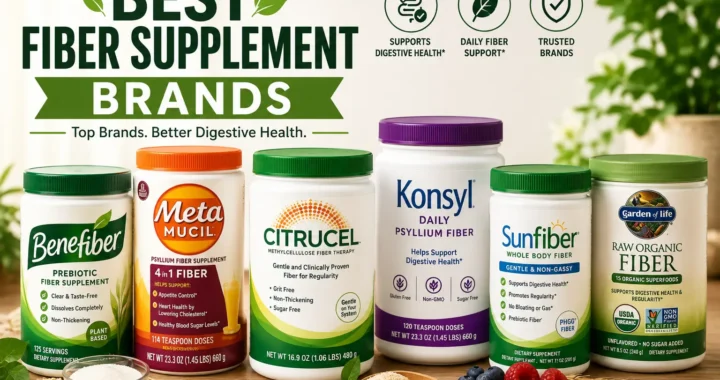
If you want the simplest, purest option, Konsyl’s decades-long track record and additive-free formula make it hard to beat. If you’re looking for the best overall value in a clean-label powder, NOW Foods is the strongest all-around pick. Organic India and Viva Naturals are worth prioritizing if certified-organic sourcing matters to you specifically, and Yerba Prima remains a reliable, budget-friendly whole-husk option. If you know powder texture is a dealbreaker, skip straight to a capsule brand like Nutricost rather than forcing yourself through a format you won’t stick with. Whichever brand you choose, the fiber itself works the same way — what changes is purity, format, and how consistently you’ll actually take it. For a broader look at how psyllium-based brands compare to non-psyllium fiber brands, our guide to the best fiber supplement brands puts this category in context alongside wheat dextrin, methylcellulose, and acacia options.