
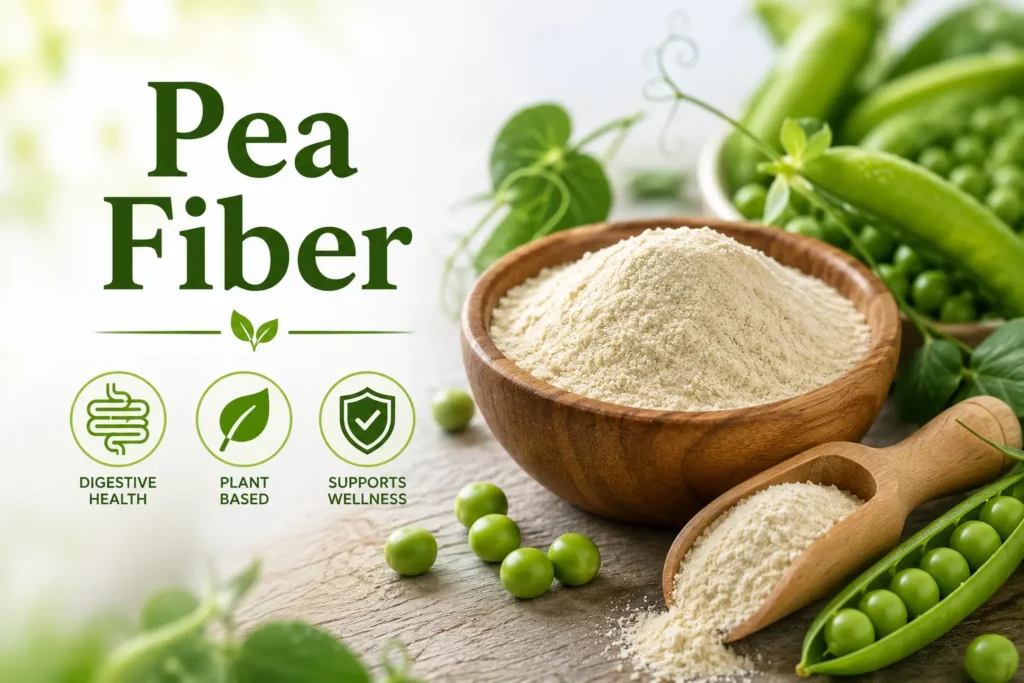
Pea fiber comes from the outer hull and fibrous structural components of field peas — the same crop used to produce pea protein isolate, meaning pea fiber and pea protein are often co-products of the same processing operation.
Nutritionally, pea fiber is composed mostly of insoluble fiber, with a smaller soluble fraction. This puts it in a similar functional category to cellulose and wheat bran, rather than gel-forming fibers like psyllium.
Table of Contents
Why Pea Fiber Is Used in Food Products
Pea fiber has become popular in food manufacturing for a few practical reasons:
- Neutral taste and color — it doesn’t significantly alter the flavor or appearance of the product it’s added to.
- Gluten-free — unlike wheat bran or wheat dextrin, pea fiber is naturally free of gluten, making it useful in gluten-free baked goods and snack products.
- Water-holding capacity — it helps retain moisture in baked goods, which can improve texture and shelf life.
- Sustainable and allergen-friendly — peas are a lower-allergenicity crop compared to some common fiber sources like wheat, making pea fiber a practical choice for products targeting sensitive consumers.
This is why you’ll often see pea fiber listed in the ingredients of high-fiber bread, protein bars, and gluten-free crackers, even when the product isn’t marketed as a “fiber supplement” itself.
How Pea Fiber Works in the Body
- It resists digestion. As an insoluble fiber, pea fiber isn’t broken down by digestive enzymes and passes through the small intestine largely intact.
- It adds bulk to stool. This bulk increases stool volume and can help stimulate more regular bowel movements.
- It has modest water-holding capacity. Compared to gel-forming soluble fibers, pea fiber holds water in a more limited way, contributing to stool softness without the thick gel effect of fibers like psyllium.
- A small soluble portion offers mild fermentation. The minor soluble component of pea fiber can be fermented by gut bacteria to a limited extent, though this isn’t its primary functional role.
In short, pea fiber behaves mechanically — through bulk and mild water retention — rather than through gel formation or heavy fermentation.
Pea Fiber vs. Other Common Fiber Sources
Many pages covering pea fiber focus entirely on its use in food manufacturing without comparing it functionally to fibers people already know. Here’s how it stacks up.
| Fiber | Solubility | Gluten-Free | Fermentability | Main Use |
| Pea fiber | Mostly insoluble | Yes | Low | Bulk, food fortificationPea fiber is a plant-based dietary fiber extracted from the hull and structural parts of field peas (Pisum sativum), the same legume used to make pea protein. It’s predominantly insoluble, meaning it adds bulk to stool rather than forming a gel, and it’s widely used in food manufacturing as a way to boost fiber content in bread, pasta, snack bars, and other packaged foods. It’s also available as a standalone fiber supplement, often chosen specifically because it’s gluten-free and allergen-friendly compared to wheat-based fiber additives.If you’re comparing pea fiber to other bulking fibers, or you’ve noticed it on an ingredient label and want to know what it actually does, this guide breaks down exactly where it fits. |
| Wheat bran | Mostly insoluble | No | Low–Moderate | Bulk, baking |
| Cellulose | Insoluble | Yes | Low | Bulk, food additive |
| Psyllium husk | Mostly soluble | Yes | Partial | Gel-forming, regularity |
| Oat fiber | Mixed | Yes | Moderate | Bulk + some cholesterol research |
If you’re specifically looking for a gluten-free, neutral-tasting insoluble fiber, pea fiber and cellulose serve a similar role. The main practical difference is source and, for some people, digestive tolerance — pea fiber’s plant origin and slightly different fiber matrix may sit differently for certain individuals compared to purified cellulose. If bulk isn’t your only goal and you also want a gel-forming effect, psyllium husk works through a different mechanism entirely, covered in our soluble vs. insoluble fiber comparison.
Potential Benefits of Pea Fiber
Based on its composition and how insoluble fibers generally function, pea fiber is associated with:
- Supporting regular bowel movements through added stool bulk.
- Contributing to a feeling of fullness, since it adds volume with minimal calories.
- Improving the fiber content of processed foods without significantly changing taste or texture — a food-manufacturing benefit that indirectly supports higher fiber intake for consumers.
- Offering an allergen-conscious fiber option, particularly useful for people avoiding gluten or wheat-derived ingredients.
As with other insoluble, low-fermentation fibers, pea fiber isn’t typically the fiber of choice for cholesterol management, blood sugar research, or prebiotic gut effects — those benefits are more associated with soluble, fermentable fibers like inulin or oat fiber.
Pea Fiber as a Supplement
While pea fiber is most commonly encountered as a food ingredient, it’s also sold as a standalone supplement in powder form. People typically choose it for:
- Adding fiber to smoothies, baked goods, or homemade recipes without altering taste
- A gluten-free alternative to wheat-based fiber powders
- General bulk-forming support for regularity
Compared to more established standalone fiber supplements like psyllium husk or methylcellulose, pea fiber has a smaller research base specifically as a supplement, since most existing studies focus on its use as a food-fortification ingredient rather than a dedicated therapeutic fiber. That doesn’t make it ineffective — insoluble fiber’s bulking mechanism is well understood in general — but it does mean pea fiber’s supplement-specific evidence is less extensive than fibers with decades of clinical use behind them.
Side Effects and Safety Considerations
Pea fiber is generally well tolerated, but a few points are worth knowing:
- Adequate water intake matters. As with any bulk-forming fiber, taking pea fiber without enough water can worsen constipation instead of relieving it.
- Gradual introduction is gentler. Increasing any fiber intake too quickly can cause temporary bloating or gas.
- Pea allergy consideration. While rare compared to more common allergens, individuals with a known legume or pea allergy should avoid pea fiber and check ingredient labels on fortified foods.
- Not a substitute for medical evaluation. Persistent digestive symptoms or significant changes in bowel habits should be assessed by a healthcare provider rather than managed with fiber alone.
This article is educational and does not replace personalized medical advice. If you have a legume allergy, a diagnosed digestive condition, or take medication, speak with a healthcare provider before adding pea fiber to your diet.
Common Mistakes People Make With Pea Fiber
- Assuming it works like a gel-forming fiber. Pea fiber bulks stool; it doesn’t form the thick gel that psyllium or glucomannan does.
- Not drinking enough water. This is the most common reason bulk-forming fibers feel like they’re “not working” or making things worse.
- Overlooking it on ingredient labels. Pea fiber often appears in high-fiber packaged foods under a plain ingredient name, so people may be consuming more of it than they realize.
- Expecting prebiotic or cholesterol effects. Its low fermentability means it isn’t the right fiber for those specific goals.
- Ignoring legume allergy status. Though uncommon, a pea or legume allergy is a real consideration that’s easy to overlook since “pea fiber” doesn’t sound like an allergen risk to most people.
Frequently Asked Questions
Is pea fiber soluble or insoluble? Pea fiber is predominantly insoluble, with only a small soluble fraction, placing it in a similar functional category to wheat bran and cellulose.
Is pea fiber gluten-free? Yes. Pea fiber is naturally gluten-free, which is one of the main reasons it’s used in gluten-free baked goods and snack products.
Does pea fiber cause bloating? It generally causes less gas than highly fermentable fibers, since its low fermentability means gut bacteria don’t break it down extensively. Some bloating can still occur if intake increases too quickly.
Is pea fiber the same as pea protein? No, though they often come from the same processing of field peas. Pea protein is the isolated protein component, while pea fiber is the fibrous, indigestible structural portion.
Can pea fiber help with weight management? Like other bulk-forming fibers, pea fiber can contribute to a feeling of fullness with minimal calories, which may support portion control as part of an overall approach to weight management — though it isn’t a standalone weight-loss solution.
Why is pea fiber added to so many packaged foods? It’s neutral in taste, gluten-free, and holds moisture well in baked goods, making it a practical fiber-boosting ingredient for manufacturers targeting cleaner labels and allergen-friendly products.
Final Verdict
Pea fiber is a straightforward, plant-based insoluble fiber that does its job well: adding bulk, supporting regularity, and boosting the fiber content of foods without disrupting taste or texture. Its gluten-free, allergen-conscious profile makes it a practical choice both for food manufacturers and for individuals looking for a bulking fiber outside of wheat-based options.
It isn’t a specialty fiber, though — if your goal is gel formation, prebiotic gut support, or cholesterol-related benefits, fibers like psyllium husk, inulin, or oat fiber are better aligned with those specific outcomes. For general bulk and regularity in a clean, allergen-friendly form, pea fiber is a solid, dependable option.
If you’re deciding between pea fiber and other bulking options, our guide on insoluble fiber can help you match the right fiber type to your specific digestive goal.