
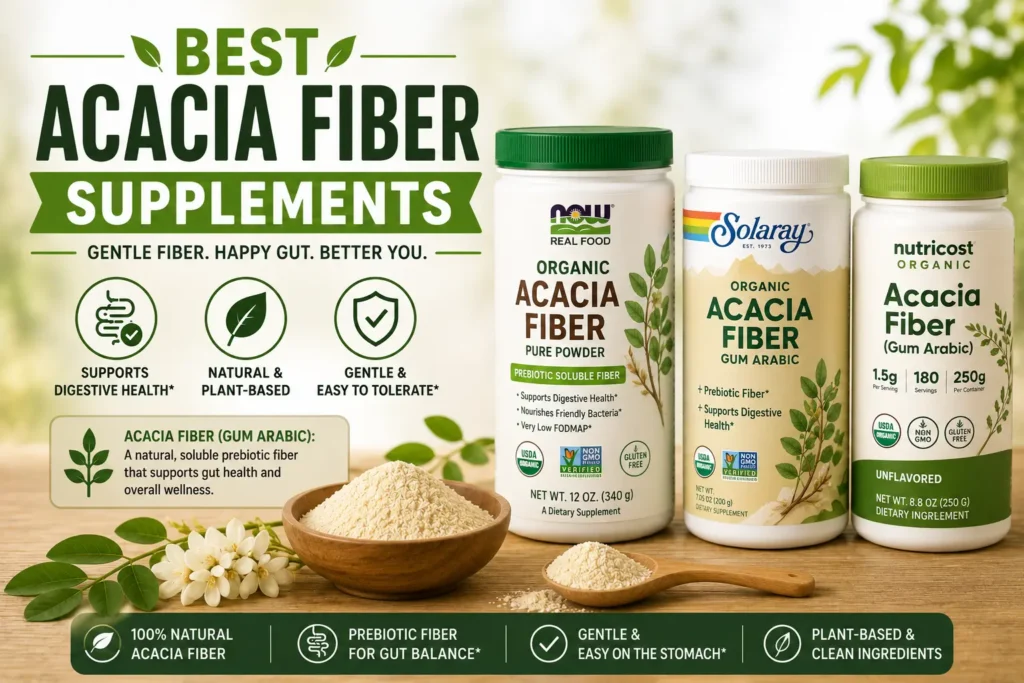
Best Acacia Fiber Supplements: Acacia fiber is one of the gentlest fermenting soluble fibers available, which is exactly why it shows up so often in recommendations for sensitive digestive systems, including IBS. Heather’s Tummy Fiber is the most specifically formulated option for IBS, built entirely around slow-fermenting Acacia Senegal with no additives.
NOW Foods Acacia Pure Powder is the best all-around, certified-organic choice for general daily use at a lower price point. Anthony’s Organic Acacia Senegal Powder offers batch-tested purity for people who want third-party verification. Micro Ingredients Organic Acacia Senegal Fiber is the strongest bulk-value option if you’re taking acacia long-term. Below, we explain what actually separates a quality acacia fiber supplement from a mediocre one — starting with a detail almost every competing guide skips: the difference between Acacia Senegal and Acacia Seyal.
Table of Contents
What Makes Acacia Fiber Different From Other Soluble Fibers
Acacia fiber, also called gum arabic, comes from the sap of acacia trees and is one of the few fiber sources that’s 100% soluble fiber with essentially no insoluble fraction. That matters because it means acacia dissolves fully rather than leaving the grainy residue you get with some whole-husk fiber products.
The bigger differentiator is fermentation speed. Where inulin and psyllium ferment relatively quickly in the colon, acacia fiber ferments slowly and steadily. That slower fermentation is the reason acacia tends to produce less gas and bloating than faster-fermenting prebiotic fibers, which is why it’s frequently recommended for people managing IBS specifically. For the full ingredient breakdown, our guide to acacia fiber covers how it works in more depth, and our acacia fiber benefits page goes further into what the current evidence supports.
Acacia Senegal vs. Acacia Seyal: The Detail Most Guides Skip
Not all acacia fiber is the same species, and the difference genuinely affects quality. Acacia Senegal is the higher grade — a pure white, fine powder that dissolves clearly and completely in liquid. Acacia Seyal is a lower grade, with a noticeably grittier texture and a slight brown tint, and it doesn’t dissolve as cleanly.
Some budget products blend the two or don’t specify which species they use at all. If a label doesn’t clearly state “Acacia Senegal,” it’s worth assuming you may be getting at least some lower-grade Seyal in the mix. This single distinction explains more of the taste and texture complaints in acacia fiber reviews than almost anything else, and it’s the first thing to check before comparing brands on price.
The Best Acacia Fiber Supplements, Compared
| Brand | Species | Format | Additives | Best For |
| Heather’s Tummy Fiber | 100% Acacia Senegal | Powder, travel stick packs | None | IBS-specific use |
| NOW Foods Acacia Pure Powder | Acacia Senegal | Powder | None, certified organic | Best overall value |
| Anthony’s Organic Acacia Senegal | Acacia Senegal | Powder | None, batch-tested | Verified purity |
| Micro Ingredients Organic Acacia Senegal | Acacia Senegal | Powder | None | Bulk, long-term use |
| Garden of Life Dr. Formulated Organic Fiber | Acacia blend + other fibers | Powder | Blended with other plant fibers | Whole-food blend preference |
Brand-by-Brand Breakdown
Heather’s Tummy Fiber
This brand is built entirely around Acacia Senegal and is specifically formulated with IBS in mind, developed by an IBS patient and author rather than a general supplement company. It’s 100% soluble fiber with zero additives, no flavoring, and no sweeteners, and it’s sold in formats ranging from bulk canisters to individual travel stick packs for people who need to dose consistently away from home. Reviewers who’ve tried faster-fermenting fibers like psyllium or inulin and found them too aggressive for their gut commonly cite Heather’s Tummy Fiber as the product that finally worked for them. It’s more expensive per serving than generic acacia powders, but the purity and species consistency are the reason it’s the most frequently recommended brand specifically for digestive sensitivity. For a broader look at how acacia stacks up against other IBS-friendly fiber options, see our best fiber supplement for IBS guide.
NOW Foods Acacia Pure Powder
NOW Foods offers a certified organic, highly soluble Acacia Senegal powder that mixes cleanly and is priced more accessibly than specialty IBS-focused brands. It’s a reasonable default for anyone who wants the fermentation benefits of acacia for general digestive health without paying a premium, though some reviewers note this line comes in a slightly smaller package size than competing bulk options, which affects cost-per-serving over time.
Anthony’s Organic Acacia Senegal Powder
Anthony’s product is batch-tested, gluten-free, and non-GMO, giving buyers third-party verification of purity beyond just label claims. This matters more with acacia than with many other fiber types, since species and grade can vary meaningfully between suppliers. It’s a solid pick for anyone who wants documented quality assurance without paying IBS-specialty pricing.
Micro Ingredients Organic Acacia Senegal Fiber
Sold in larger bulk sizes, this brand is a practical option for people who’ve already confirmed acacia works well for them and want to buy in volume rather than reordering smaller containers repeatedly. It’s instant-dissolving and plant-based, positioned similarly to NOW Foods but typically available in bigger bag sizes.
Garden of Life Dr. Formulated Organic Fiber
Unlike the single-ingredient acacia powders above, this product blends acacia with other plant-based fibers in a whole-food-style formula. That approach appeals to people who want a broader fiber blend rather than isolated acacia, though it means the fermentation profile is less predictable than pure Acacia Senegal, since you’re combining multiple fiber types with different digestive behaviors.
Who Should Prioritize Acacia Fiber Specifically
Acacia isn’t the right starting point for everyone, but it’s worth prioritizing over faster-fermenting fibers if you:
- Have been diagnosed with IBS and react poorly to psyllium or inulin
- Experience noticeable gas or bloating with other soluble fiber supplements
- Want a fiber source with zero insoluble fraction and minimal taste or texture
- Need a supplement suitable for long-term, daily use without additives
If you’re not sure acacia is the right category for you yet, our comparison of inulin vs. acacia fiber and acacia fiber vs. psyllium walks through how the fermentation and tolerance profiles actually differ, rather than just listing product names.
How to Take Acacia Fiber
Acacia fiber is typically taken as a powder stirred into water or a moist food, usually starting around one teaspoon once or twice daily and increasing gradually if tolerated. Because it’s slower-fermenting than inulin or psyllium, most people find they can reach a full dose with less trial and error than with faster-fermenting fiber types — though starting low and increasing gradually is still the more comfortable approach for anyone new to fiber supplementation generally.
Common Mistakes When Choosing an Acacia Fiber Supplement
- Not checking the species. A product labeled simply “acacia fiber” without specifying Senegal is more likely to contain lower-grade Seyal or a blend, which affects both texture and dissolution.
- Assuming all acacia products are interchangeable. Purity, grade, and additive content vary meaningfully between brands, even when the front label looks similar.
- Expecting immediate results. Acacia’s slow fermentation is a tolerance advantage, but it also means effects on regularity may take slightly longer to become noticeable than with faster-acting fibers.
- Choosing based on price alone. The cheapest acacia powders are sometimes cheaper specifically because they use lower-grade Seyal or blend in fillers — check the label, not just the price tag.
- Skipping the water. Like other soluble fibers, acacia needs adequate fluid intake to work as intended, regardless of brand.
Frequently Asked Questions
What is the best acacia fiber supplement for IBS specifically? Heather’s Tummy Fiber is the most consistently recommended option for IBS, largely because it’s formulated entirely around slow-fermenting Acacia Senegal with no additional ingredients that could trigger symptoms.
Is acacia fiber better than psyllium husk for sensitive stomachs? For people who experience gas or bloating with psyllium, acacia is often better tolerated because it ferments more slowly. It’s not universally “better” — psyllium has stronger evidence for cholesterol support — but for digestive sensitivity specifically, acacia is frequently the gentler choice.
What’s the difference between Acacia Senegal and Acacia Seyal? Acacia Senegal is the higher-grade species, producing a fine, white, fully soluble powder. Acacia Seyal is lower grade, grittier, and doesn’t dissolve as completely. Quality acacia fiber supplements should clearly specify Acacia Senegal on the label.
Does acacia fiber cause less bloating than other fibers? Generally, yes, compared to faster-fermenting fibers like inulin. Acacia can still cause some gas, especially at higher doses, but its slow fermentation typically makes it one of the gentler options among soluble, prebiotic fibers.
Can I take acacia fiber every day long-term? Yes, acacia fiber is commonly used for daily, long-term supplementation, including in IBS management protocols, since it has a strong tolerability profile at recommended doses.
Is acacia fiber the same thing as gum arabic? Yes, acacia fiber and gum arabic refer to the same substance — the dried sap of the acacia tree, used both as a food-grade thickener and as a soluble fiber supplement.
Final Verdict
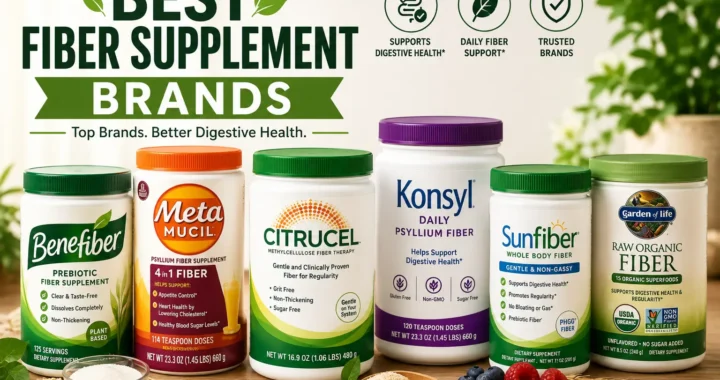
If digestive sensitivity or diagnosed IBS is your main concern, Heather’s Tummy Fiber remains the most purpose-built option on the market, backed by a specific focus on Acacia Senegal purity. For general daily fiber support without IBS-specific pricing, NOW Foods and Anthony’s both offer certified, well-reviewed alternatives at a lower cost. Whichever brand you choose, confirm it’s genuinely Acacia Senegal rather than an unspecified acacia blend — that single detail affects taste, texture, and dissolution more than any other factor on this list. For a wider view of how acacia fits into the broader landscape of fiber supplement brands, our guide to the best fiber supplement brands compares it directly against psyllium, wheat dextrin, and inulin-based options.