
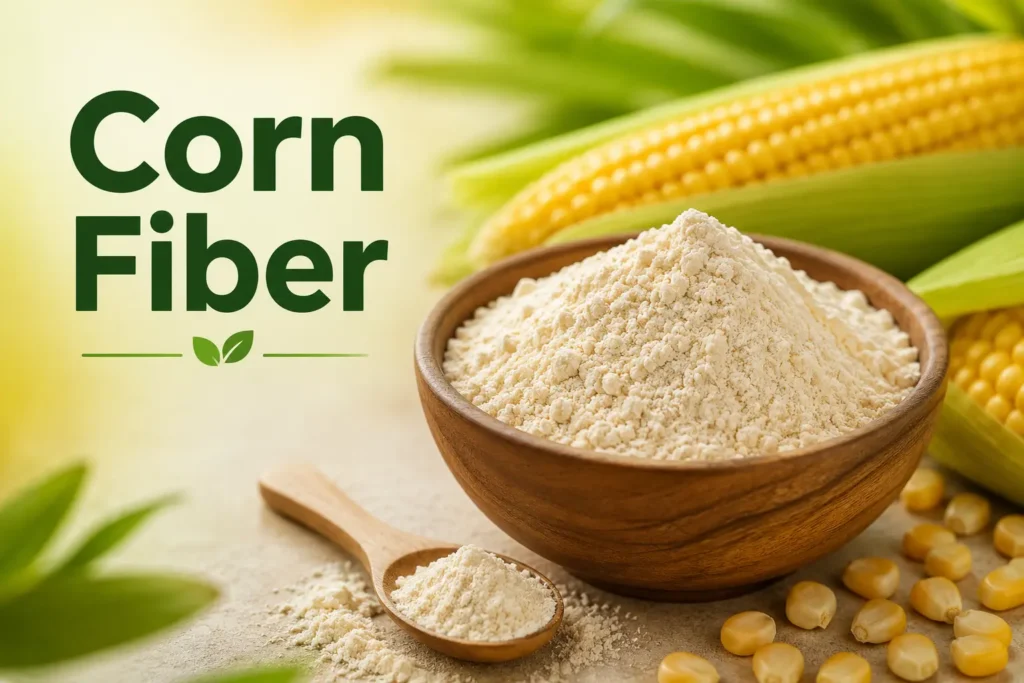
“Corn fiber” actually refers to two different things, and mixing them up is where most confusion starts. Corn bran is the insoluble, structural fiber from the outer layer of the corn kernel — it works like other insoluble fibers, adding bulk. Soluble corn fiber is a manufactured, digestion-resistant fiber made from corn starch, widely used in reduced-sugar and high-fiber food products because it’s well tolerated, low glycemic, and mixes easily without a gritty texture.
If you’ve seen “soluble corn fiber” on a food label and wondered what it actually is, this guide separates the two forms clearly and explains where each one fits.
Table of Contents
What Is Corn Fiber? Two Different Ingredients, One Name
Corn Bran (Insoluble Corn Fiber)
Corn bran comes from the outer hull of the corn kernel, similar to how wheat bran comes from the outer layer of a wheat kernel. It’s a coarse, insoluble fiber that behaves like other structural plant fibers — resisting digestion and adding bulk to stool.
Soluble Corn Fiber
Soluble corn fiber is a different category entirely. It’s produced by processing corn starch into a digestion-resistant carbohydrate — technically a type of resistant maltodextrin. Despite being manufactured rather than naturally occurring in whole corn, it’s classified as a dietary fiber because it resists digestion in the small intestine and reaches the colon largely intact.
This soluble, manufactured form is the one most commonly referenced when people search “corn fiber supplement” or “soluble corn fiber,” since it’s the version used heavily in food product formulation — things like protein bars, low-sugar ice cream, and high-fiber baked goods.
This distinction is the most important thing to understand about corn fiber, and it’s exactly the kind of detail that gets glossed over on competitor pages that treat “corn fiber” as one single ingredient.
How Soluble Corn Fiber Works in the Body
- It resists digestion in the small intestine. Its structure isn’t broken down by human digestive enzymes, so it isn’t absorbed as sugar or significant calories.
- It has a low glycemic impact. Because it isn’t digested like starch, it doesn’t cause the blood sugar spike associated with regular corn starch or sugar — a major reason manufacturers use it to replace sugar while maintaining texture and sweetness-adjacent mouthfeel.
- It’s partially fermented in the colon. Gut bacteria ferment a portion of soluble corn fiber, contributing mild prebiotic activity, though it’s generally considered better tolerated than more aggressively fermented fibers like inulin.
- It dissolves easily without forming a thick gel. Unlike psyllium or glucomannan, soluble corn fiber doesn’t create a heavy viscous texture, which is part of why it blends so seamlessly into food products without changing consistency.
Corn Fiber vs. Other Common Fibers
| Fiber | Type | Fermentability | Gas/Bloating Tendency | Common Use |
| Soluble corn fiber | Soluble, manufactured | Moderate | Low–Moderate | Sugar/starch replacement in food products |
| Corn bran | Insoluble | Low | Low | Bulk, baking |
| Inulin | Soluble | Very high | Moderate–High | Prebiotic supplements |
| Wheat dextrin | Soluble | Moderate | Moderate | Fiber supplements, regularity |
| Cellulose | Insoluble | Low | Low | Bulk, food additive |
One of the most practical comparisons for people considering a fiber supplement is soluble corn fiber versus inulin. Both are soluble and used in food products and supplements, but soluble corn fiber is generally reported to cause less gas and bloating than inulin at comparable doses — a meaningful difference for people who are gas-sensitive but still want a soluble, low-glycemic fiber option. It’s also worth comparing to wheat dextrin, another manufactured soluble fiber with a similar food-industry role.
Potential Benefits of Corn Fiber
Depending on which type of corn fiber is being discussed, associated benefits include:
Soluble corn fiber:
- Supporting a lower glycemic impact when replacing sugar or refined starch in food formulations
- Generally good digestive tolerance compared to more fermentable soluble fibers
- Mild prebiotic activity from partial fermentation
- Contributing to fiber content in “reduced sugar, high fiber” labeled products
Corn bran (insoluble):
- Supporting regular bowel movements through added bulk
- Contributing to overall dietary fiber intake in whole corn products
As with other fibers, evidence for specific health claims varies by study design and dose, and corn fiber’s most consistent, well-supported role is as a functional food ingredient rather than a targeted therapeutic supplement.
Where You’ll Actually Find Corn Fiber
This is a section most competitor pages skip, but it’s genuinely useful: corn fiber, especially the soluble form, shows up far more often as a hidden ingredient than as a standalone supplement.
- Reduced-sugar ice cream and frozen desserts — used to maintain texture while cutting sugar content
- Protein and fiber bars — added to boost fiber counts without a gritty or gummy texture
- Low-carb or “keto-friendly” baked goods — used as a bulking agent that doesn’t spike blood sugar
- High-fiber cereals and snacks — supplements the product’s total fiber content
If you’re checking ingredient labels for fiber sources, “soluble corn fiber” is one of the more common entries in reduced-sugar and high-fiber processed foods — worth recognizing rather than mistaking for a corn starch or added sugar ingredient.
Side Effects and Safety Considerations
Corn fiber, in either form, is generally well tolerated, but a few points matter:
- Gas and bloating can still occur with soluble corn fiber, particularly at higher intakes, though tolerance is generally reported to be better than more fermentable fibers like inulin.
- Corn allergy or intolerance is a real consideration — anyone with a known corn allergy should avoid corn fiber-containing products, including soluble corn fiber derived from corn starch.
- Not a substitute for whole-food fiber. Since soluble corn fiber is manufactured specifically for food formulation, it doesn’t carry the same broader nutrient profile as fiber from whole corn, vegetables, or grains.
- Gradual increases are gentler, as with any fiber addition to the diet.
This article is educational and does not replace personalized medical advice. If you have a corn allergy, a diagnosed digestive condition, or are managing blood sugar with medication, check with a healthcare provider before significantly changing your fiber intake.
Common Mistakes People Make With Corn Fiber
- Assuming “corn fiber” means one single thing. Corn bran and soluble corn fiber are functionally different, and confusing them leads to mismatched expectations.
- Overlooking it on ingredient labels. Soluble corn fiber often appears in “reduced sugar” or “high fiber” products without much attention, even though it’s doing real work in the formulation.
- Expecting it to behave like inulin. While both are soluble, tolerance and fermentation profiles differ — soluble corn fiber is generally milder.
- Ignoring corn allergy status. It’s an easy detail to miss since “fiber” doesn’t sound like a corn-derived ingredient at first glance.
- Treating manufactured fiber as equivalent to whole-food fiber nutritionally. Soluble corn fiber serves a specific formulation purpose; it isn’t a replacement for the broader nutrient profile of whole grains and vegetables.
Frequently Asked Questions
Is corn fiber the same as soluble corn fiber? Not exactly. “Corn fiber” can refer to insoluble corn bran or to soluble corn fiber, which is a manufactured, digestion-resistant ingredient made from corn starch. They behave differently in the body.
Does soluble corn fiber raise blood sugar? No — one of its main appeals is a low glycemic impact, since it isn’t digested and absorbed the way regular starch or sugar is.
Does corn fiber cause gas or bloating? It can, particularly the soluble form at higher intakes, though it’s generally reported to be better tolerated than more fermentable fibers like inulin.
Is soluble corn fiber natural or synthetic? It’s manufactured through processing corn starch into a resistant carbohydrate structure. It originates from a natural source (corn) but doesn’t exist in that soluble form in whole corn itself.
Why is soluble corn fiber used in reduced-sugar foods? It replaces some of the bulk, texture, and mild sweetness that sugar or starch would normally provide, while adding fiber and minimizing blood sugar impact.
Can people with corn allergies have corn fiber? No — anyone with a diagnosed corn allergy should avoid corn fiber-containing products, including soluble corn fiber, since it’s derived from corn starch.
Final Verdict
Corn fiber isn’t one ingredient — it’s two, and understanding the difference changes how you should think about it. Corn bran functions as a straightforward insoluble bulking fiber, while soluble corn fiber is a manufactured, low-glycemic soluble fiber built specifically for food formulation, offering a gentler tolerance profile than more fermentable soluble fibers like inulin.
For most people encountering “corn fiber” on an ingredient label, it’s soluble corn fiber doing quiet, functional work in a reduced-sugar or high-fiber product — not a supplement chosen deliberately for a specific health outcome. If you are looking for a dedicated soluble fiber supplement, comparing soluble corn fiber against inulin or wheat dextrin based on your gas tolerance is a practical way to decide.
For a broader look at how different soluble fibers compare, our soluble fiber guide covers the full landscape in more depth.