
Quick Answer
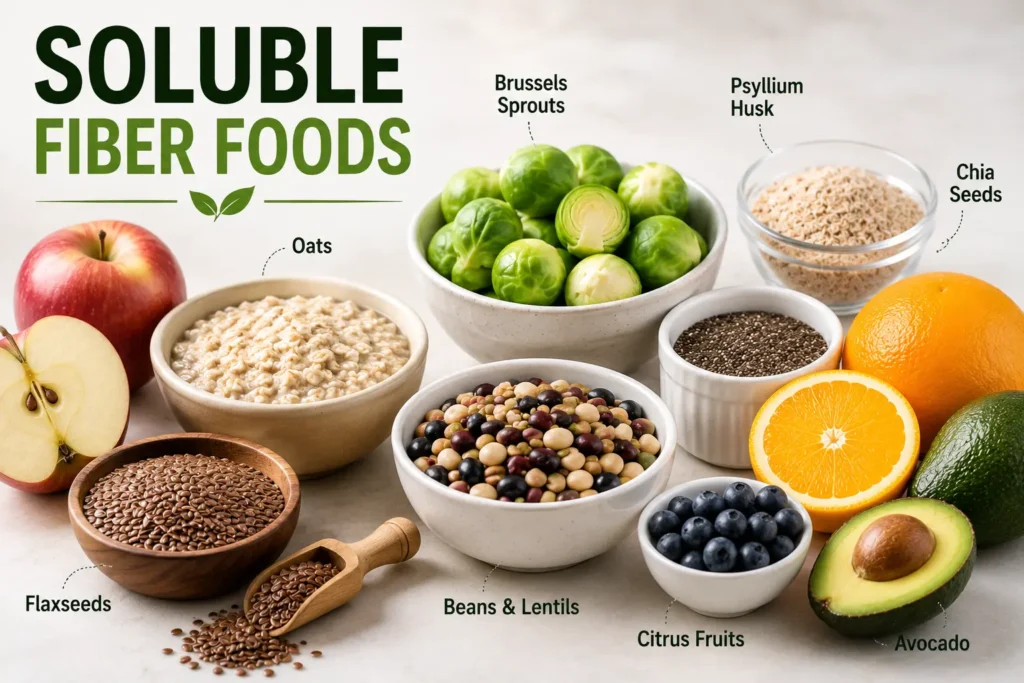
The best soluble fiber foods include oats, barley, black beans, lima beans, lentils, Brussels sprouts, sweet potatoes, apples, pears, citrus fruits, flaxseed, and psyllium husk. Soluble fiber dissolves in water to form a gel that slows digestion, softens stool, feeds gut bacteria, and helps manage cholesterol and blood sugar. Most adults need 25–30 grams of total fiber a day, with roughly 6–8 grams coming from soluble sources — but average intake in the U.S. is closer to 15 grams total, so most people fall short.
Table of Contents
What Is Soluble Fiber?
Soluble fiber is a type of dietary fiber that dissolves in water and turns into a thick, gel-like substance during digestion. Unlike insoluble fiber, which passes through the gut mostly intact and adds bulk to stool, soluble fiber slows things down. It delays how quickly food leaves your stomach, moderates how fast sugar enters your bloodstream, and acts as food for the beneficial bacteria living in your colon.
You’ll find soluble fiber naturally in oats, legumes, many fruits, some vegetables, and seeds like flax and psyllium. Almost every plant food contains a mix of both soluble and insoluble fiber — foods are labeled “high in soluble fiber” when that particular type makes up a larger share of the total.
If you’re still working out the difference between the two types, our full soluble vs. insoluble fiber comparison breaks it down side by side.
How Soluble Fiber Works in the Body
When soluble fiber reaches your stomach and small intestine, it absorbs water and thickens into a viscous gel. This gel does three main jobs:
- Slows digestion — food stays in the stomach longer, which increases fullness and reduces post-meal blood sugar spikes.
- Traps cholesterol-containing bile acids — the gel binds to bile acids in the gut, forcing the liver to pull more LDL (“bad”) cholesterol from the blood to make new bile acids.
- Ferments in the colon — gut bacteria break soluble fiber down into short-chain fatty acids, which nourish colon cells and support a healthy microbiome.
This is different from how insoluble fiber works, which acts mainly as bulk to move waste through the digestive tract more efficiently.
Benefits of Soluble Fiber
- Lower LDL cholesterol. The FDA recognizes a heart-health claim for soluble fiber from oats, barley, and psyllium, based on its cholesterol-lowering effect.
- Steadier blood sugar. The gel slows carbohydrate absorption, which can blunt post-meal glucose spikes.
- Better gut health. Soluble fiber is a prebiotic — it feeds beneficial bacteria that produce compounds linked to a healthier gut lining.
- More consistent bowel movements. By softening stool, soluble fiber can ease both constipation and, in some cases, mild diarrhea by adding form to loose stool.
- Longer-lasting fullness. Because digestion slows down, soluble fiber can help control appetite between meals.
25 Best Soluble Fiber Foods (With Amounts)
The table below lists common soluble fiber sources, organized from legumes to grains, fruits, vegetables, and seeds, with the approximate soluble fiber content per typical serving.
| Food | Serving Size | Soluble Fiber (approx.) |
| Black beans (cooked) | ¾ cup | 5.4 g |
| Lima beans (cooked) | ¾ cup | 5.3 g |
| Lentils (cooked) | 1 cup | 3.0 g |
| Kidney beans (cooked) | ¾ cup | 3.0 g |
| Chickpeas (cooked) | 1 cup | 2.0 g |
| Oats (cooked) | 1 cup | 1.9 g |
| Oat bran (cooked) | ½ cup | 1.4 g |
| Barley (cooked) | ½ cup | 0.8 g |
| Brussels sprouts (cooked) | 1 cup | 2.0 g |
| Sweet potato (cooked) | ½ cup | 1.8 g |
| Carrots (cooked) | 1 cup | 2.4 g |
| Broccoli (cooked) | 1 cup | 1.0–2.0 g |
| Apple (with skin) | 1 medium | 1.0 g |
| Pear (with skin) | 1 medium | 1.1 g |
| Orange | 1 medium | 1.8 g |
| Nectarine | 1 medium | 1.4 g |
| Apricots | 3 whole | 1.4 g |
| Guava | 1 medium | 1.1 g |
| Avocado | ½ fruit | 1.7 g |
| Flaxseed (ground) | 1 tbsp | 0.6–1.2 g |
| Psyllium husk | 1 tsp | ~5 g (mostly soluble) |
| Sunflower seeds | ¼ cup | 1.0 g |
| Hazelnuts | ¼ cup | 1.1 g |
| Figs (dried) | 3 figs | 1.9 g |
| Prunes | 5 prunes | 1.5 g |
Values are approximate and vary by preparation method, ripeness, and database source. Cooking, ripeness, and portion size all shift the numbers slightly, so treat these as a practical guide rather than an exact lab measurement.
Best Soluble Fiber Foods by Category
Legumes: The Most Concentrated Source
Beans, lentils, and peas consistently top soluble fiber charts. Black beans and lima beans alone can supply over 5 grams of soluble fiber per serving — more than most single fruits or grains. If you’re building meals around gut or heart health, legumes are the most efficient place to start.
Whole Grains: Oats and Barley Lead the Pack
Oats and barley owe their reputation to a specific soluble fiber called beta-glucan. About 3 grams of oat beta-glucan per day is the amount studies associate with meaningful cholesterol reduction — roughly the amount in a large bowl of oatmeal. Barley works the same way and is often overlooked in soups, pilafs, and grain bowls.
Fruits: Apples, Pears, and Citrus
Most fruit fiber sits in and just under the skin, so eating fruit unpeeled maximizes soluble fiber intake. Apples and pears contain pectin, a soluble fiber that also thickens naturally when fruit is cooked down (think applesauce). Citrus fruits like oranges and grapefruit add soluble fiber along with vitamin C.
Vegetables: Brussels Sprouts, Carrots, and Sweet Potatoes
Root and cruciferous vegetables carry a reasonable amount of soluble fiber, especially when cooked. Cooking softens plant cell walls and can make some of that fiber easier for your gut to access.
Seeds: Flax and Psyllium
Flaxseed and psyllium husk stand out because they’re unusually concentrated. A single teaspoon of psyllium husk can contain around 5 grams of soluble fiber — more than most whole-food servings. This is why psyllium is the base ingredient in most fiber supplements; if you want to compare whole foods against a concentrated option, see our guide to psyllium husk and psyllium husk benefits.
Soluble Fiber Foods vs. Insoluble Fiber Foods
Most competitor articles list soluble fiber foods in isolation. In practice, you rarely need only one type — the two work together, and almost every plant food contains both in different ratios.
| Soluble Fiber | Insoluble Fiber | |
| Behavior in water | Dissolves, forms a gel | Does not dissolve, adds bulk |
| Main foods | Oats, beans, barley, apples, citrus, psyllium | Whole wheat, wheat bran, nuts, vegetable skins |
| Primary benefit | Cholesterol and blood sugar management | Regular bowel movements, prevents constipation |
| Feeds gut bacteria | Yes, strongly fermentable | Partially |
| Best for | Heart health, blood sugar swings, loose stool | Constipation, sluggish digestion |
For a deeper breakdown of which type suits your specific goal, our soluble vs. insoluble fiber guide walks through both in detail. If your main concern is overall fiber intake rather than type, our high fiber foods list covers both categories together.
How Much Soluble Fiber Do You Actually Need?
There’s no official separate daily target for soluble fiber alone. Most nutrition guidelines recommend 25–30 grams of total fiber per day for adults, with experts generally suggesting about 6–8 grams of that coming from soluble sources. For context, average fiber intake among U.S. adults sits around 15 grams a day — roughly half of what’s recommended — so soluble fiber specifically tends to be even further behind target.
A simple way to hit that soluble fiber range without overhauling your whole diet:
- Start the day with oatmeal or oat bran (about 1.5–2 g)
- Add beans or lentils to one meal (3–5 g)
- Eat one piece of fruit with the skin on (1–1.5 g)
- Snack on a handful of nuts or seeds (1 g)
That combination alone gets most people close to or past the 6–8 gram soluble fiber target.
Common Mistakes When Trying to Eat More Soluble Fiber
- Increasing intake too fast. A sudden jump in soluble fiber can cause bloating and gas. Add foods gradually over 1–2 weeks.
- Not drinking enough water. Soluble fiber needs water to form its gel. Without enough fluid, it can have the opposite effect and contribute to constipation.
- Peeling fruits and vegetables. Skin holds a meaningful share of the fiber, especially in apples, pears, and potatoes.
- Relying only on “fiber-fortified” processed foods. Products with added isolated fibers like inulin or chicory root don’t always behave the same way in the gut as fiber from whole foods, and can cause more gas in sensitive people.
- Assuming all fiber is soluble. Whole wheat bread and bran cereal are high in fiber but mostly insoluble — they won’t have the same cholesterol or blood sugar effect as oats or beans.
Soluble Fiber Foods vs. Fiber Supplements
Whole foods are the best starting point for soluble fiber because they come with additional nutrients — vitamins, minerals, and antioxidants — that supplements don’t provide. But food alone isn’t always practical for people with a low appetite, digestive conditions, or a diet that’s hard to change quickly. In those cases, a soluble fiber supplement, most commonly psyllium husk, can help close the gap.
If you’re deciding between the two approaches, our comparison of fiber supplements vs. fiber foods explains when each makes more sense. And if you’ve concluded food alone isn’t getting you there, our guide to the best soluble fiber supplements can help you pick one, or you can check do I need a fiber supplement first to be sure.
Who Benefits Most From Soluble Fiber
- People managing cholesterol — soluble fiber’s gel-forming action is the main mechanism behind its heart-health reputation. See our best fiber supplement for cholesterol guide for a supplement-focused approach.
- People with blood sugar concerns — the slower digestion soluble fiber causes can smooth out glucose spikes after meals.
- People with constipation or IBS — the gel-forming action can soften stool and ease straining. See best fiber supplement for constipation and best fiber supplement for IBS for related reading.
- People with occasional loose stool — soluble fiber can absorb excess water and add form to stool, which is why it’s sometimes recommended for mild diarrhea alongside medical advice.
FAQs About Soluble Fiber Foods
What fruit has the most soluble fiber? Pears, oranges, and apples (eaten with the skin) are among the fruits with the highest soluble fiber content per serving, though amounts vary by size and ripeness.
What is the number one soluble fiber food? By concentration, psyllium husk provides the most soluble fiber per serving of any common source. Among whole foods, black beans and lima beans rank near the top.
Can you get too much soluble fiber? Very high intakes introduced quickly can cause bloating, gas, or cramping, and may interfere with the absorption of certain medications or minerals if taken at the same time. Increasing gradually and spacing supplements away from medications helps avoid this.
Is oatmeal enough soluble fiber for the whole day? A bowl of oatmeal typically provides 1.5–2 grams of soluble fiber — a solid start, but usually not enough on its own to reach the recommended 6–8 grams. Pairing it with beans, fruit, or vegetables later in the day helps close the gap.
Do cooked vegetables have more soluble fiber than raw? Cooking can make some soluble fiber more accessible by softening plant cell walls, though it doesn’t dramatically change the total amount. Both raw and cooked vegetables contribute meaningfully to intake.
Is psyllium husk a soluble fiber food? Psyllium husk comes from a plant seed, but it’s typically used as a concentrated supplement rather than eaten as a whole food. It’s one of the most soluble-fiber-dense options available. Learn more in our psyllium husk dosage guide.
Final Word
Soluble fiber foods aren’t a single food group — they’re spread across legumes, oats, barley, fruit, some vegetables, and seeds. Building a plate that regularly includes even two or three of these categories — say, oats at breakfast, beans at lunch, and an apple as a snack — is enough to move most people much closer to a healthy soluble fiber intake without any dramatic diet overhaul. If whole foods alone aren’t practical for your routine, a soluble fiber supplement is a reasonable way to fill the gap, though food should still be the foundation whenever possible.
This article is for educational purposes and isn’t a substitute for personalized medical or dietary advice. Talk to a doctor or registered dietitian before making significant changes to your fiber intake, especially if you have a digestive condition or take regular medication.